ADHD and autism are often thought of as conditions of boys. Boys are diagnosed with both more often, but researchers have found that part of that gap comes from girls being overlooked.61,55 This page covers what the data show, why signs can be missed, and questions you can bring to a clinician.
What these conditions are
ADHD is a neurodevelopmental disorder marked by inattention, hyperactivity, and impulsivity.52 For some people inattention is the main problem, while others have the most trouble with hyperactivity and impulsivity, and some have symptoms in all three areas.52 Based on their symptoms, a person can be diagnosed with one of three types of ADHD: inattentive, hyperactive-impulsive, or combined.53
Autism spectrum disorder is a neurological and developmental disorder that affects how people interact with others, communicate, learn, and behave.54 It can be diagnosed at any age, but it is called a “developmental disorder” because symptoms generally appear in the first two years of life.54
ADHD symptoms begin in childhood and usually continue into the teen years and adulthood.52
What the numbers show
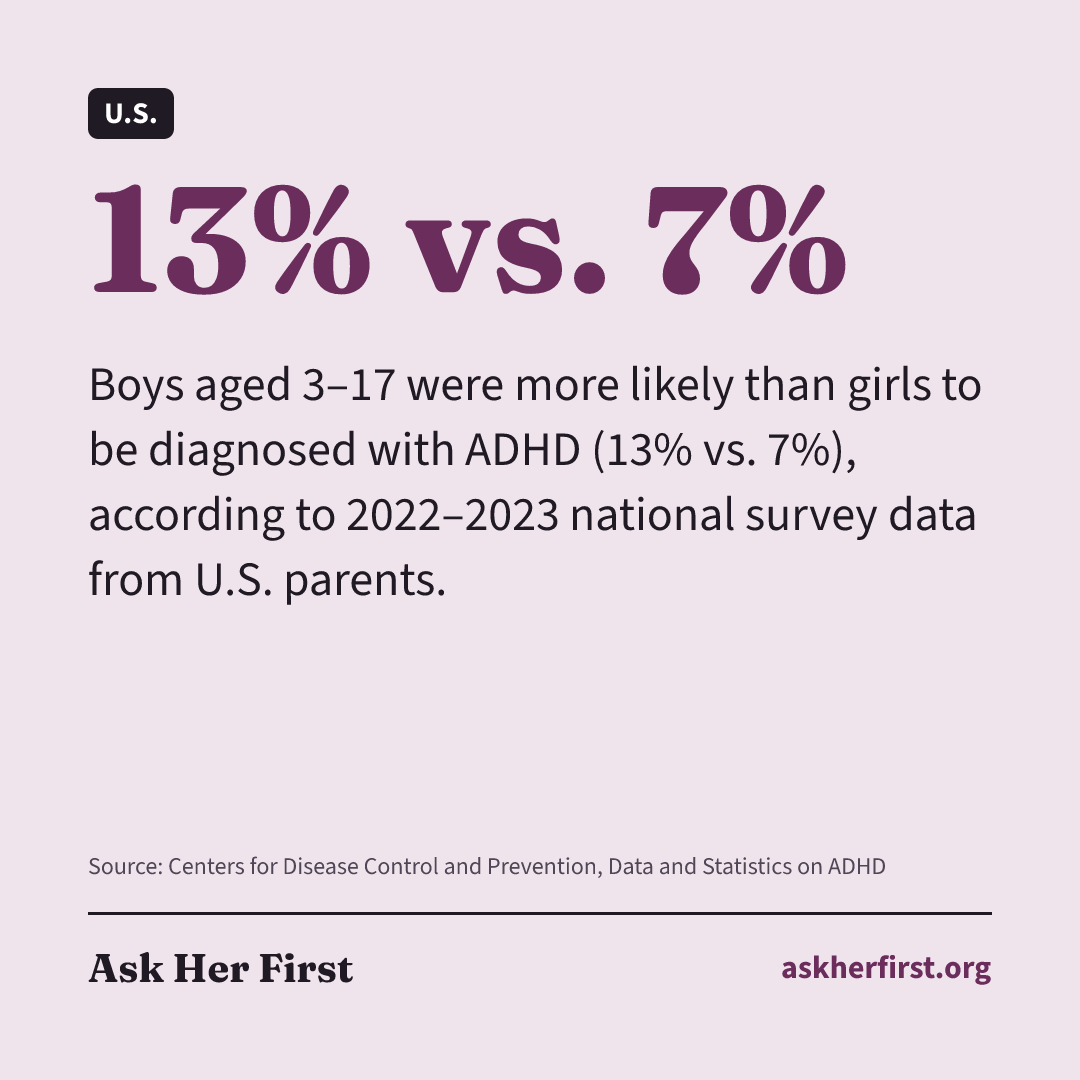
Boys are diagnosed with ADHD more often than girls. Boys aged 3–17 were more likely than girls to be diagnosed with ADHD (13% vs. 7%), according to 2022–2023 national survey data from U.S. parents.49
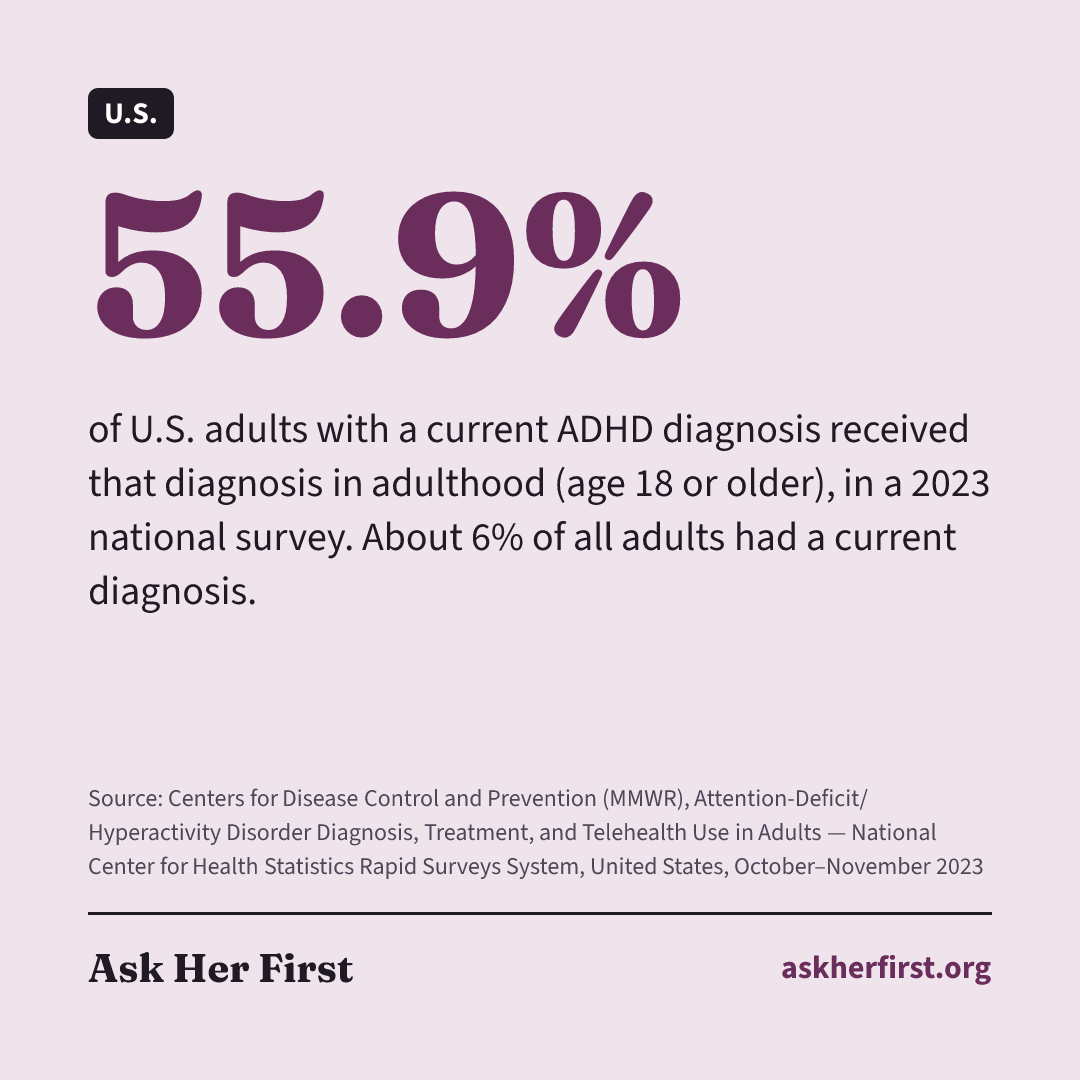
The gap looks different in adults. 44.2% of U.S. adults with a current ADHD diagnosis in 2023 were women; 55.8% were men.50 The same national survey asked adults when they were diagnosed. 55.9% of U.S. adults with a current ADHD diagnosis received that diagnosis in adulthood (age 18 or older), in a 2023 national survey. About 6% of all adults had a current diagnosis.50 The National Institute of Mental Health (NIMH) says ADHD symptoms among girls and women are especially likely to have been missed in childhood, and that sex differences in diagnosis rates begin to even out in adulthood.53
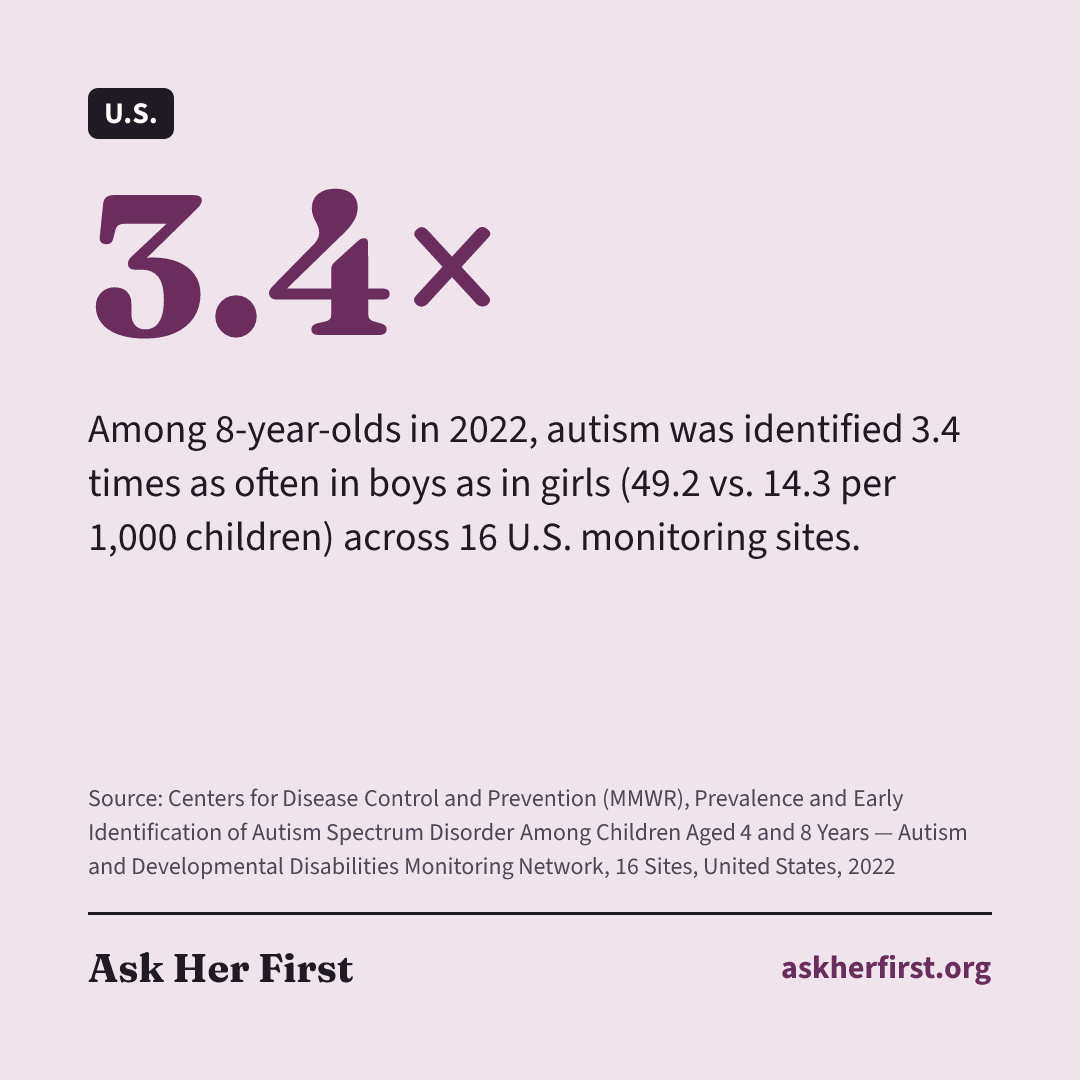
For autism, the CDC’s monitoring network tracks 8-year-olds at sites across the country. Among 8-year-olds in 2022, autism was identified 3.4 times as often in boys as in girls (49.2 vs. 14.3 per 1,000 children) across 16 U.S. monitoring sites.51 That ratio has been shrinking. The boy-to-girl ratio for autism among 8-year-olds at U.S. monitoring sites narrowed from 4.2 in 2018 to 3.8 in 2020 and 3.4 in 2022, though the gap in cases per 1,000 children grew.51 The CDC authors cautioned that a smaller ratio “could be deceiving” if read as better identification of girls, because the difference in cases between boys and girls actually widened over the same years.51
Screening studies suggest the true gap is smaller than diagnosis counts alone would show. A 2017 review of 54 studies found the male-to-female ratio in autism was about 3.25 to 1 in studies that screened the general population, lower than the 4.56 to 1 seen in studies that counted only people already diagnosed.55 The authors concluded that there appears to be a diagnostic gender bias, meaning that girls who meet criteria for autism are at disproportionate risk of not receiving a clinical diagnosis.55
Why girls and women can be missed
ADHD can look quieter
A 2002 review that pooled many studies found that, compared with boys with ADHD, girls with ADHD had lower ratings of hyperactivity, inattention, impulsivity, and outward behavior problems, and more “internalizing” problems, meaning difficulties directed inward rather than outward.59 A later review noted that in girls, inattention is often more prominent than hyperactivity and impulsivity, so their presentation may be seen as “subthreshold” and clinicians may not suspect ADHD.60
A 2020 expert consensus statement named several barriers to recognizing ADHD in girls and women: differences in symptoms, gender bias, co-occurring conditions, and coping strategies that can mask or overshadow ADHD symptoms.61 The experts urged clinicians to move away from seeing ADHD only as a behavior problem and to pay attention to the more subtle, internalized presentation that is common in females.61
NIMH lists other reasons someone may not be diagnosed until adulthood: teachers and parents may not have recognized the disorder, a supportive environment may have helped the person thrive anyway, or milder symptoms may have been manageable until the demands of adult life, especially at work.53
Autism and “camouflaging”
Researchers use the word camouflaging for strategies autistic people use to mask or make up for autistic traits in social situations.57 In a qualitative study, autistic adults described camouflaging as a mix of masking and compensation techniques, used to fit in and connect with others.56 They reported costs that included exhaustion and threats to how they saw themselves.56 The researchers noted that camouflaging may affect diagnosis, quality of life, and long-term outcomes.56
In an online survey of autistic and non-autistic adults, autistic women reported more camouflaging than autistic men, while non-autistic men and women did not differ.57 That fits with the idea that some autistic girls and women may be harder to recognize, but it comes from self-reported data in one survey.
Later diagnosis
A large survey of autistic children and adults in the Netherlands found that some groups of girls and women were identified later than boys and men, and the authors called for strategies to improve how clinicians recognize autism in females.58 In the CDC’s 2022 monitoring data, the median age at the earliest known autism diagnosis was 47 months.51
Anxiety, depression, and other conditions
ADHD often occurs alongside other conditions, such as learning disorders, sleep problems, anxiety, or depression, which can make the conditions harder to diagnose and treat.52 About 4 in 10 U.S. children with ADHD also had anxiety, according to a 2022 national survey of parents.49 One review noted that anxiety and depression are common in women and girls with ADHD and can lead to a missed diagnosis or misdiagnosis.60 NIMH says sleep problems are especially common in adults with ADHD.53
Autistic adults also face high rates of anxiety and depression. A 2019 review of 35 studies estimated that 42% of autistic adults have had an anxiety disorder and 37% a depressive disorder at some point in their lives.62 The review’s authors cautioned that the studies varied widely and relied heavily on clinical samples.62
Because anxiety and depression can overshadow ADHD, it can help to ask a clinician whether ADHD or autism might also be part of the picture.
Getting evaluated as an adult
ADHD can be diagnosed in childhood or adulthood, but adults must have had symptoms starting before age 12.53 Because of that, a provider may ask to talk with a partner, family members, or friends, and may look at school reports or other childhood records.53 An evaluation may include interviews, rating scales or checklists, psychological tests, and questions about mood and medical history to rule out other explanations.53
The most common treatments for ADHD in adults are medication, usually stimulants, and psychotherapy such as behavioral and cognitive behavioral therapy, and treatment often combines more than one approach.53 People whose ADHD symptoms affect their work may qualify for reasonable accommodations under the Americans with Disabilities Act.53 NIMH says it is never too late to seek a diagnosis and treatment for ADHD.53
What we don’t know yet
- How many women are undiagnosed. Diagnosis counts reflect who gets evaluated, not only who has the condition. Screening studies suggest girls with autism are under-diagnosed, but those studies varied widely in their results.55
- Whether the gap is closing for the right reasons. CDC researchers warned that a shrinking autism sex ratio does not by itself show that girls are being identified better.51
- Sex and gender differences in autism. A major review of the research found that key questions about sex and gender differences in autism, including how it should be defined and diagnosed in males and females, remain underaddressed.63
- How hormones shape ADHD. A review noted that women and girls face particular issues related to how hormones affect ADHD symptoms and treatment response.60
- Data age and scope. The adult ADHD figures come from one survey in late 2023, and the autism monitoring data cover children at 16 U.S. sites, not the whole country.50,51 The meta-analysis on sex differences in ADHD symptoms was published in 2002, and the camouflaging studies relied on what autistic adults reported about themselves.59,56,57
Questions to ask your doctor
- I’ve struggled with focus, organization, or social situations since childhood. Could ADHD or autism be part of this?
- I’ve been treated for anxiety or depression. Could something else be going on alongside it?
- Can you refer me to someone who evaluates adults for ADHD or autism, and who has experience with women?
- What will the evaluation involve? Should I bring school records or ask a family member to take part?
- If I am diagnosed, what are my treatment and support options, and what are the pros and cons of each?
- Could my menstrual cycle, pregnancy, or menopause affect my symptoms or treatment?
- Can I get accommodations at work or school, and what documentation would I need?
This article summarizes published research and official health information. It has not been reviewed by a clinician and is not medical advice. How we source.