Perimenopause, the years leading up to a woman’s last period, can affect emotional and mental well-being as well as the body.143 Studies that followed women over many years have found that the risk of depression goes up during this stage.148,150 Yet many women don’t know their symptoms may be related to menopause, and many health care workers get little training in it.143 Knowing the connection can make it easier to ask for the right help.
What perimenopause is
The time leading up to menopause is called the menopausal transition, or perimenopause.142 The World Health Organization says perimenopause starts when the first signs appear, usually changes in the menstrual cycle, and ends one year after the final period.143 Menopause itself can only be confirmed after a full year without a period.142
Most women begin the transition between ages 45 and 55, and it may last for several years.142 ACOG says the amount of estrogen the ovaries make begins to rise and fall in a woman’s 30s and 40s.144 The National Institute on Aging puts the average age of menopause in the U.S. at 52, while ACOG gives it as 51.142,144 Menopause can also happen suddenly after surgery to remove both ovaries, or after treatments such as chemotherapy or radiation that stop the ovaries from working.143
During the transition, the ovaries make much less estrogen and progesterone, and these changes may explain the symptoms some women have.142 Symptoms related to menopause can last from two to eight years, and timing and symptoms vary a lot from one woman to the next.142
How it can affect mood
WHO lists changes in mood, depression, and anxiety among the symptoms of menopause, along with hot flashes, night sweats, and trouble sleeping.143 Some women have few symptoms, while for others symptoms are severe enough to affect daily life.143
You might feel moodier or more irritable around the time of menopause, and scientists don’t know exactly why.142 The National Institute on Aging says stress, family responsibilities such as raising children or caring for aging parents, depression, or feeling extra tired could all play a part.142 Forgetfulness and trouble concentrating are also among the symptoms some women notice.142
What the research shows
Depression
Experts who wrote clinical guidelines in 2018 describe perimenopause, including the first years after the last period, as a “window of vulnerability” for both depressive symptoms and major depression.147
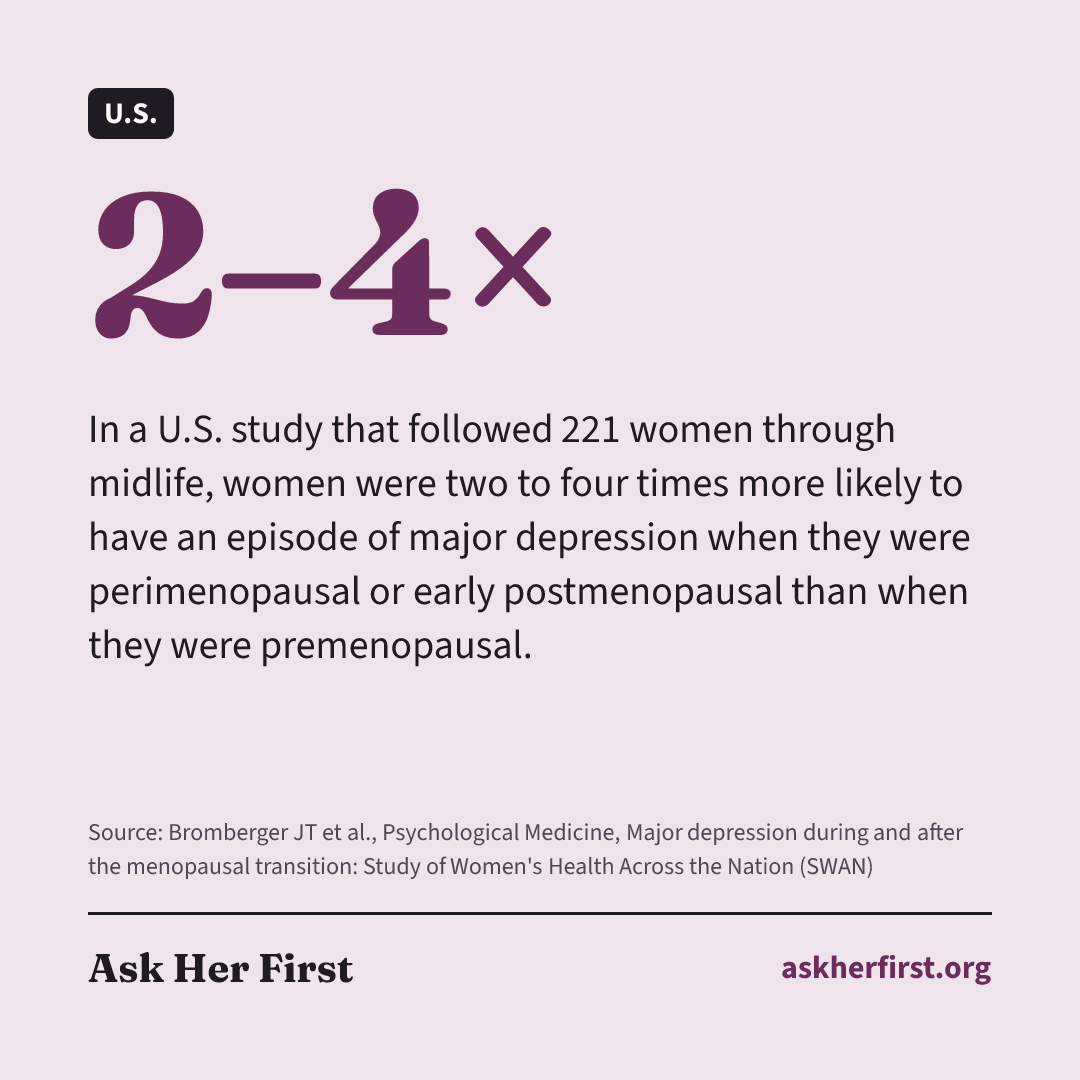
The Study of Women’s Health Across the Nation (SWAN) is a long-term NIH-funded study of the menopausal transition.142 In a U.S. study that followed 221 women through midlife, women were two to four times more likely to have an episode of major depression when they were perimenopausal or early postmenopausal than when they were premenopausal.148 In that study, the link held even after accounting for past depression, upsetting life events, hot flashes, and hormone levels.148 A past history of major depression was a strong predictor of depression throughout the study.148
The risk isn’t limited to women who have been depressed before.149 U.S.In a Boston-area study of 460 women with no history of major depression, those who entered perimenopause were twice as likely to develop significant depressive symptoms as women the same age who were still premenopausal.149 The added risk was somewhat greater in women who reported hot flashes or night sweats.149
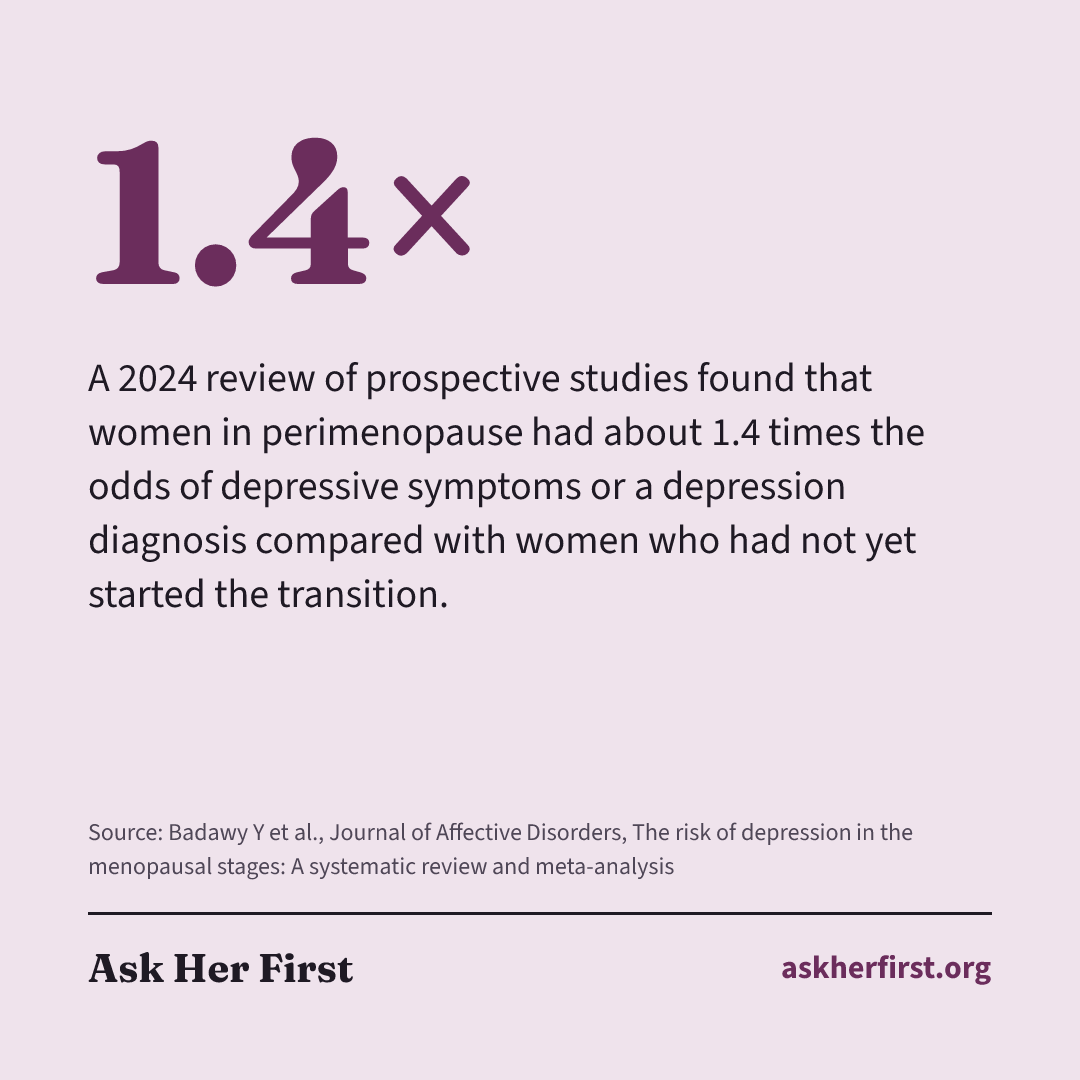
A 2024 review pooled results from studies that followed women over time.150 A 2024 review of prospective studies found that women in perimenopause had about 1.4 times the odds of depressive symptoms or a depression diagnosis compared with women who had not yet started the transition.150 The same review did not find a significantly higher risk after menopause compared with before the transition.150 Still, the 2018 guidelines note that most midlife women who have a major depressive episode during perimenopause have had depression before.147
Why might this happen? In a small trial at the NIH Clinical Center, researchers studied women who had once had perimenopausal depression that improved with hormone therapy; when their estradiol (a form of estrogen) was switched to a placebo without their knowing, their depressive symptoms came back, while women with no such history stayed symptom-free.151 The researchers concluded that normal changes in estrogen may trigger depression in some women who are especially sensitive to them.151
Anxiety
In a U.S. study of nearly 3,000 midlife women, those with low anxiety at the start were about 1.6 times as likely to report high anxiety during perimenopause or after menopause as before the transition.152 That held even after accounting for life stress, money strain, health, and hot flashes.152 Women who already had high anxiety before the transition tended to stay anxious, but their risk did not go up at particular stages of menopause.152
Hot flashes, sleep, and mood
Hot flashes and night sweats are among the most common symptoms of menopause, and night sweats can disrupt sleep.142 They can last a long time.153 In a large U.S. study, frequent hot flashes or night sweats lasted a median of 7.4 years in total; for African American women, the median was 10.1 years.153 Women who had more depressive symptoms and anxiety when their hot flashes began were more likely to have hot flashes that lasted longer.153
In SWAN, trouble falling asleep and staying asleep became more likely as women moved through the transition, and more frequent hot flashes were linked with more sleep problems.154 The National Institute on Aging says hot flashes, especially night sweats, and mood changes, especially depression, can all contribute to poor sleep.146 Lack of sleep can in turn make you feel irritable or depressed.146
Why it gets missed
It can be hard for you and your doctor to tell whether you are in the menopausal transition.142 According to the 2018 guidelines, depression in midlife often shows up alongside menopause symptoms such as hot flashes and poor sleep, and the two overlap and complicate each other.147
Silence plays a part too. WHO notes that menopause is often not discussed in families, communities, workplaces, or health care settings.143 Women may not know their symptoms are related to menopause, or may feel embarrassed to ask for support.143 Health care providers may not be trained to recognize menopause symptoms, and menopause gets limited attention in many training programs.143
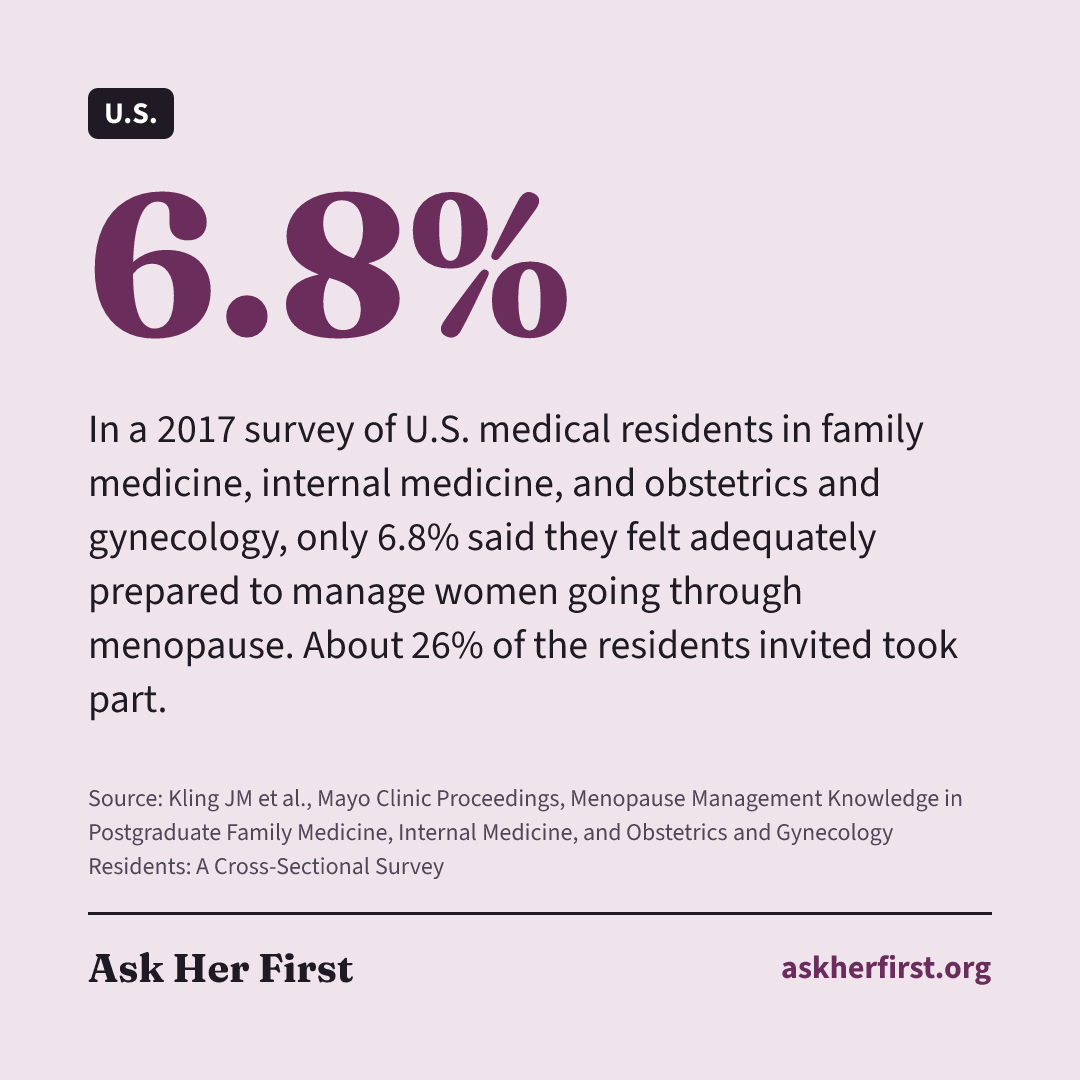
In a 2017 survey of U.S. medical residents in family medicine, internal medicine, and obstetrics and gynecology, only 6.8% said they felt adequately prepared to manage women going through menopause. About 26% of the residents invited took part.155To tell these conditions apart, the 2018 guidelines recommend that clinicians identify the woman’s menopause stage, assess both mental health and menopause symptoms, consider the pressures common in midlife, and use validated screening questionnaires.147
Treatment options sources describe
The National Institute on Aging encourages women with mood changes to talk with a primary care provider or a mental health professional, and says treatments are available.142
For depression. The 2018 guidelines say proven depression treatments, antidepressants and psychotherapy, are the first-line treatments for depression during perimenopause.147 Estrogen therapy is not approved to treat perimenopausal depression. There is evidence that it has antidepressant effects in perimenopausal women, especially those who also have hot flashes, but data on estrogen combined with progestin are sparse and inconclusive.147 In the NIH withdrawal trial, the researchers advised that women with a history of perimenopausal depression be alert to the risk of depression returning when stopping hormone therapy.151 That is worth discussing with a clinician before any change.
For hot flashes. The Menopause Society’s 2022 position statement says hormone therapy is still the most effective treatment for hot flashes and night sweats.156 Its 2023 statement on nonhormone options recommends cognitive behavioral therapy, clinical hypnosis, certain antidepressants (SSRIs and SNRIs), gabapentin, and fezolinetant, based on good and consistent evidence.157 The same statement does not recommend supplements or herbal remedies.157 The National Institute on Aging says black cohosh, DHEA, and soy isoflavones are not proven to work, and some carry risks such as liver damage.145 Our article on menopause hormone therapy covers the benefits, risks, and recent label changes in more detail.
For sleep. The National Institute on Aging says cognitive behavioral therapy for insomnia has been shown to help improve sleep in women with menopause symptoms.146 It also says over-the-counter sleep aids and prescription sleep medicines may help for a short time but are not a cure and should not be used long term.146
If you are in crisis or thinking about suicide, the 988 Suicide & Crisis Lifeline offers free, confidential support 24/7 by call, text, or chat.11
What we don’t know yet
- Why it happens. Scientists don’t yet know why mood changes happen around menopause.142 Stress, hormones, sleep, and life circumstances are hard to separate, and researchers have called for more studies on whether hot flashes, hormone therapy, and life events each change the risk.149
- Inconsistent research methods. Studies use different definitions of the menopause stages and different measures of depression, and there are too few long-term studies comparing perimenopause directly with postmenopause.150
- Treatment evidence. When the 2018 guidelines were written, the authors said clinical recommendations for identifying and treating perimenopausal depression were lacking, and evidence on estrogen plus progestin remains sparse.147
- Older data. Much of what we know comes from SWAN, which began collecting data in 1996.153
- Who is missing. WHO notes there is little data on how trans and gender-diverse people experience menopause.143
Questions to ask your doctor
- Could my changes in mood, sleep, or anxiety be related to perimenopause? How would we tell?
- Should I be screened for depression or anxiety?
- I’ve had depression before. Does that change what we should watch for now?
- What are my options for treating depression or anxiety, and how do they fit with treating my menopause symptoms?
- Could treating my hot flashes or night sweats help my sleep and mood?
- If I’m using hormone therapy or thinking about stopping it, what should I watch for with my mood?
- Would cognitive behavioral therapy for insomnia or for hot flashes be a good fit for me?
- Can you refer me to a mental health professional who works with women in midlife?
This article summarizes published research and official health information. It has not been reviewed by a clinician and is not medical advice. How we source.