Menopause hormone therapy is one of the most studied, and most debated, treatments in women’s health. Its use dropped sharply in the early 2000s after the FDA added boxed warnings based on the Women’s Health Initiative study.122 In November 2025, the FDA began removing parts of those warnings.123 Here is what the evidence and current official sources say, including where experts still disagree.
What it is
Hormone therapy is a medical treatment that can help relieve symptoms of menopause and perimenopause. It is also called hormone replacement therapy (HRT) or menopausal hormone therapy (MHT).116 The FDA describes four main types: estrogen plus a progestogen taken throughout the body (systemic), systemic estrogen alone, a systemic progestogen added for women with a uterus who use systemic estrogen, and estrogen applied in the vagina.125
Women who still have a uterus are prescribed a progestin along with estrogen, because it lowers the risk of uterine cancer that can come with estrogen alone.116 Systemic estrogen comes as pills, skin patches, gels, and sprays and travels through the bloodstream. Local estrogen for vaginal dryness comes as a vaginal ring, tablet, or cream and releases small doses directly into vaginal tissue.116
Many products marketed as “bioidentical hormones” are compounded drugs that are not FDA-approved, and the FDA says it has no evidence that they are safe and effective, or safer or more effective than FDA-approved hormone therapy.128 ACOG recommends FDA-approved hormone therapy over compounded hormones.116
Why people consider it
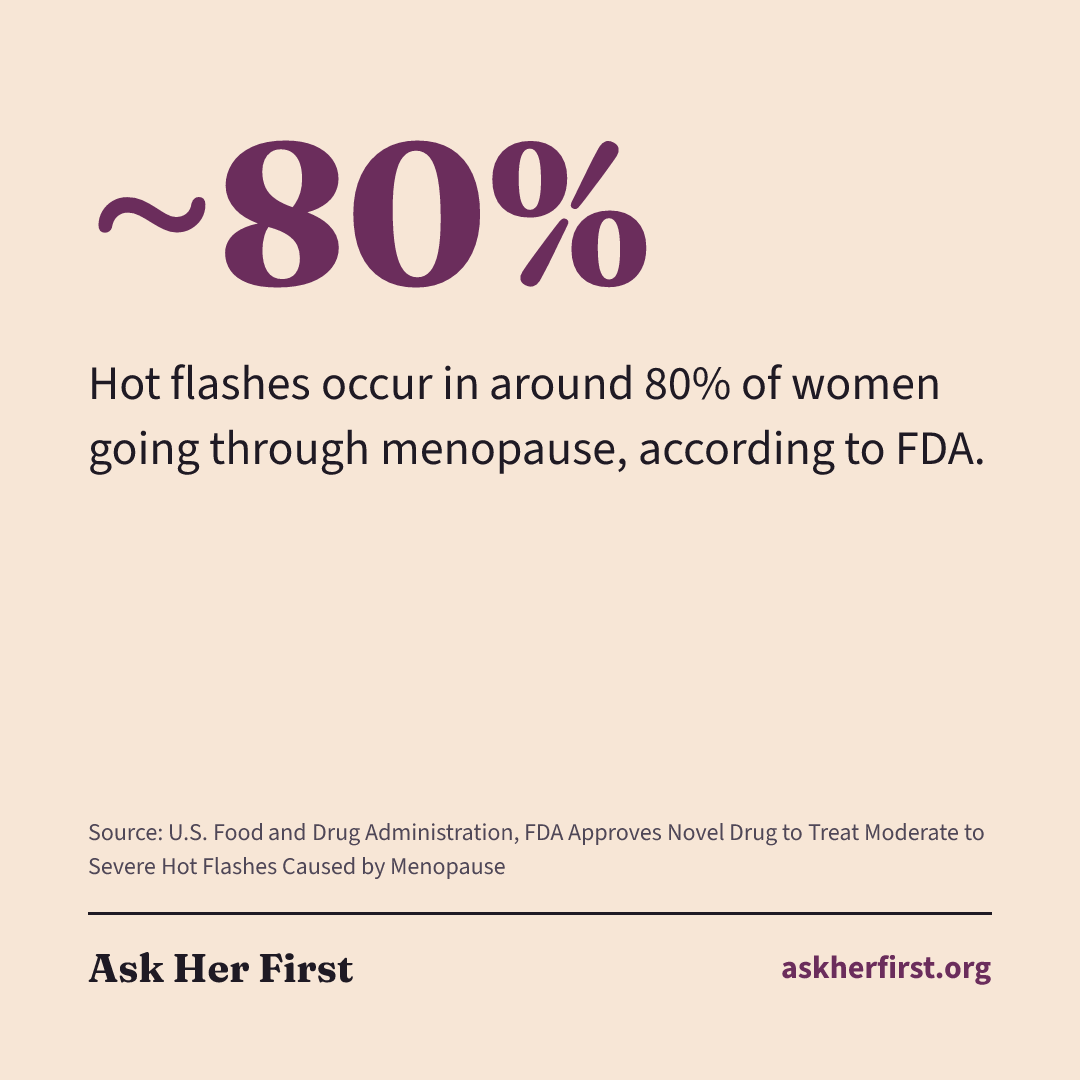
Hot flashes occur in around 80% of women going through menopause, according to FDA.129 The FDA says menopause symptoms can significantly reduce quality of life. Common symptoms include hot flashes and night sweats; vaginal, vulvar, and urinary changes caused by lower estrogen; and bone thinning that raises the risk of fractures.124
The Menopause Society’s 2022 position statement says hormone therapy remains the most effective treatment for hot flashes and night sweats and for genitourinary symptoms of menopause, and that it has been shown to prevent bone loss and fracture.156 ACOG likewise says systemic estrogen is the best treatment for hot flashes and night sweats, and that both systemic and local estrogen relieve vaginal dryness.116
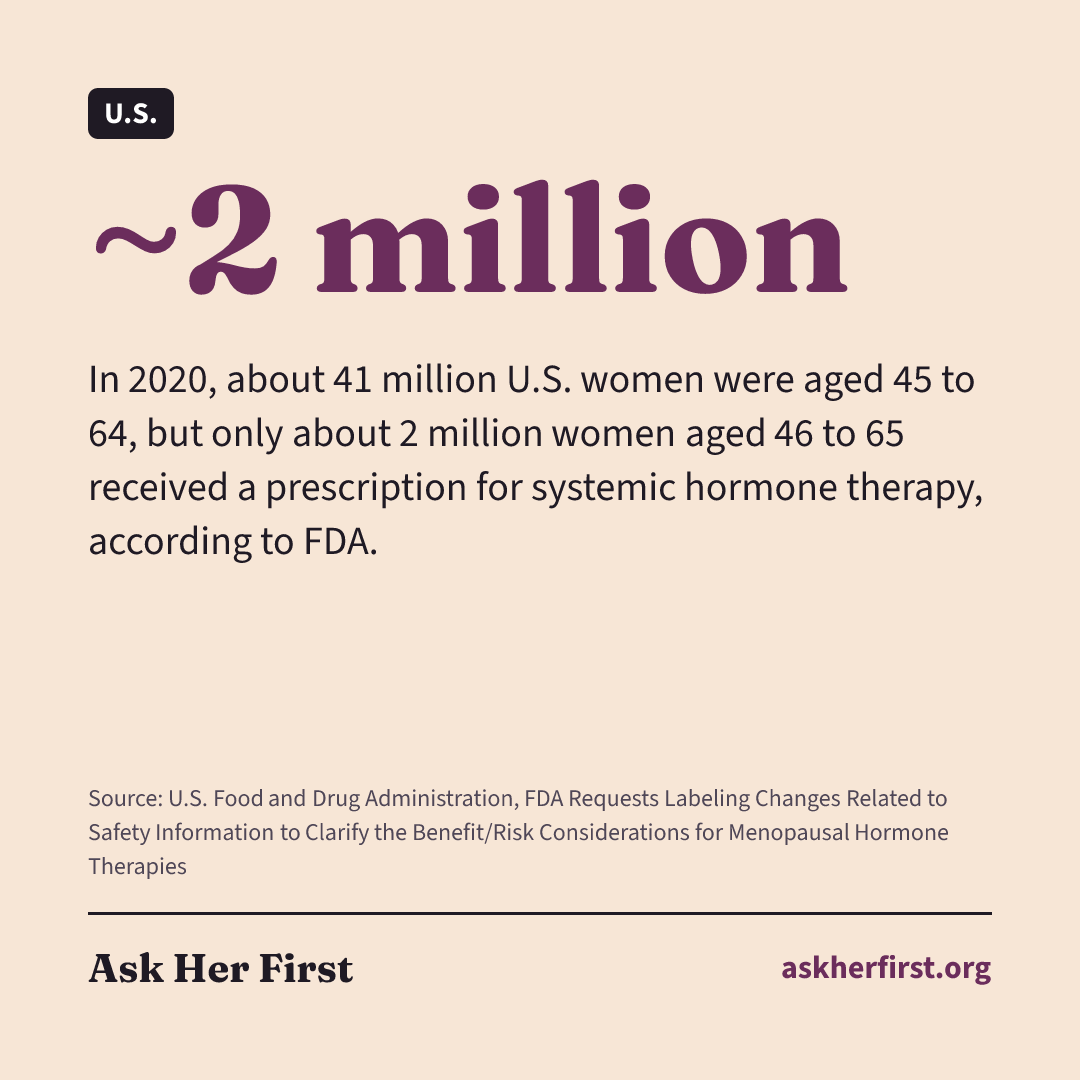
Only a small fraction of women who could benefit are using it, according to the FDA.124 In 2020, about 41 million U.S. women were aged 45 to 64, but only about 2 million women aged 46 to 65 received a prescription for systemic hormone therapy, according to FDA.123 The FDA said these data suggest hormone therapy may be under-used among women likely to benefit.123
The Women’s Health Initiative: what happened
The Women’s Health Initiative (WHI), sponsored by the National Heart, Lung, and Blood Institute, is a long-term national study of ways to prevent heart disease, breast and colorectal cancer, and osteoporosis in postmenopausal women.117 The Women's Health Initiative clinical trials enrolled more than 68,000 postmenopausal U.S. women aged 50 to 79 between 1993 and 1998 and followed them for up to 20 years.118,117
Its hormone trial had two parts: estrogen plus progestin for women with a uterus, and estrogen alone for women without one. Both tested whether hormone pills, compared with placebo pills, prevented heart disease and osteoporosis, and whether they raised breast cancer risk.117 The combined pill contained conjugated equine estrogens and medroxyprogesterone acetate.119
The estrogen-plus-progestin trial was stopped early, on May 31, 2002, after an average of 5.2 years, because invasive breast cancer crossed a pre-set safety boundary and overall risks outweighed benefits.119 U.S.In the 2002 results of the WHI estrogen-plus-progestin trial, for every 10,000 women taking the hormones for a year there were 7 more heart disease events, 8 more strokes, 8 more blood clots in the lungs, and 8 more invasive breast cancers than with placebo, but 6 fewer colorectal cancers and 5 fewer hip fractures.119 The estrogen-alone trial was stopped in 2004 because of a higher risk of stroke and no evidence that it prevented heart disease.123
Starting in 2003, the FDA approved class-wide label changes that eventually included a boxed warning about cardiovascular disorders, invasive breast cancer, and probable dementia.123 The National Institute on Aging notes that the 2002 results raised significant concerns and caused many women to become wary of hormones.145
How the interpretation changed
The WHI trials were designed to test chronic disease prevention in women of all postmenopausal ages, and the average participant was 63. Most women have bothersome hot flashes much earlier, and the average age of menopause in the U.S. is 51.123 The WHI dementia studies enrolled only women aged 65 to 79.123
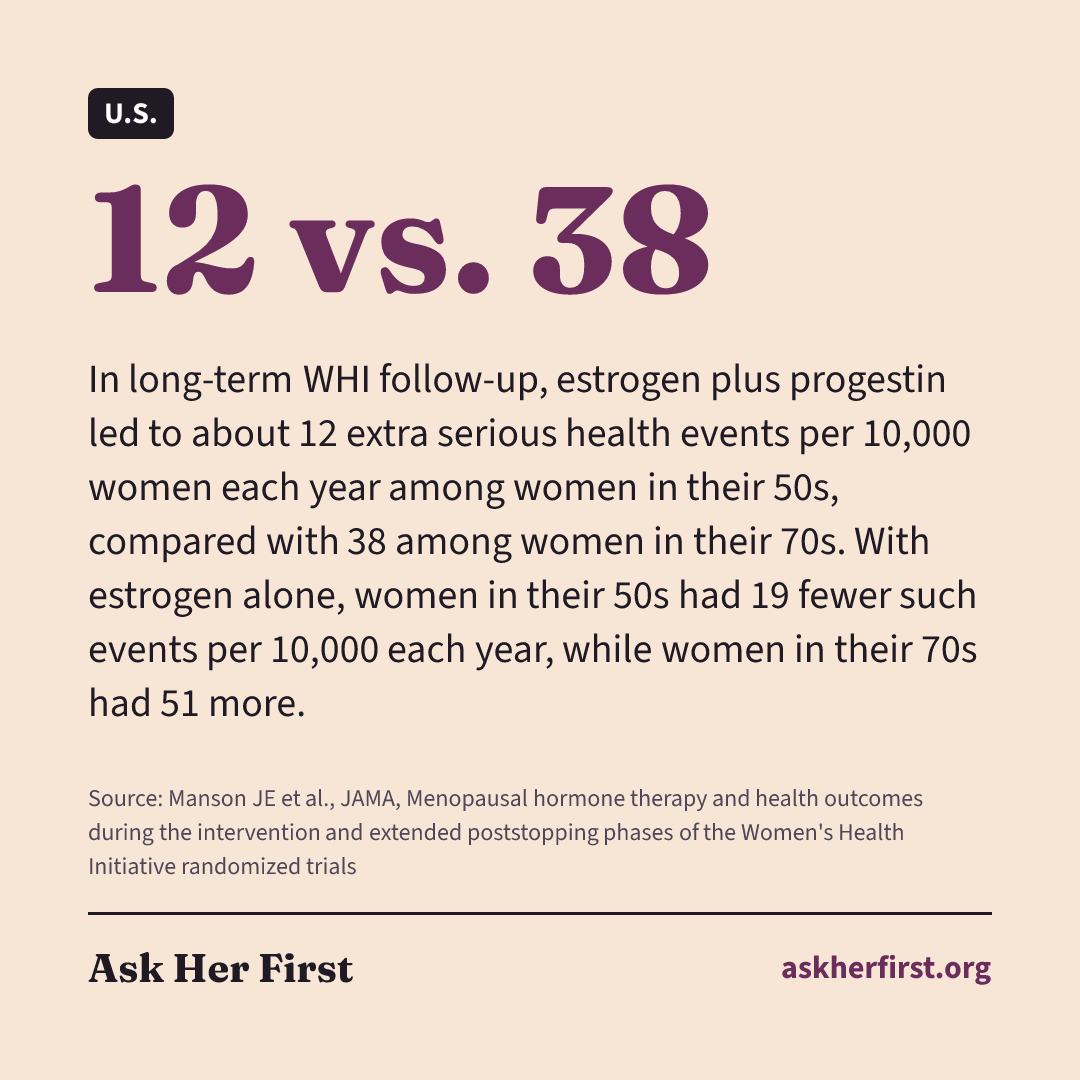
Longer follow-up, published in 2013, described a complex pattern of risks and benefits.120 Most risks and benefits faded after women stopped the hormones, though some added breast cancer risk from estrogen plus progestin persisted. Risks and benefits were more balanced with estrogen alone, and neither regimen affected the overall death rate.120 Age mattered.120 U.S.In long-term WHI follow-up, estrogen plus progestin led to about 12 extra serious health events per 10,000 women each year among women in their 50s, compared with 38 among women in their 70s. With estrogen alone, women in their 50s had 19 fewer such events per 10,000 each year, while women in their 70s had 51 more.120
The National Institute on Aging says research since 2002 has found that younger women are at less risk and have more potential benefit than the WHI first suggested, and that the harms mostly affected women over 60.145
In a 2024 review, WHI investigators concluded that the trials do not support using hormone therapy to prevent heart disease, dementia, or other chronic diseases. They also said hormone therapy is effective for moderate to severe hot flashes, and that its benefits in early menopause, together with lower rates of harm, support starting it before age 60 for women without contraindications who have bothersome symptoms.121 The NHLBI stresses that the WHI was not designed to test FDA-approved hormone therapy for treating symptoms, and those benefits were established before the study began.118
What the FDA changed in 2025 and 2026
On November 10, 2025, the FDA told makers of menopausal hormone therapies that it was requesting label changes.123 The same day, HHS announced that the FDA was starting to remove the broad boxed warnings.122 The FDA said the move followed its review of research since the WHI, an expert panel held July 17, 2025, and a period of public input.123
The FDA’s requested changes include:123
- All products (systemic and vaginal): remove the boxed warning language about cardiovascular disease, breast cancer, and probable dementia; remove the boxed warning about endometrial cancer except for systemic estrogen-alone products; remove the advice to use the lowest effective dose for the shortest time; and remove the probable dementia warning from the label entirely.
- Systemic products: add that starting therapy for moderate to severe hot flashes can be considered in women under 60 or within 10 years of menopause; add WHI data for women aged 50 to 59; keep the boxed warning about endometrial cancer on estrogen-alone products; and keep the warnings about cardiovascular disease and breast cancer elsewhere in the label.
- Vaginal estrogen: condense the safety information to focus on what is most relevant to the local form.
The FDA has not asked companies to remove cardiovascular disease and breast cancer risks from the “Warnings and Precautions” section of the label.125
On February 12, 2026, the FDA announced it had approved the first updated labels, for six products covering all four types of hormone therapy.124 For example, the revised label for Bijuva, a combined estradiol and progesterone capsule, no longer has a boxed warning and says the timing of starting therapy can affect the balance of risks and benefits.126 The revised label for Divigel, an estrogen-only gel, still carries a boxed warning about endometrial cancer in women with a uterus who use estrogen without a progestogen.127 The FDA said more companies may make changes, so not every product’s label may be updated yet.125
Where experts agree and disagree
The Menopause Society and ACOG both welcomed at least part of the change, but official statements and expert groups describe it differently.133,134
- HHS and FDA leadership said women who start hormone therapy within 10 years of menopause may lower their risk of cardiovascular disease, Alzheimer’s disease, and fractures, and described the old warnings as rooted in “a distortion of risk.”122
- WHI investigators, by contrast, concluded in 2024 that the trials do not support hormone therapy to prevent cardiovascular disease or dementia.121 Later WHI analyses also continued to find more breast cancers with estrogen plus progestin than with placebo.120
- The Menopause Society agreed with removing the boxed warning from low-dose vaginal estrogen, but said systemic estrogen still carries potential risks for some people that should be reviewed in detail.133
- ACOG praised the change and said it does not alter its guidance. It stressed that systemic estrogen has a different safety profile than low-dose vaginal estrogen and is “not without risk.”134
- Breast cancer survivors are one group where, as a 2026 JAMA viewpoint put it, there is “significant controversy without formal consensus,” and the authors wrote that the label change does not mean hormone therapy suits every patient.135
Benefits and risks, per current statements
The Menopause Society’s 2022 statement says the risks of hormone therapy depend on the type, dose, how long it is used, how it is taken, when it is started, and whether a progestogen is used.156 For women younger than 60 or within 10 years of menopause who have no contraindications, it says the benefits outweigh the risks for treating bothersome hot flashes and preventing bone loss.156 For women who start more than 10 years after menopause or after age 60, the balance appears less favorable because of greater absolute risks of heart disease, stroke, blood clots, and dementia.156 It recommends that longer use be tied to a documented reason, such as ongoing hot flashes, with shared decision-making and regular check-ins.156
ACOG describes these risks:
- Estrogen alone thickens the lining of the uterus, which raises the risk of endometrial cancer; adding a progestin lowers that risk.116
- Combined hormone therapy is linked with a small increase in breast cancer risk.116
- Both combined and estrogen-only therapy are linked with a small risk of stroke and blood clots, and patches, sprays, and rings may carry less risk than pills.116
- There is a small increase in gallbladder disease, greatest with pills.116
The NHLBI says hormone therapy should not be used to prevent heart disease or lower cholesterol.117 For vaginal symptoms not relieved by over-the-counter products, in women who don’t need systemic therapy, the Menopause Society recommends low-dose vaginal estrogen or other options.156
Who it may not be appropriate for
The updated 2026 labels list conditions in which these products should not be used: unexplained abnormal genital bleeding; breast cancer or a history of it; estrogen-dependent cancers; current or past blood clots in the legs or lungs; current or past stroke or heart attack; liver disease; known inherited clotting disorders; and a known allergic reaction to the product.126,127
ACOG says systemic hormone therapy usually is not recommended for anyone who has had breast or endometrial cancer, stroke, heart attack, blood clots, or liver disease, and that hormone therapy is not for pregnant women.116 It also says women with a history of hormone-sensitive breast cancer should try nonhormonal treatments first.116
Non-hormonal options
For women who cannot or choose not to use hormones, the FDA has approved three nonhormone medicines.125
- Paroxetine (Brisdelle), an SSRI antidepressant, is approved to treat hot flashes associated with menopause.145
- Fezolinetant (Veozah) was approved on May 12, 2023, as the first drug of its kind (a neurokinin 3 receptor antagonist). It works on the part of the brain that helps control body temperature.129 On December 16, 2024, the FDA added a boxed warning about rare but serious liver injury, and liver blood tests are done before and during treatment.130
- Elinzanetant (Lynkuet) was approved on October 24, 2025, to reduce moderate to severe hot flashes due to menopause.131 Its label warns about sleepiness and daytime impairment and about liver enzyme increases, and it should not be used during pregnancy.132
The Menopause Society’s 2023 statement also recommends cognitive behavioral therapy, clinical hypnosis, certain antidepressants (SSRIs and SNRIs), and gabapentin for hot flashes, and does not recommend supplements or herbal remedies.157 For vaginal dryness, ACOG lists over-the-counter vaginal moisturizers and lubricants and a prescription vaginal DHEA insert among the alternatives.116
What we don’t know yet
- Newer formulations. The WHI tested one hormone formulation that HHS says is no longer in common use.122 The National Institute on Aging says studies continue to evaluate the benefits, risks, and long-term safety of hormone therapy.145
- Prevention claims. Official statements differ on whether hormone therapy lowers the risk of heart disease or dementia, and the WHI investigators say their trials do not support using it for that purpose.122,121
- Breast cancer survivors. More research is needed on how hormone therapy affects women whose menopause was natural versus caused by cancer treatment.135
- Unequal access. Black women are less likely to receive hormone therapy to begin with.135
- A rollout in progress. Label updates are being approved product by product.125
Questions to ask your doctor
- Are my symptoms bothersome enough that treatment makes sense for me?
- Given my age and how long it has been since my last period, how do the benefits and risks look for me?
- Do I need a progestogen, based on whether I still have a uterus?
- Would a patch, gel, or spray be different for me than a pill? Would vaginal estrogen alone be enough?
- Does my personal or family history (breast cancer, blood clots, stroke, heart disease, liver disease) rule out any options?
- Has the label for the product you’re recommending been updated since the FDA’s 2025 changes?
- What nonhormonal options could work for me, and what monitoring do they need?
- How often should we revisit whether to continue, change, or stop treatment?
This article summarizes published research and official health information. It has not been reviewed by a clinician and is not medical advice. How we source.