Endometriosis is a long-lasting disease that can cause severe period pain, pain during sex, and trouble getting pregnant.5 Its symptoms vary so much from person to person that health workers may not easily recognize it, and long delays in diagnosis are common.5 This page explains what the research says about why that happens and what can help.
What it is
In endometriosis, tissue similar to the lining of the uterus grows outside the uterus, causing inflammation and scar tissue.5 It most often occurs in the pelvis, but in some women it grows elsewhere in the body, including the abdomen and chest.5 It can affect anyone from their first period through menopause, including transgender men and nonbinary people who menstruate.5
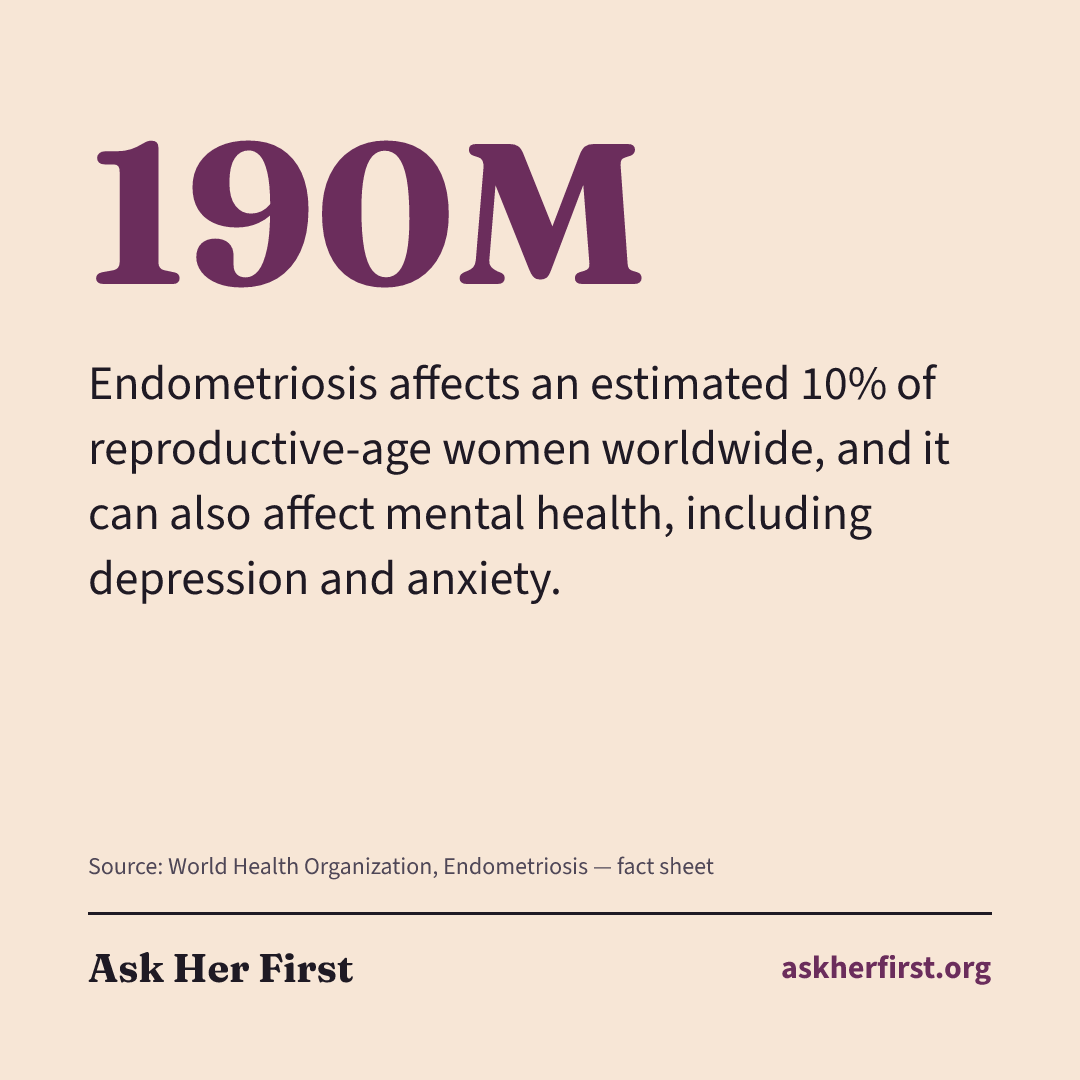
Endometriosis affects an estimated 10% of reproductive-age women worldwide, and it can also affect mental health, including depression and anxiety.5The causes are unknown.5 Researchers have several theories, including retrograde menstruation, in which menstrual tissue flows backward through the fallopian tubes into the pelvis, but no single theory explains every case.101 Emerging research suggests endometriosis is linked with immune system problems, and people with endometriosis have higher rates of other immune-related conditions such as lupus, multiple sclerosis, and inflammatory bowel disease.5 Having a close relative with endometriosis makes it more likely.104
Symptoms
The World Health Organization (WHO) lists these symptoms:5
- Severe pain during periods
- Heavy menstrual bleeding
- Chronic pelvic pain that does not go away when the period ends
- Infertility
- Bloating and nausea
It can also cause pain during sex, painful bowel movements or urination, and fatigue.5,102 Period pain from endometriosis often gets worse over time.104 Some people have no symptoms at all and find out only when they have trouble getting pregnant or during surgery for something else.104
The amount of pain does not always match how much endometriosis there is.104 Some women with only a few small lesions have severe pain, while others with large patches have little pain.102
Why diagnosis takes so long
The World Health Organization says the average time to an endometriosis diagnosis is between 4 and 12 years.5 Estimates vary widely, partly because studies measure the delay in different ways.
A 2024 systematic review in the journal BJOG pulled together 17 studies published from 2018 to 2023.105 The authors split the delay into two parts: the time from first symptoms to a first doctor visit, and the time from that visit to a diagnosis.105
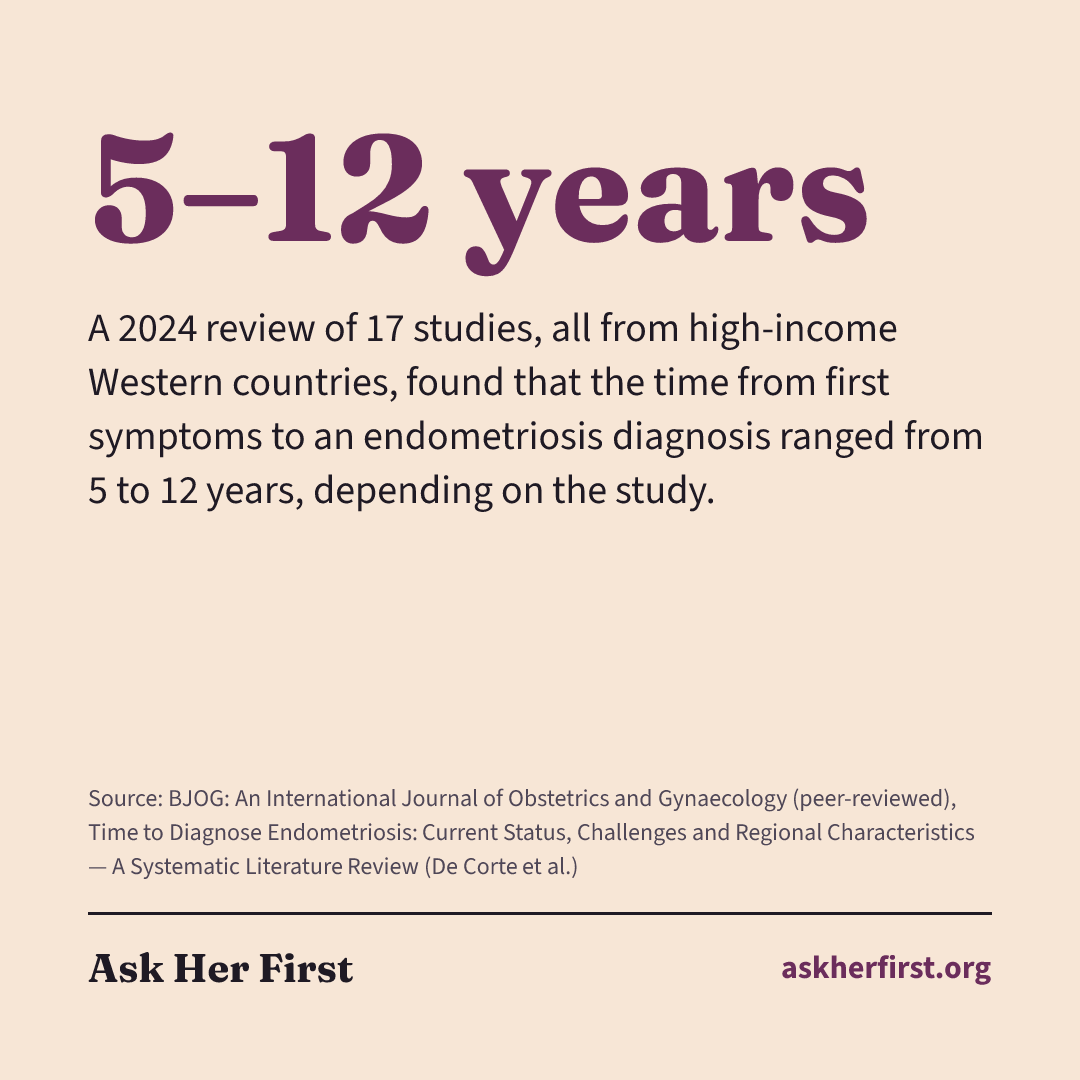
- From first symptoms to diagnosis: A 2024 review of 17 studies, all from high-income Western countries, found that the time from first symptoms to an endometriosis diagnosis ranged from 5 to 12 years, depending on the study.105
- In the United States: In the U.S. studies included in a 2024 review, the time from first symptoms to an endometriosis diagnosis ranged from 5 to 8 years.105
- Before seeing a doctor: people waited 1 to 4 years after their first symptoms to seek medical care.105
- After the first visit: the time from a first doctor visit to a diagnosis ranged from a few months (0.3 years) to 8.6 years.105
The review found large differences between and within countries, and the authors concluded that the delay is “primarily driven by physicians.”105 All of the studies came from high-income Western countries, so we know little about delays elsewhere or for different ethnic and gender identity groups.105 Single studies found longer delays for people who were younger when symptoms started, who had infertility, or who were Black rather than White, but the authors caution that these findings are not yet consistent enough to draw conclusions.105 In one included study, women who felt their general practitioner did not take their pain seriously waited about twice as long for a diagnosis.105
Why does this happen? A 2023 review of interviews and focus groups with patients and health professionals found these barriers:106
- It is hard to tell endometriosis pain apart from “normal” period pain.
- Menstrual stigma leads people to treat period pain as normal.
- Some health professionals lack training, and referrals to specialists are delayed.
- Symptoms vary, overlap with other conditions, and there is no noninvasive test.
A 2025 meta-analysis found that both patient factors, such as delays in seeking care, and provider factors, such as misdiagnosis, contributed to the delay.107 WHO notes that in many countries, the public, families, and most health workers do not know that chronic pelvic pain from endometriosis is not normal.5
How it’s diagnosed
Diagnosis usually starts with a detailed health history, a list of symptoms, and often a pelvic exam.104 WHO says a careful menstrual history covering pain, how heavy bleeding is, and related symptoms can help.5 Because symptoms overlap with problems like irritable bowel syndrome, urinary tract problems, and infections, the doctor needs to rule those out.104
- Imaging. The American College of Obstetricians and Gynecologists (ACOG) calls transvaginal ultrasound the best test for finding endometriosis, and an MRI may be needed for endometriosis deeper in the pelvis or outside it.104 A normal imaging test does not rule it out, because some lesions are hard to see.104 The National Institutes of Health notes that imaging does not help find small lesions or scar tissue.103
- Surgery. The only way to confirm endometriosis is surgery, usually a laparoscopy, in which a surgeon looks inside the abdomen through a small cut.104,103 WHO notes that this surgery is out of reach for many women.5
- Diagnosis based on symptoms. WHO says a clinical diagnosis can be made from symptoms and imaging, and surgery is not always needed before starting treatment.5 ACOG says you are not required to have surgery and can start treatment for many symptoms without it, even before imaging results come back.104
New tests aimed at earlier diagnosis are being studied, including symptom checklists, blood tests, and self-tests using saliva or menstrual blood.5
Treatment options
There is no cure, but symptoms can be treated with medicines or, for some women, surgery.5 Treatment choices depend on how severe the disease is, which symptoms you have, whether you want to get pregnant, and your preferences.5,104
- Pain relievers. Nonsteroidal anti-inflammatory drugs (NSAIDs) such as ibuprofen and naproxen are often used for pain.5 They may relieve pain but do not treat other symptoms.104
- Hormonal medicines. These include combined birth control (pill, patch, or ring), progestins (such as the hormonal IUD), and GnRH medicines.5 They can help manage pain but usually do not remove tissue that is already there, and pain often returns after they are stopped.104 Some are not suitable for people trying to get pregnant.5
- Surgery. Surgery can remove lesions and scar tissue, and it usually relieves pain, but pain can come back.5,104 Up to 8 in 10 women have endometriosis pain again within 2 years of surgery.104
- Hysterectomy. Removing the uterus, usually with the ovaries, may be considered for people who have not responded to other treatments and do not plan to have children, but it is not a cure, and some symptoms can remain.5
- Pain management and support. Physiotherapy and cognitive behavioral therapy (CBT) can help reduce pain and improve quality of life, and patient support groups can offer advice and emotional support.5
Effects on fertility and mental health
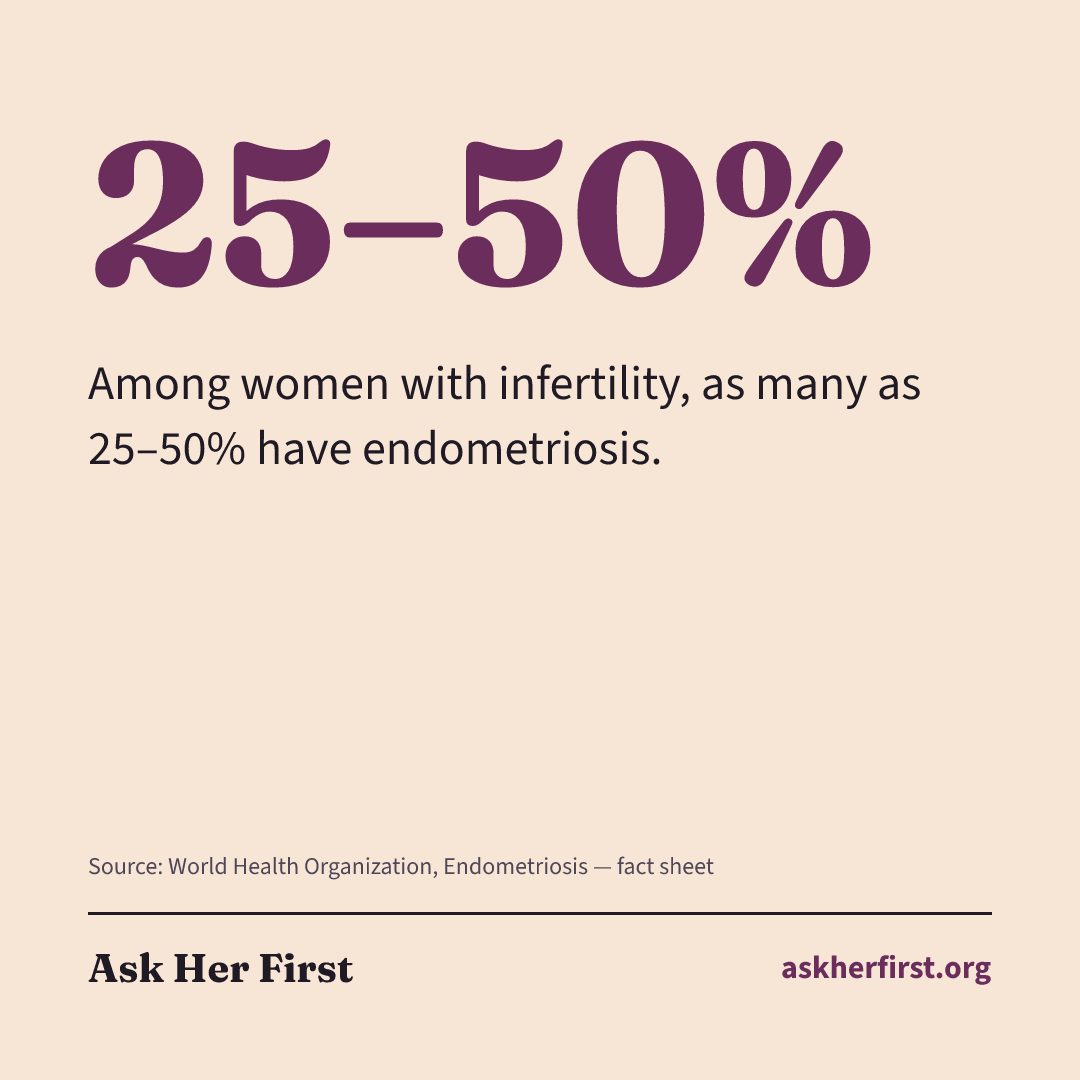
Endometriosis is linked with infertility worldwide.5 Among women with infertility, as many as 25–50% have endometriosis.5 In severe cases, scar tissue can block the fallopian tubes, and in milder cases, inflammation may affect the sperm or egg.104 Fertility treatments such as ovulation induction, intrauterine insemination (IUI), or in vitro fertilization (IVF) may be recommended.5
WHO says endometriosis can affect mental health, including depression and anxiety.5 Severe pain, heavy bleeding, fatigue, infertility, and social isolation can greatly reduce quality of life, and some people miss work or school.5 Treating period pain as normal, and the stigma around it, harms the mental health and well-being of people with endometriosis.5
If you are struggling, you do not have to wait for a diagnosis to ask for help.
What we don’t know yet
- The cause. No one knows yet what causes endometriosis, and there is no known way to prevent it.5
- A simple test. WHO names the need for noninvasive diagnostic methods, and for medical treatments that do not prevent pregnancy, among the many knowledge gaps.5
- Why pain varies. Researchers know pain is a main symptom but do not know exactly what causes it.102
- Better delay data. The 2024 review calls for a standard definition of diagnostic delay and more research across diverse populations and non-Western countries.105
- Access to care. WHO notes that many low- and middle-income countries lack the teams and equipment needed for early diagnosis and effective treatment.5
Questions to ask your doctor
- Could my symptoms be endometriosis? What else could cause them?
- Should I have a transvaginal ultrasound or MRI? What can and can’t they show?
- Can I start treatment before I have a confirmed diagnosis?
- Would surgery help me, and would a surgeon who specializes in endometriosis be a good option?
- Which treatments fit if I want to get pregnant now or in the future?
- What side effects should I watch for, and what happens if my symptoms come back?
- Can you refer me to pain management, physiotherapy, or mental health support?
This article summarizes published research and official health information. It has not been reviewed by a clinician and is not medical advice. How we source.