Hundreds of women in the U.S. die each year from causes related to pregnancy.108 State review committees find that most of those deaths could have been prevented.14 The risk doesn’t end at delivery: pregnancy-related deaths can happen up to a year after pregnancy ends.109 CDC’s Hear Her campaign shares what it calls potentially life-saving messages about urgent maternal warning signs.112
What the numbers measure
Two kinds of counts show up in U.S. data, and they measure different things:
- Maternal deaths (from national death certificate data) are deaths during pregnancy or within 42 days of its end, from any cause related to or made worse by the pregnancy or its care, but not from accidents or incidental causes.108
- Pregnancy-related deaths (from state maternal mortality review committees) are deaths during pregnancy or within one year of its end from a pregnancy complication, a chain of events started by the pregnancy, or an unrelated condition made worse by pregnancy.109
Review committees are teams of experts in each state that look at medical records, social service records, and other information to understand each death and recommend ways to prevent similar ones.14 The systems use different time windows and methods, and U.S. data sources often produce different estimates of rates and trends.110
The U.S. maternal mortality rate
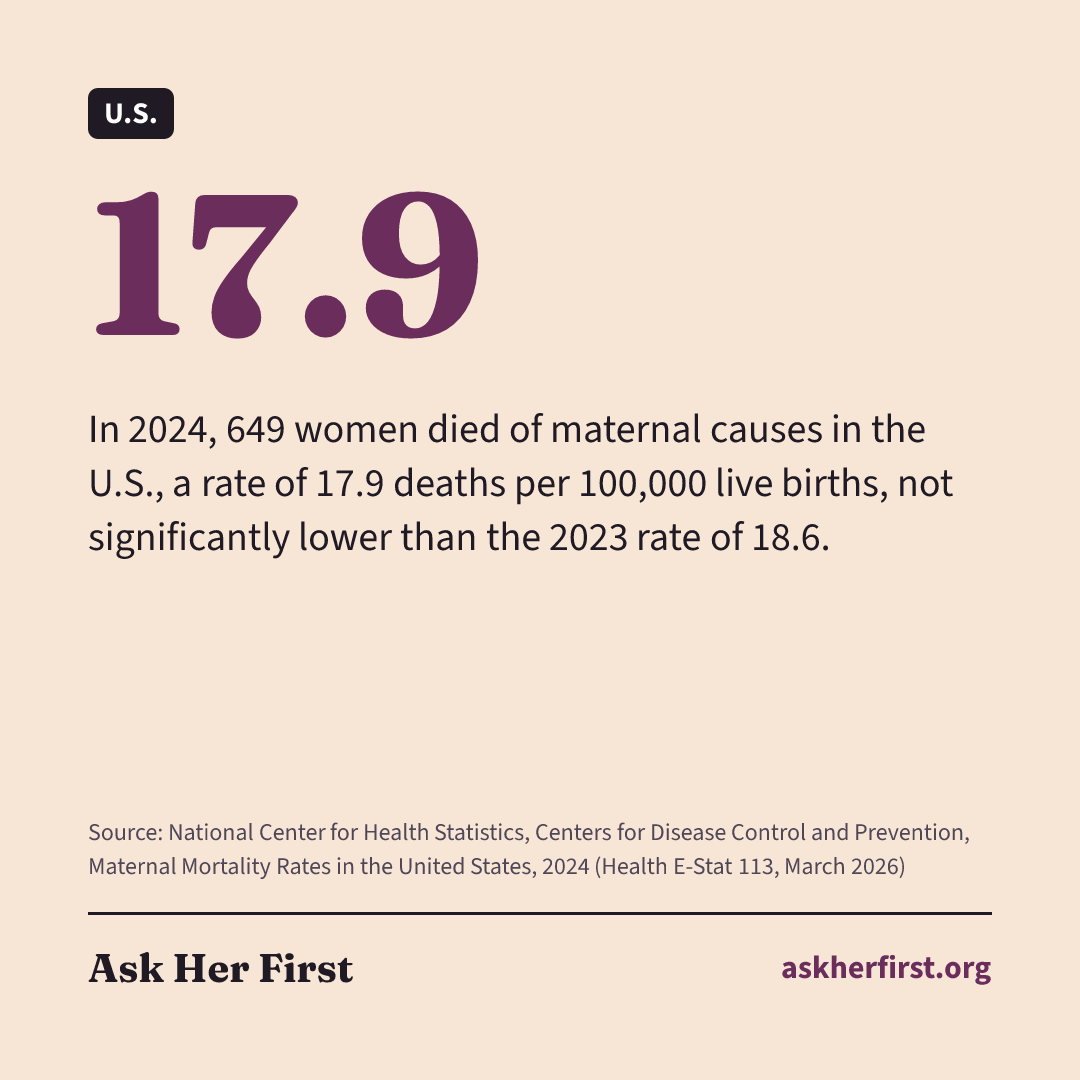
In 2024, 649 women died of maternal causes in the U.S., a rate of 17.9 deaths per 100,000 live births, not significantly lower than the 2023 rate of 18.6.108 The rate has moved a lot in recent years. The U.S. maternal mortality rate rose from 17.4 deaths per 100,000 live births in 2018 to a peak of 32.9 in 2021, then fell to 22.3 in 2022, 18.6 in 2023, and 17.9 in 2024.108
The National Center for Health Statistics notes that these rates change from year to year partly because the numbers are relatively small, and possibly because maternal deaths are not always recorded accurately on death certificates.108
For global context, the World Health Organization reports that most maternal deaths worldwide happen in low- and lower-middle-income countries, and that most could have been prevented.4
Who is most at risk
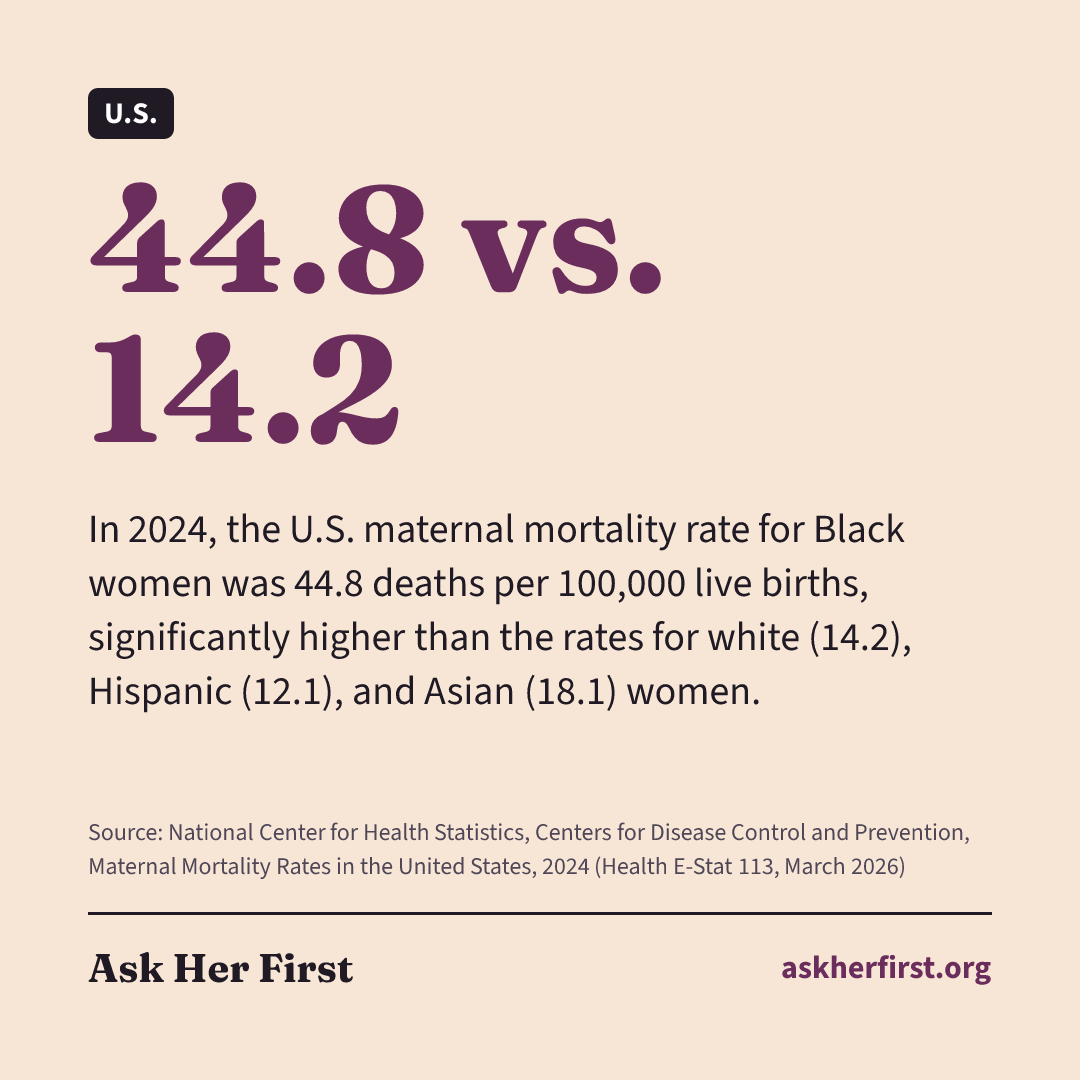
Race. The gap between Black women and other groups is large and persistent. In 2024, the U.S. maternal mortality rate for Black women was 44.8 deaths per 100,000 live births, significantly higher than the rates for white (14.2), Hispanic (12.1), and Asian (18.1) women.108 Black women had the highest rate among the groups reported in every year from 2018 to 2024.108
National vital statistics don’t publish reliable yearly rates for some smaller groups.108 A 2025 study that pooled five years of data and counted deaths up to a year after pregnancy filled in part of that picture. From 2018 to 2022, American Indian and Alaska Native women had the highest U.S. pregnancy-related death rate (106.3 deaths per 100,000 live births), followed by Black women (76.9), in a study that counted deaths up to 1 year after pregnancy.110
Age. In 2024, the U.S. maternal mortality rate for women 40 and older was 62.3 deaths per 100,000 live births, five times the rate for women younger than 25 (13.7).108
Where you live. From 2018 to 2022, U.S. pregnancy-related death rates ranged from 18.5 to 59.7 deaths per 100,000 live births depending on the state.110
Discrimination. Since May 2020, review committees have been able to record whether discrimination contributed to a death, not just whether the woman was exposed to it.109 CDC gives an example: dismissing abdominal pain described by a woman with a history of substance use disorder, which delayed diagnosis and care for a ruptured ectopic pregnancy.109 Review committees found that discrimination contributed to 15.6% of U.S. pregnancy-related deaths in 2021 and probably contributed to another 17.2%.14,109
Most of these deaths are preventable
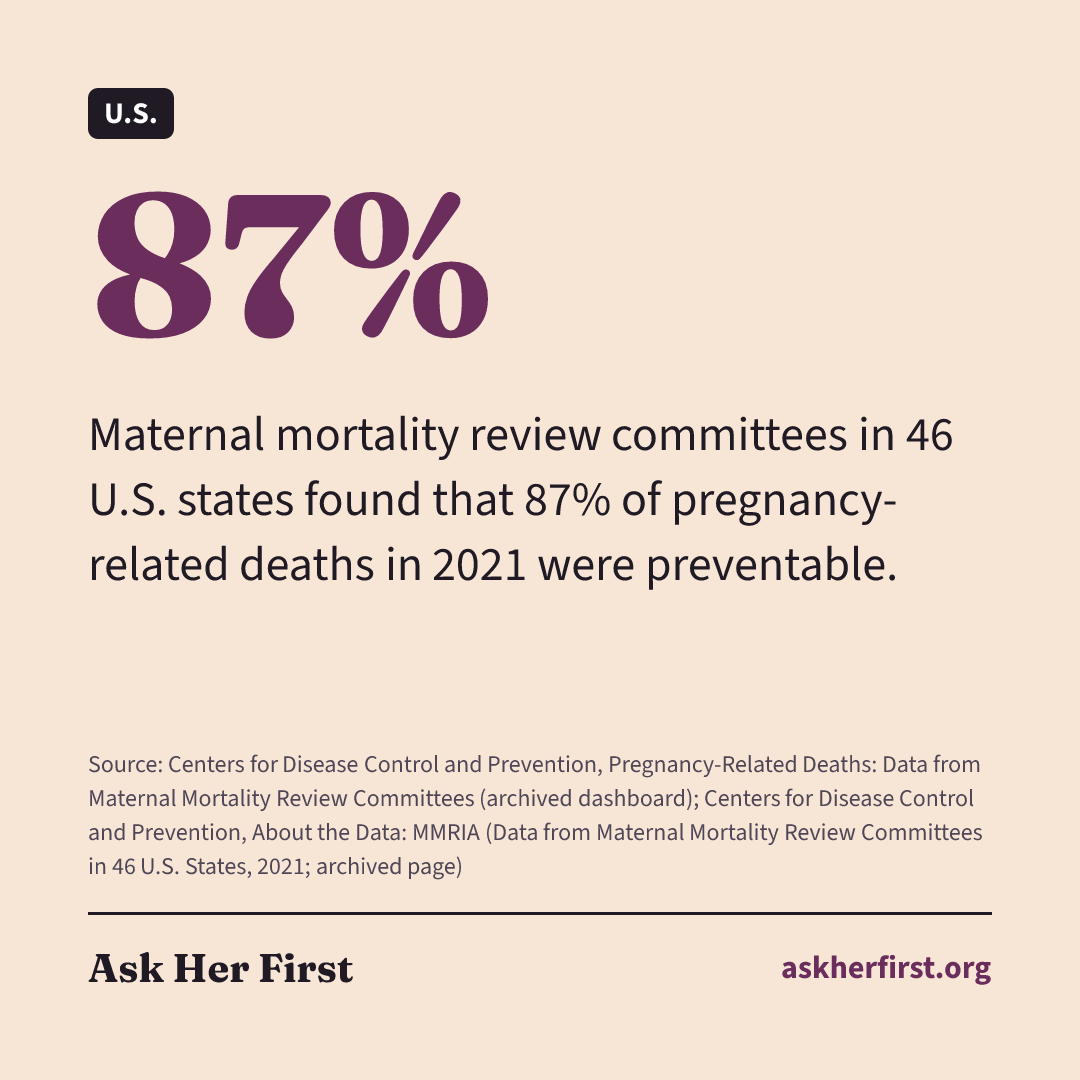
Maternal mortality review committees in 46 U.S. states found that 87% of pregnancy-related deaths in 2021 were preventable.14,109 A death counts as preventable if the committee finds there was at least some chance it could have been averted by one or more reasonable changes involving the patient, community, health care provider, facility, or health system.109
What causes them
In the 2021 review committee data, infection (including COVID-19) was the most common underlying cause of pregnancy-related deaths.14 U.S.Mental health conditions, including suicide and overdose related to substance use disorder, caused 22.5% of pregnancy-related deaths in 2021, second only to infection (including COVID-19).14 Among those mental health deaths in 2021, unintentional or undetermined overdose and poisoning, and suicide, were the most common ways people died.14 Other leading causes that year included heart and blood vessel conditions, severe bleeding (hemorrhage), and blood clots or other embolisms.14
Causes shift with time after birth. The 2025 study found heart and blood vessel disease was the leading cause of pregnancy-related deaths overall from 2018 to 2022, while cancer, mental and behavioral disorders, and drug- and alcohol-related deaths were important contributors to deaths more than 42 days after pregnancy.110
The year after birth matters
Risk continues for months after birth. Of U.S. pregnancy-related deaths reviewed for 2021, 19.5% happened during pregnancy, 9.1% on the day of delivery, 14.1% 1 to 6 days after, 29.2% 7 to 42 days after, and 28.1% from 43 days to 1 year after.14
The American College of Obstetricians and Gynecologists (ACOG) recommends that postpartum care be an ongoing process rather than a single visit, with contact with an obstetric care provider within the first 3 weeks after birth and a full postpartum visit no later than 12 weeks after birth.115 ACOG says that visit should cover mood and emotional well-being, physical recovery, sleep, infant feeding, birth spacing and contraception, and management of chronic conditions.115
Getting to care
Access to maternity care varies widely across the country, especially in rural and under-resourced communities, according to March of Dimes.114
- More than half of rural U.S. counties did not have a hospital providing obstetric services in 2018, and the number of rural hospitals offering these services declined from 2004 through 2018.113 Studies reviewed by the GAO found closures were focused in rural counties that were sparsely populated, had a majority of Black or African American residents, and were considered low income.113
- Medicaid covered 50% of rural U.S. births in 2018, compared with 43% of births nationwide.113 The GAO reported that Medicaid rates set by states do not cover the full cost of providing obstetric services.113
- The nonprofit March of Dimes tracks “maternity care deserts” in its own reports. About 1 in 3 U.S. counties (34.6%) are maternity care deserts, with no obstetric clinicians or birthing facilities, according to March of Dimes. They are home to 2.4 million women of reproductive age and 149,000 infants born each year.114 Nearly 58% of rural U.S. counties lack obstetric clinicians, compared with about 19% of urban counties, according to March of Dimes.114 At least 96 hospital labor and delivery units closed across 35 U.S. states between 2024 and early 2026, based on public reports counted by March of Dimes.114
Urgent maternal warning signs
CDC’s Hear Her campaign shares urgent warning signs to watch for during pregnancy and in the year after delivery.111 CDC says to get medical care right away if you have any of these:111
- Headache that won’t go away or gets worse over time
- Dizziness or fainting
- Changes in your vision
- Fever of 100.4°F or higher
- Extreme swelling of your hands or face
- Thoughts about harming yourself or your baby
- Trouble breathing
- Chest pain or fast-beating heart
- Severe nausea and throwing up
- Severe belly pain that doesn’t go away
- Baby’s movement stopping or slowing during pregnancy
- Vaginal bleeding or fluid leaking during pregnancy
- Vaginal bleeding or discharge after pregnancy
- Severe swelling, redness, or pain of your leg or arm
- Overwhelming tiredness
When you get care, CDC advises telling the health care provider if you are pregnant or were pregnant within the last year.111 If you feel something just isn’t right, or you aren’t sure whether it’s serious, CDC encourages you to talk with your provider.111 In an emergency, call 911. See CDC’s full list of urgent maternal warning signs.
What we don’t know yet
The review committee figures on preventability, causes, and timing here are for 2021, the most recent year we could verify in CDC’s published dashboard data, and they cover only the 46 participating states.14,109 Researchers note that different U.S. data systems often produce different estimates of rates and trends.110 Death certificates may misclassify race and ethnicity, and questions about pregnancy timing on death certificates can lead to some early postpartum deaths being undercounted and some later ones overcounted.110 The March of Dimes figures come from an advocacy organization’s own analysis rather than a government agency.
Questions to ask your doctor
- Do I have any conditions, like high blood pressure, diabetes, heart problems, or a history of depression or anxiety, that raise my risk during or after pregnancy? What’s the plan for managing them?
- Which warning signs should I watch for, and who should I call, day or night, if I notice one?
- When will I be seen after I give birth? Can I be contacted within the first 3 weeks?
- How will you check on my mood and mental health during pregnancy and after birth?
- If I need to go to an emergency room in the year after birth, what should I tell them?
- How far is the nearest hospital with labor and delivery services, and what’s the plan if I can’t get there quickly?
- Who will be responsible for my ongoing care after the postpartum period ends?
This article summarizes published research and official health information. It has not been reviewed by a clinician and is not medical advice. How we source.