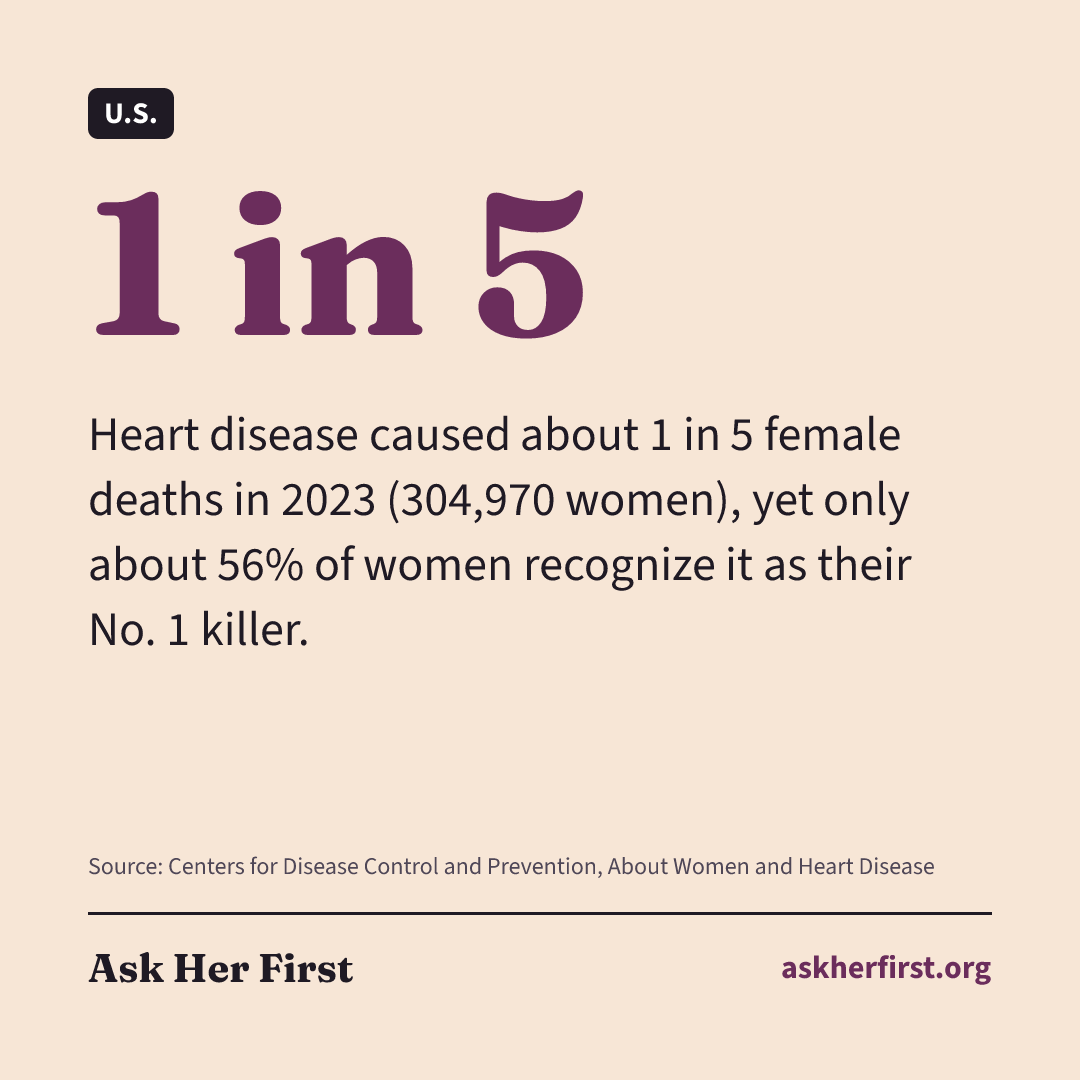
Heart disease is the leading cause of death for women in the United States.6 U.S.Heart disease caused about 1 in 5 female deaths in 2023 (304,970 women), yet only about 56% of women recognize it as their No. 1 killer.6 The causes, risk factors, and symptoms of a heart attack can be different in women compared with men, and many women may not recognize their symptoms as a heart attack.281 Acting fast can limit damage to the heart and save a life.280
Symptoms to know
A heart attack happens when part of the heart muscle doesn’t get enough blood, and the longer it goes without treatment to restore blood flow, the greater the damage.279 CDC lists these major symptoms:279
- Chest pain or discomfort, usually in the center or left side of the chest, that lasts more than a few minutes or goes away and comes back. It can feel like uncomfortable pressure, squeezing, fullness, or pain.
- Feeling weak, light-headed, or faint, sometimes with a cold sweat.
- Pain or discomfort in the jaw, neck, or back.
- Pain or discomfort in one or both arms or shoulders.
- Shortness of breath, which can come with chest discomfort or before it.
Other symptoms can include unusual or unexplained tiredness and nausea or vomiting, and CDC says women are more likely to have these other symptoms.279 NHLBI says women are more likely than men to have pain in the shoulder, back, or arm; shortness of breath; unusual tiredness and weakness; upset stomach; and anxiety, with or without chest pain.281 CDC’s list of heart attack signs in women also includes indigestion, heartburn, extreme fatigue, and dizziness.6
Symptoms can start slowly, can be mild or sudden, and may come and go over several hours.280 Some heart attacks cause very mild symptoms or none at all, and if you’ve had one before, the next one may feel different.280
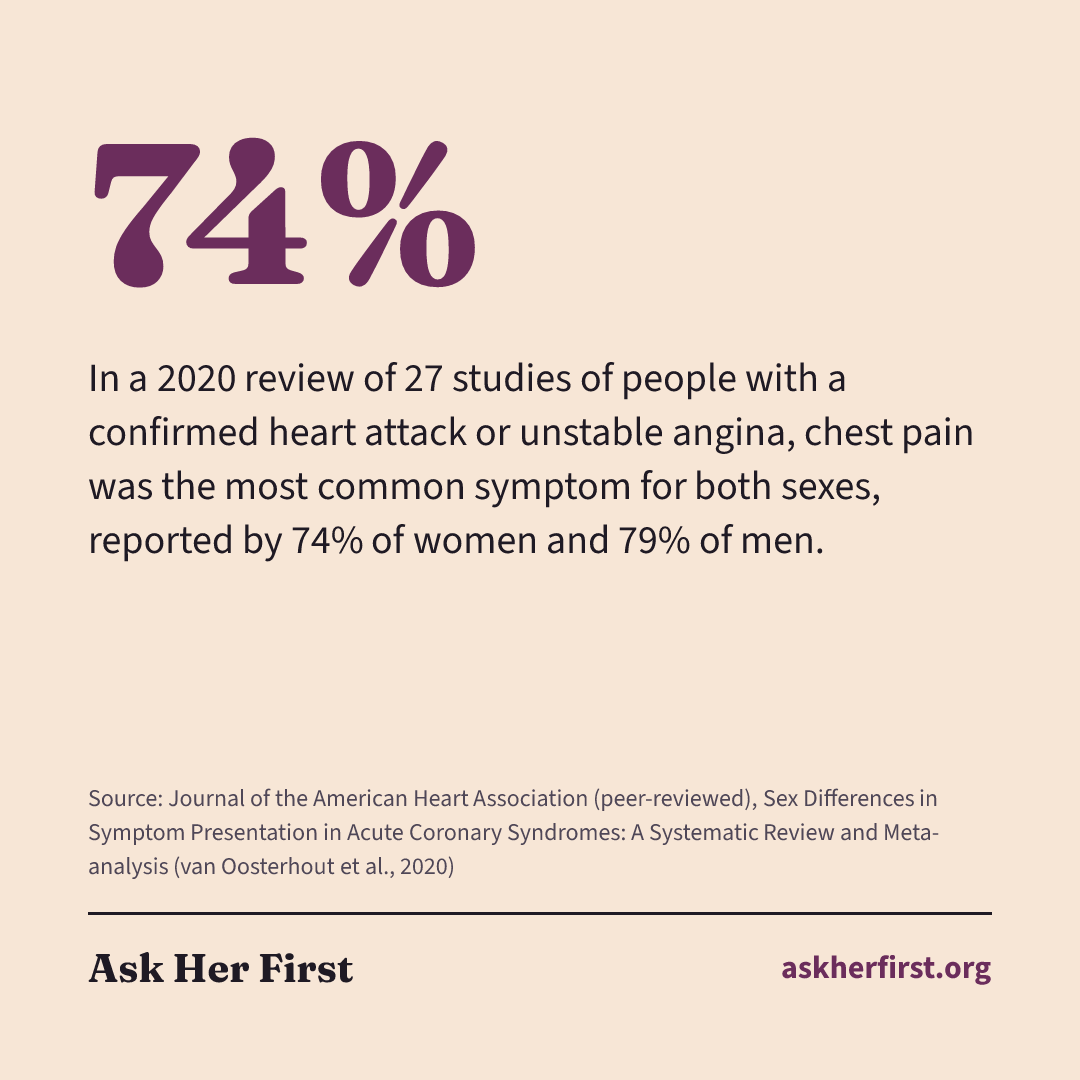
What the research shows. Chest pain is still the most common symptom for women.285 In a 2020 review of 27 studies of people with a confirmed heart attack or unstable angina, chest pain was the most common symptom for both sexes, reported by 74% of women and 79% of men.285 In a 2020 review of 27 studies of people with a heart attack or unstable angina, women were more likely than men to have shortness of breath (48% vs. 40%) and nausea or vomiting (39% vs. 28%).285 The researchers found considerable overlap between women’s and men’s symptoms and concluded that symptoms should no longer be labeled “atypical” or “typical.”285
What to do: call 911
If you notice the symptoms of a heart attack in yourself or someone else, CDC says to call 911 immediately.279 NHLBI says to call even if you’re not sure it’s a heart attack.280
- Don’t drive yourself. NHLBI calls an ambulance the best and safest way to get to the hospital, and advises against driving yourself or having someone else drive you.280
- Care can start on the way. Emergency medical services (EMS) teams can start tests and lifesaving medicines right away, and people who arrive by ambulance often get faster treatment at the hospital.280
- The 911 operator can help. The operator or EMS team can give advice that can help prevent damage to your heart.280
If you’re pregnant or recently gave birth, the same advice applies: heart attacks are not common in pregnancy, but they can happen during pregnancy and soon after delivery, and NHLBI says to call 911 right away if you have symptoms.281 When you get care, CDC advises telling the provider if you are pregnant or were pregnant within the last year.111
Why women’s heart attacks get missed or delayed
NHLBI says women may not get emergency treatment right away if they downplay their symptoms and delay going to the hospital, or if the first tests done at the hospital don’t detect an early or atypical heart attack.281 Because of this, it says, women have a higher risk of serious health problems after a heart attack.281
Before the hospital. In a large U.S. study of younger heart attack patients, many women and men first blamed their symptoms on something other than the heart, most often indigestion or acid reflux, and women were more likely than men to think their symptoms were caused by stress or anxiety.286 In a U.S. study of adults aged 18 to 55 hospitalized for a heart attack, women took longer than men to get to the hospital after their symptoms began (a median of 3.2 hours vs. 2.4 hours).286 A 2010 systematic review found that most studies showed women arriving at the hospital later than men.287 A 2026 analysis that pooled 29 studies of 127,409 heart attack patients found that women had 17% higher odds than men of a prolonged delay before reaching the hospital, after adjusting for other factors.288
In the ambulance. In about 2.4 million U.S. emergency medical services calls for chest pain from 2010 to 2013, women were less likely than comparable men to receive aspirin (2.8 fewer per 100 calls) and to be taken to the hospital with lights and sirens.289 The researchers described these gaps as small to modest and called for more research.289
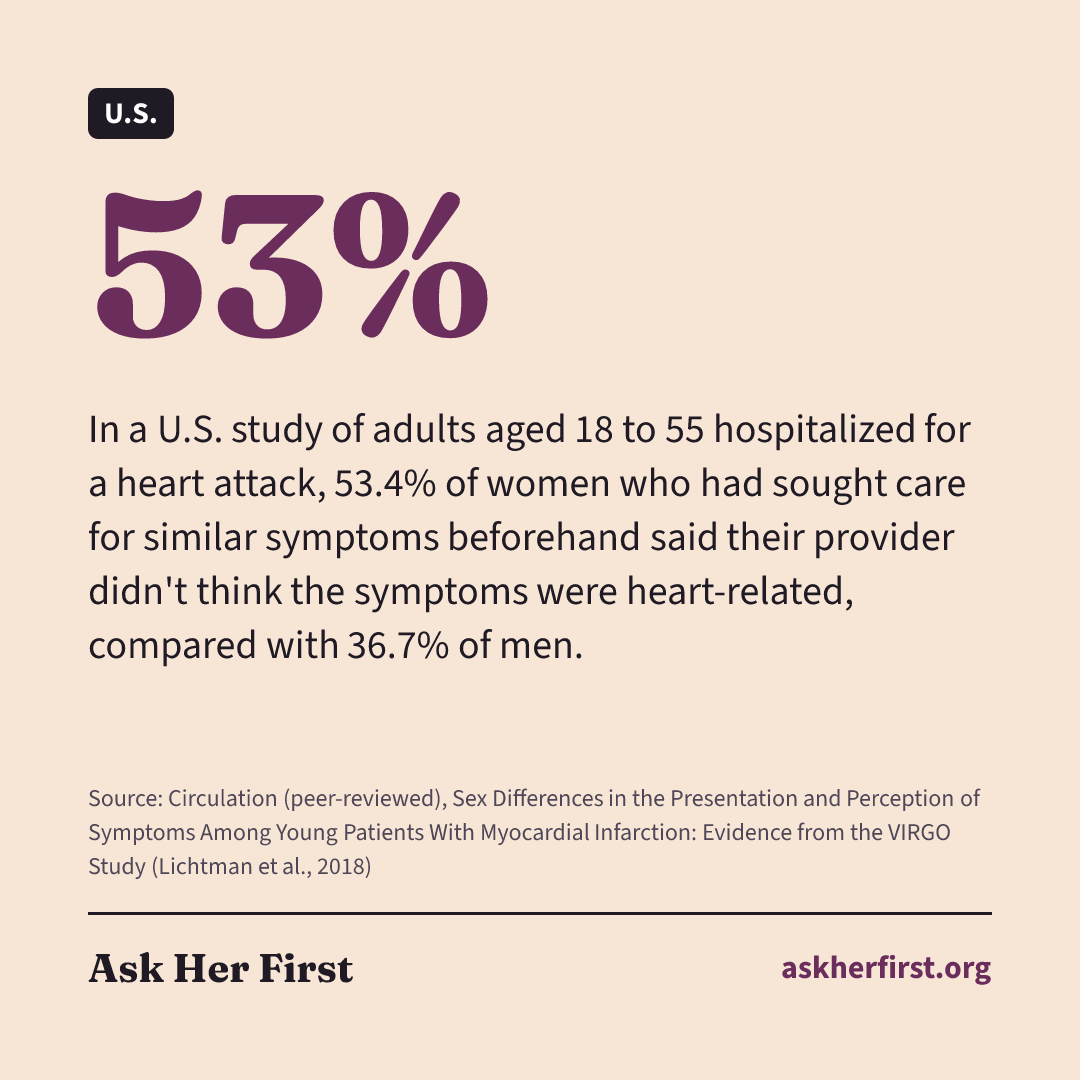
At the doctor’s office and the hospital. In a U.S. study of adults aged 18 to 55 hospitalized for a heart attack, 53.4% of women who had sought care for similar symptoms beforehand said their provider didn't think the symptoms were heart-related, compared with 36.7% of men.286 NHLBI says women who go to the hospital with heart symptoms may be more likely than men to wait longer for a first electrocardiogram (ECG), less likely to be cared for by a heart specialist in the hospital, and less likely to receive some treatments and medicines.283 It also says younger women are more likely than men to be misdiagnosed and sent home from the emergency department after cardiac events caused by undiagnosed and untreated microvascular heart disease.283
After diagnosis. In a study of four U.S. communities from 1995 to 2014, women aged 35 to 54 hospitalized for a heart attack were less likely than men their age to receive several guideline-recommended treatments, including cholesterol-lowering drugs and procedures to restore blood flow to the heart, though death rates a year later were similar.290 A 2026 American Heart Association (AHA) scientific statement on heart attacks and related conditions in premenopausal women says diagnostic delays, misclassification, and mistreatment appear to be more frequent in this group, and that younger women less often receive guideline-directed therapies afterward.291
Heart conditions that affect women more often
Women are more likely than men to have heart attacks that are not caused by coronary artery disease, which can make them harder to diagnose.281 The 2026 AHA statement says plaque buildup (atherosclerosis) accounts for most heart attacks and related acute coronary syndromes in premenopausal women, but a substantial number have other causes, including spontaneous coronary artery dissection, coronary artery spasm, and coronary embolism, a blood clot that travels to a heart artery.291,282
Spontaneous coronary artery dissection (SCAD) happens when a tear forms inside a heart artery; a blood clot can form at the tear, or the torn tissue itself can block the artery.282 NHLBI says it is more common in women under 50 and in pregnant women, and lists stress, extreme physical activity, and pregnancy as possible causes.282 Spontaneous coronary artery dissection (SCAD) may cause up to 35% of heart attacks in women aged 50 or younger, and it is the most common cause of heart attacks linked to pregnancy (43%).292 SCAD most often occurs in people with few or no traditional heart disease risk factors, and it can come back.292 The AHA says SCAD is still misdiagnosed, underdiagnosed, and managed like a typical plaque-related heart attack, which may harm patients, partly because clinicians have a low suspicion of heart attack in young women, even those with classic symptoms.292
MINOCA stands for myocardial infarction (heart attack) in the absence of obstructive coronary artery disease: a heart attack caused by other heart and blood vessel conditions rather than by blockages from plaque buildup.282 It is more common in women, younger people, and Black, Hispanic/Latino, and Asian people.282 About 5% to 6% of people with a heart attack who are referred for coronary angiography have MINOCA, meaning no obstructive blockages are found in their heart arteries.293 Because many conditions can cause it, the AHA says it’s important to find the correct cause so that specific treatment can be given when possible.293
In coronary microvascular disease, blood flow into the tiny arteries inside the heart muscle is blocked because the inner walls of these small vessels are damaged; NHLBI says it is more common in women.284 It can be harder to identify, which can delay treatment.283 Along with coronary artery spasm, it is one cause of INOCA (ischemia with no obstructive coronary arteries): reduced blood flow to the heart caused by problems with how its blood vessels work rather than by blockages.294 Up to 70% of patients who have an invasive coronary angiogram don't have obstructive coronary artery disease; this is more common in women than in men, and a large share of these patients have INOCA as the cause of their symptoms.294 INOCA symptoms are often misdiagnosed as non-cardiac, and the condition is not benign: compared with people without symptoms, it is linked with more cardiovascular events, repeat hospital stays, and worse quality of life.294
Takotsubo syndrome, also called broken heart syndrome or stress cardiomyopathy, causes a temporary problem with how the wall of the heart’s left ventricle moves and shares features with a heart attack, including similar symptoms at first: chest pain, shortness of breath, or fainting.296 In an international registry of 1,750 people with takotsubo (broken heart) syndrome, 89.8% were women, and the average patient age was 66.8.295 It often follows emotional or physical stress, such as grief or a medical illness, but a trigger can’t always be found.296 It was once thought to be harmless, but it can cause serious complications, including death, and in one large registry, rates of shock and death in the hospital were similar to those of comparable patients with acute coronary syndrome.296,295
Risk factors that are specific to women
Some risk factors for coronary heart disease are unique to women or more common in women than in men.283 Others hit women harder: NHLBI says smoking, high blood pressure, high cholesterol, high blood sugar, obesity, and stress raise the risk of a heart attack more in women than in men.281
- Pregnancy complications. CDC lists gestational diabetes, preterm delivery, having a baby with low or high birth weight, and high blood pressure disorders of pregnancy among the reproductive factors that raise women’s heart disease risk.6 The AHA says these and other adverse pregnancy outcomes raise a woman’s risk of later coronary heart disease, stroke, and heart failure, and should be recognized when her heart disease risk is evaluated.248 Read more in After preeclampsia or gestational diabetes.
- Menopause. Women’s risk of heart disease rises notably after menopause, and they typically develop coronary heart disease several years later than men.297 The AHA calls the menopause transition a time of accelerating risk and midlife a critical window for early prevention.297 Early menopause, before age 40, is on both CDC’s and NHLBI’s lists of risk factors.6,283
- Autoimmune and inflammatory diseases. NHLBI lists them among conditions that are more common in women or raise women’s risk of coronary heart disease more than men’s.283
The 2019 prevention guideline from the American College of Cardiology and the AHA lists premature menopause (before age 40), pregnancy conditions such as preeclampsia, and chronic inflammatory conditions such as psoriasis, rheumatoid arthritis, lupus, and HIV/AIDS as “risk-enhancing factors” for clinicians and patients to discuss.298 Still, NHLBI notes that health care providers may not understand women’s unique risk factors, and that commonly used risk scores may not accurately predict risk in women.283
What we don’t know yet
- Younger women are understudied. The 2026 AHA statement says specific data and evidence for diagnosing and managing heart attacks in premenopausal women are lacking, and that better representation in research is critical.291
- Women in heart research. Women have historically been underrepresented in cardiovascular trials.228 Women made up 38.2% of the 862,652 adults in 740 cardiovascular clinical trials completed between 2010 and 2017.228 See Why women were left out of medical research.
- Hard-to-count conditions. The true number of SCAD cases is uncertain because it is underdiagnosed, and takotsubo’s prevalence is probably underestimated.292,296
- Why delays happen. Researchers still debate how much of women’s longer delays comes from sex itself rather than older age and other health conditions.288
- Outcomes. Studies differ: the 2026 AHA statement says younger women with these conditions have been shown to have worse outcomes than young men, while the four-community U.S. study found similar death rates a year later.291,290
- Older data. The U.S. studies of younger patients and of ambulance care used data collected from 2008 to 2012 and from 2010 to 2013.286,289
Questions to ask your doctor
- Given my history, including any pregnancy complications, early menopause, or autoimmune disease, what is my risk of heart disease?
- Which symptoms should make me call 911, even if I’m not sure?
- Are my blood pressure, cholesterol, and blood sugar where they should be?
- My tests didn’t show blocked arteries, but I still have chest pain. Could it be coronary microvascular disease, coronary artery spasm, or INOCA? How would we find out?
- If I’ve had a heart attack, what caused it: plaque, SCAD, MINOCA, takotsubo, or something else? How does that change my treatment?
- Should I be referred to cardiac rehabilitation?
This article summarizes published research and official health information. It has not been reviewed by a clinician and is not medical advice. How we source.