From 1977 to 1993, a U.S. guideline kept most women who could become pregnant out of the earliest stages of drug testing.37 Rules have changed a lot since then, but researchers are still finding places where women’s bodies were not studied closely enough. This article walks through what happened, what it cost, and what still needs work.
Why women were kept out
The story starts with two drugs given to pregnant women. In 1961, thalidomide, which had been used to treat nausea and vomiting in pregnancy, was identified as the first drug known to cause birth defects in humans.222 Diethylstilbestrol (DES), a synthetic estrogen, was prescribed to pregnant women between 1940 and 1971 to prevent miscarriage and other complications.223 In 1971, researchers linked DES exposure in the womb to a rare cancer of the cervix and vagina in young women, and the FDA soon told health care providers not to prescribe it to pregnant women.223
A review of this history describes how the DES findings “further enhanced the fear and suspicion generated by the thalidomide tragedy.”222 In 1977, the FDA issued a guideline recommending that most women of childbearing potential be excluded from the early phases of clinical trials, and drug companies widely adopted it.222,37
The goal was to protect a possible pregnancy. Under the guideline, most women who could become pregnant were kept out of Phase 1 and early Phase 2 trials, the earliest studies of a drug in people.41 The same review notes it took more than 10 years for the FDA to recognize the harm this policy did to women’s health.222
How the rules changed
NIH’s push to include women has its origins in the women’s health movement.38 After a 1985 report from the Public Health Service Task Force on Women’s Health, NIH adopted a policy in 1986 that urged researchers to include women in clinical research.38 But in 1990, the U.S. General Accounting Office found that this earlier policy had been applied inconsistently and was not well understood inside NIH or by researchers.38 That same year, NIH set up the Office of Research on Women’s Health, citing “an astonishing lack of knowledge” about conditions that are unique to or more common in women.39
The biggest changes came in 1993:
- The law changed. The NIH Revitalization Act, signed on June 10, 1993, directed NIH to make sure women and members of minority groups are included in the clinical research it funds.40 For clinical trials, it required that the trial be designed well enough to show whether the treatment affects women differently.40
- The FDA reversed course. On July 22, 1993, the FDA withdrew its restriction on women of childbearing potential joining early clinical trials.37 Its new guideline also set expectations that drug data be analyzed by sex and that researchers look for differences in how women’s bodies process drugs.37 The guideline came amid a growing consensus that women should be allowed to decide for themselves whether to join early trials.41
The problem was not always that women were missing entirely. A GAO study of drugs approved from 1988 through 1991 found that women were often a sizable share of the people tested, but trial data often were not analyzed to see whether women responded differently, and women mostly took part in the later phases of testing.224 In 1998, the FDA required drug makers to present safety and effectiveness data by sex, age, and race in their applications, noting that in many cases, data submitted to the agency still were not being analyzed consistently for these differences.224
What it cost
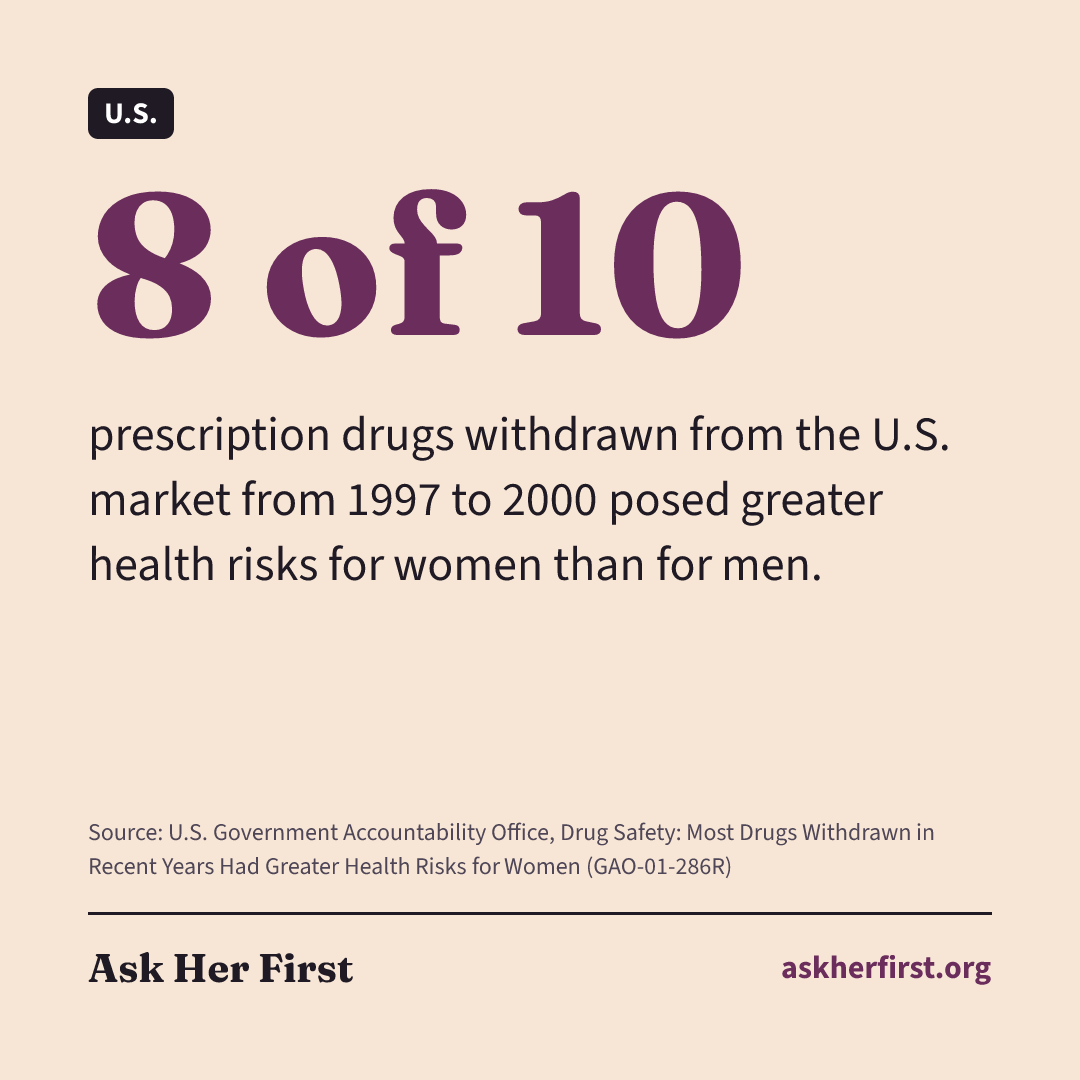
In 2001, the GAO looked at prescription drugs pulled from the U.S. market since January 1, 1997.21 8 of 10 prescription drugs withdrawn from the U.S. market from 1997 to 2000 posed greater health risks for women than for men.21 Four of those drugs may have caused more adverse events in women because they were prescribed more often to women; the other four had more adverse events in women even though both women and men used them widely.21
The sleep drug zolpidem (sold as Ambien and other brands) is one of the clearest examples. In 2013, the FDA announced that new data showed blood levels in some people could still be high enough the next morning to impair driving.42 Women appeared more at risk because their bodies clear zolpidem more slowly than men’s.42 In studies of a 10 mg dose of zolpidem reviewed by the FDA, about 15% of women and 3% of men still had blood levels high enough to impair driving about 8 hours after taking it.42 The FDA told manufacturers to lower the recommended starting dose for women from 10 mg to 5 mg for immediate-release products and from 12.5 mg to 6.25 mg for extended-release products.42
Heart disease prevention offers another lesson. Earlier trials showed that low-dose aspirin lowered the risk of a first heart attack in men, but there were few similar data in women.226 In a 10-year trial of 39,876 women aged 45 and older, low-dose aspirin lowered the risk of stroke but not of heart attack, unlike earlier trials in men, which had shown fewer first heart attacks.226 In that trial, aspirin did lower the risk of major heart and blood vessel events, ischemic stroke, and heart attack in women 65 and older.226 The point is not that one result applies to everyone; it’s that results in men could not simply be assumed for women.
Sex differences in how drugs work
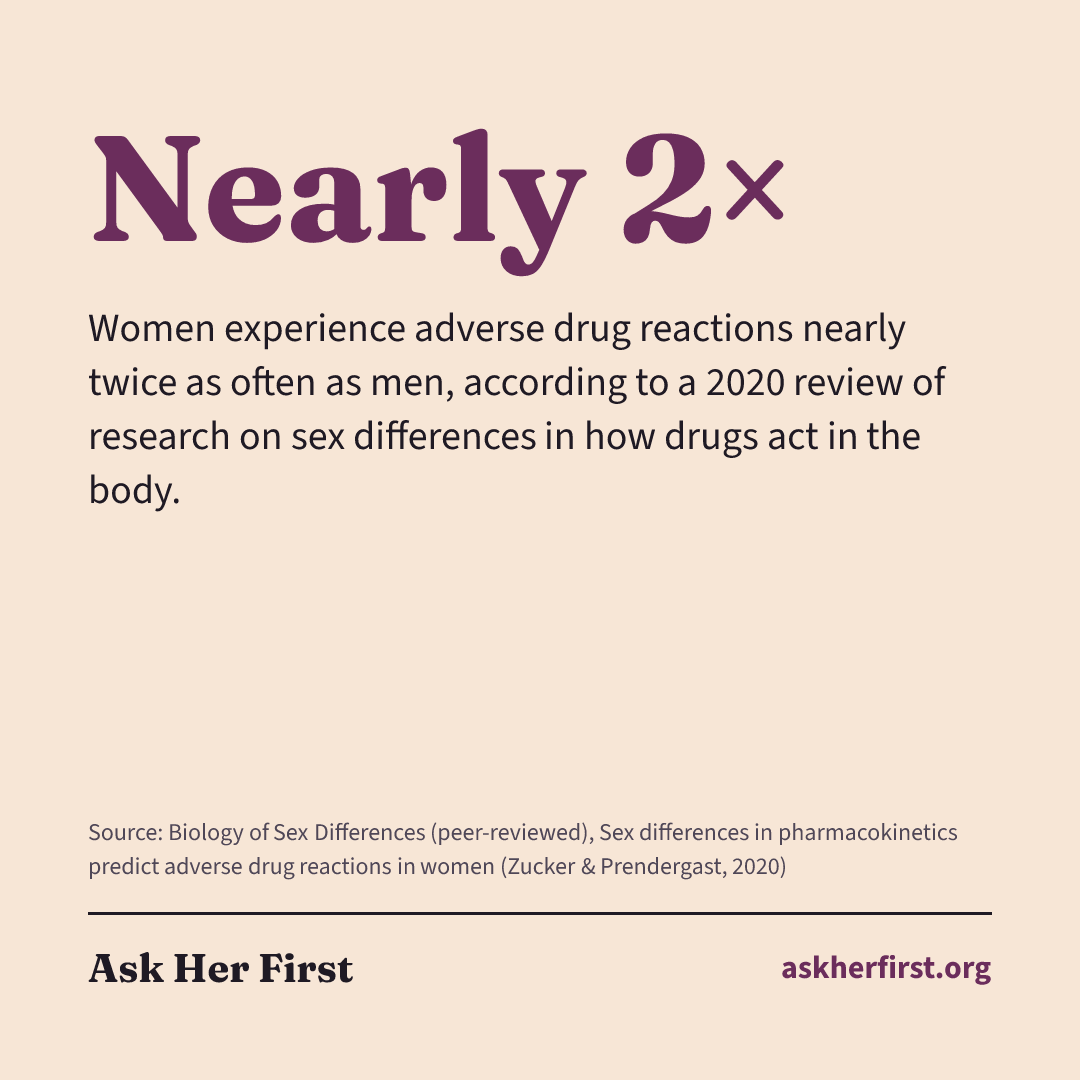
Women and men can process the same drug differently.225 Women experience adverse drug reactions nearly twice as often as men, according to a 2020 review of research on sex differences in how drugs act in the body.225 A 2020 review compared how drugs are absorbed, peak in the blood, and are cleared by sex. In a 2020 review of 86 FDA-approved drugs, 76 reached higher blood levels or cleared more slowly in women, and 96% of drugs with higher levels in women were linked to more side effects in women than in men.225 The authors reported that the difference was not explained by differences in body weight.225 They also found that sex-specific information on how drugs move through the body is publicly available for only a small fraction of drugs.225
The authors argue that giving women and men the same dose can lead to overmedicating women, and they recommend evidence-based dose reductions for women.225 That is the researchers’ recommendation, not a change you should make on your own. If you’re worried about side effects or dosing, talk with your doctor or pharmacist.
Where things stand now
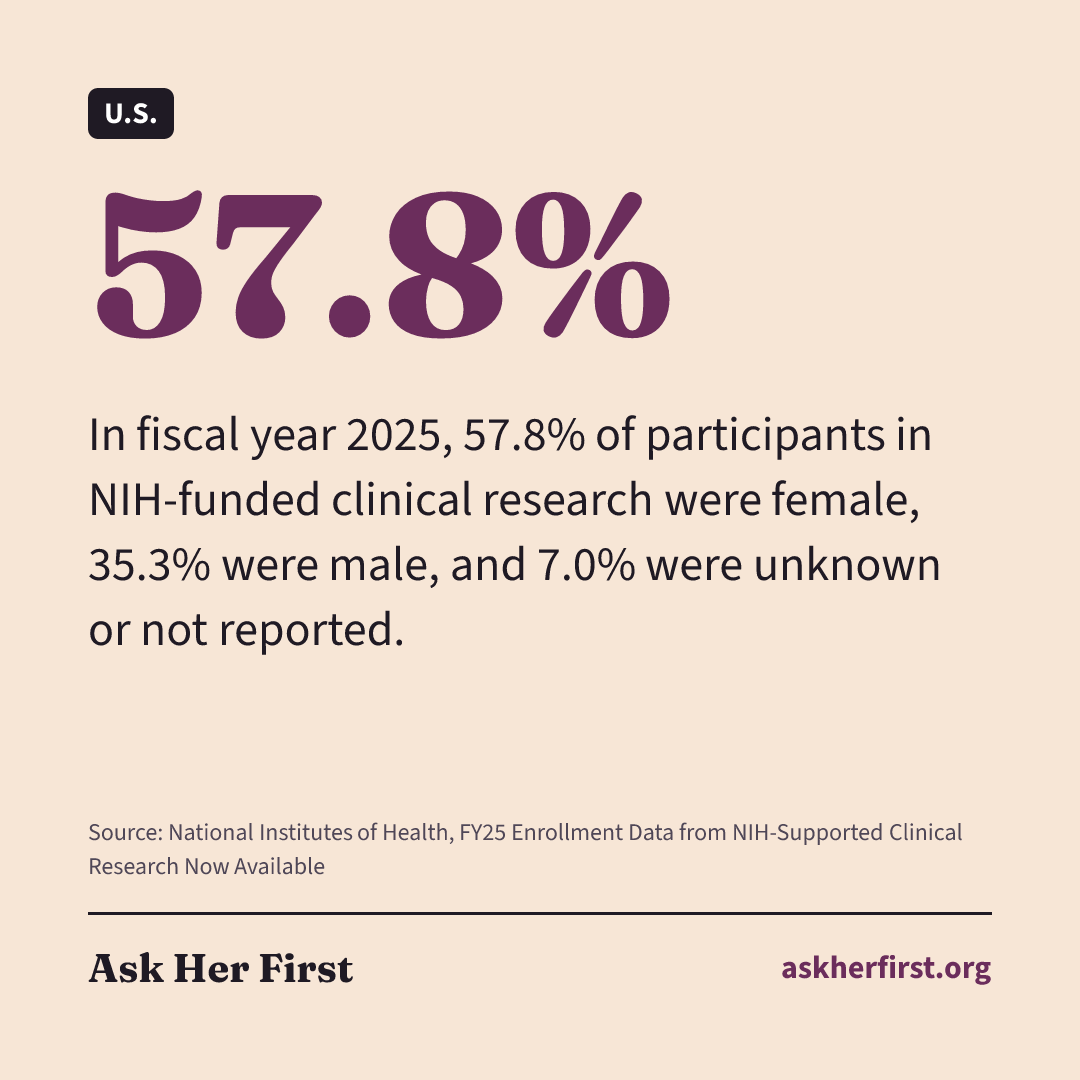
Women are now strongly represented in NIH-funded clinical research overall.233 U.S.In fiscal year 2025, 57.8% of participants in NIH-funded clinical research were female, 35.3% were male, and 7.0% were unknown or not reported.233 NIH policy also requires analyses by sex, race, and ethnicity for NIH-defined Phase 3 clinical trials, and applicable trials must report those results in ClinicalTrials.gov.233
Lab research has lagged behind. In 2015, NIH noted that basic and preclinical research has more often focused on male animals and cells, and that relying too much on males may hide important sex differences.43 Since applications due January 25, 2016, NIH expects sex as a biological variable to be built into the design, analysis, and reporting of studies in vertebrate animals and humans, and asks for strong justification for studying only one sex.43 For context, a 2011 review of animal studies found male bias in most of the biological fields it examined, most of all in neuroscience.230 In neuroscience studies of animals published in 2009, single-sex studies of males outnumbered single-sex studies of females 5.5 to 1.230
Gaps that remain
Analyzing results by sex. Including women is only half the job; the data also have to be analyzed. In a 2019 review of papers across nine biological fields, more studies included both sexes than a decade earlier, but in 8 of the 9 fields there was no change in the share of studies that analyzed data by sex.231 Most studies in that review gave no reason for studying one sex or for skipping sex-based analyses, and those that did often relied on misconceptions about female hormonal variability.231 In 2015, the GAO found that NIH did not keep, analyze, or report summary data on whether trials planned or carried out analyses of outcomes by sex, and did not routinely look at enrollment by the disease being studied.234
Heart disease trials. Cardiovascular disease is the leading cause of death among women worldwide, yet women have historically been underrepresented in cardiovascular trials.228 Women made up 38.2% of the 862,652 adults in 740 cardiovascular clinical trials completed between 2010 and 2017.228 That study found women’s representation was lower than their share of patients in trials for arrhythmia, coronary heart disease, acute coronary syndrome, and heart failure, though it improved in stroke and heart failure trials from 2013 to 2017.228 A separate FDA-led analysis looked at the trials used to approve heart drugs. U.S.In the trials behind 36 FDA approvals of heart and blood vessel drugs from 2005 to 2015, women were on average 46% of participants, but fewer than expected given their share of patients with heart failure, coronary artery disease, and heart attack.229 That analysis found little sign of clinically meaningful differences in how well the drugs worked or how safe they were for women compared with men.229
Other fields. Representation varies by specialty. In U.S. clinical trials from 2000 to 2020, women were most underrepresented compared with their share of the disease burden in cancer (43% of participants vs. 46% of burden), neurology (53% vs. 56%), immunology (46% vs. 49%), and kidney disease (42% vs. 45%).227 The same study found men were underrepresented in other fields, and its authors concluded that sex bias in clinical trials persists within medical fields.227
Pregnancy. Pregnant women are still commonly left out. Pregnancy and breastfeeding were the most frequent exclusion criteria in a review of new drugs approved from 2014 to 2017, so much of what is known about medication safety in pregnancy comes from observational data after drugs are on the market.222
Funding. One analysis looked at how NIH spreads money across diseases compared with how much illness each causes. U.S.In nearly three-quarters of the diseases that mainly affect one sex, a 2021 analysis found that NIH funding patterns favored men, relative to each disease's burden.232 The author concluded that NIH gives a disproportionate share of resources to diseases that mainly affect men.232
What we don’t know yet
Much of the research on sex differences in drug response looks back at published data, and information broken down by sex is missing for many drugs, so the full picture is unknown.225 Findings also differ by drug: one FDA-led review of heart drug trials found few meaningful differences between women and men, while the FDA found a clear difference for zolpidem.229,42 The funding analysis above comes from a single independent researcher.232 Several of the studies here are a few years old, and newer data may look different.
Questions to ask your doctor
- Was this medicine studied in women? Are there known differences in how it works or its side effects for women?
- Is the dose I’m taking the one recommended for women, or is there a lower dose I could start with?
- Could my age, weight, pregnancy, breastfeeding, or hormone use (like birth control or menopause treatment) change how this drug affects me?
- What side effects should I watch for, especially the next morning or when driving?
- If I’m pregnant or planning to be, what is known about this medicine’s safety, and where does that information come from?
- Are there clinical trials I could join that are looking for women like me?
This article summarizes published research and official health information. It has not been reviewed by a clinician and is not medical advice. How we source.