Body & health
Heart disease, endometriosis, maternal health, and the research gaps that shape how women are diagnosed and treated.
What the research shows
Global figures unless labeled U.S. Superscripts link to the full source list. Use "Save image" to share a stat.
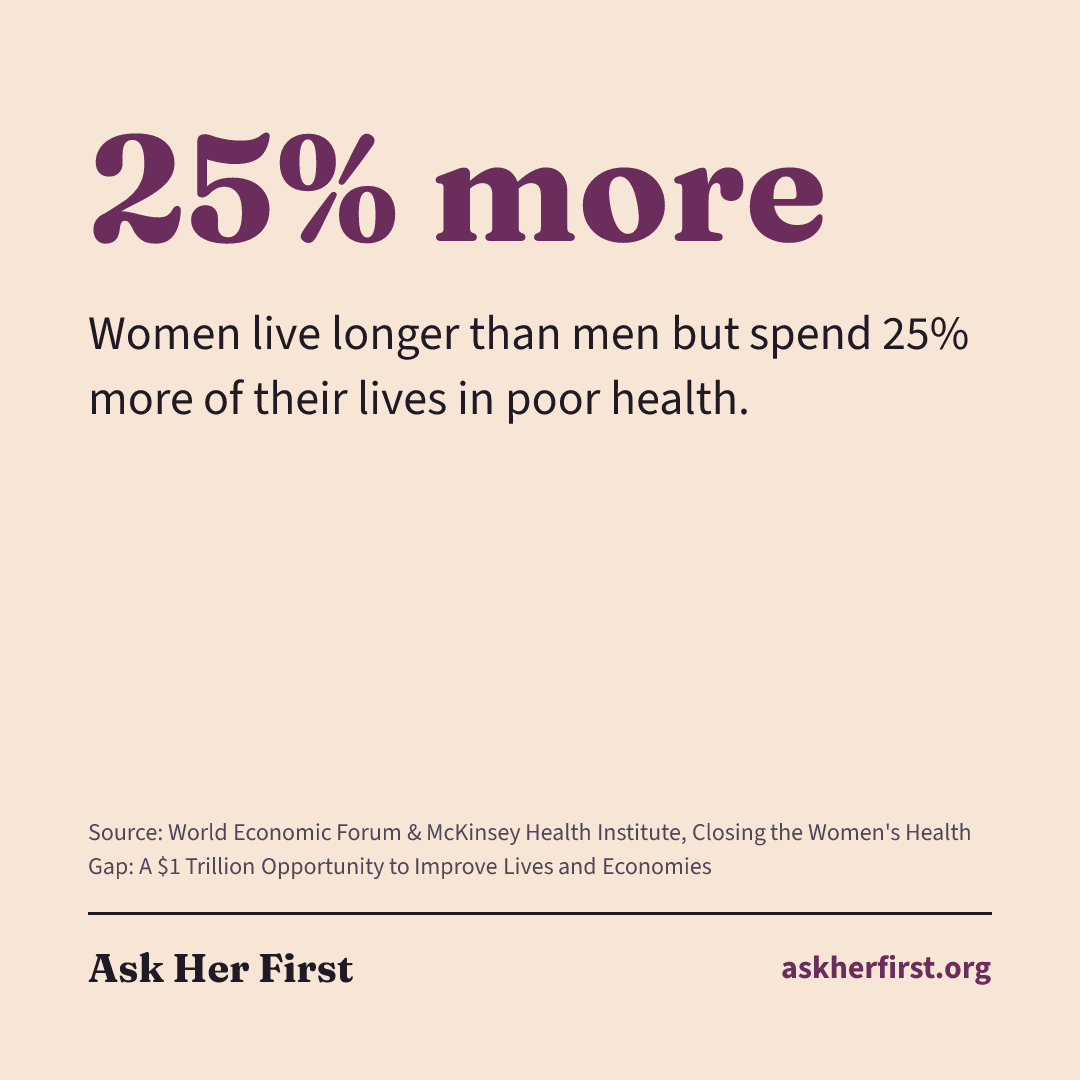
Women live longer than men but spend 25% more of their lives in poor health.
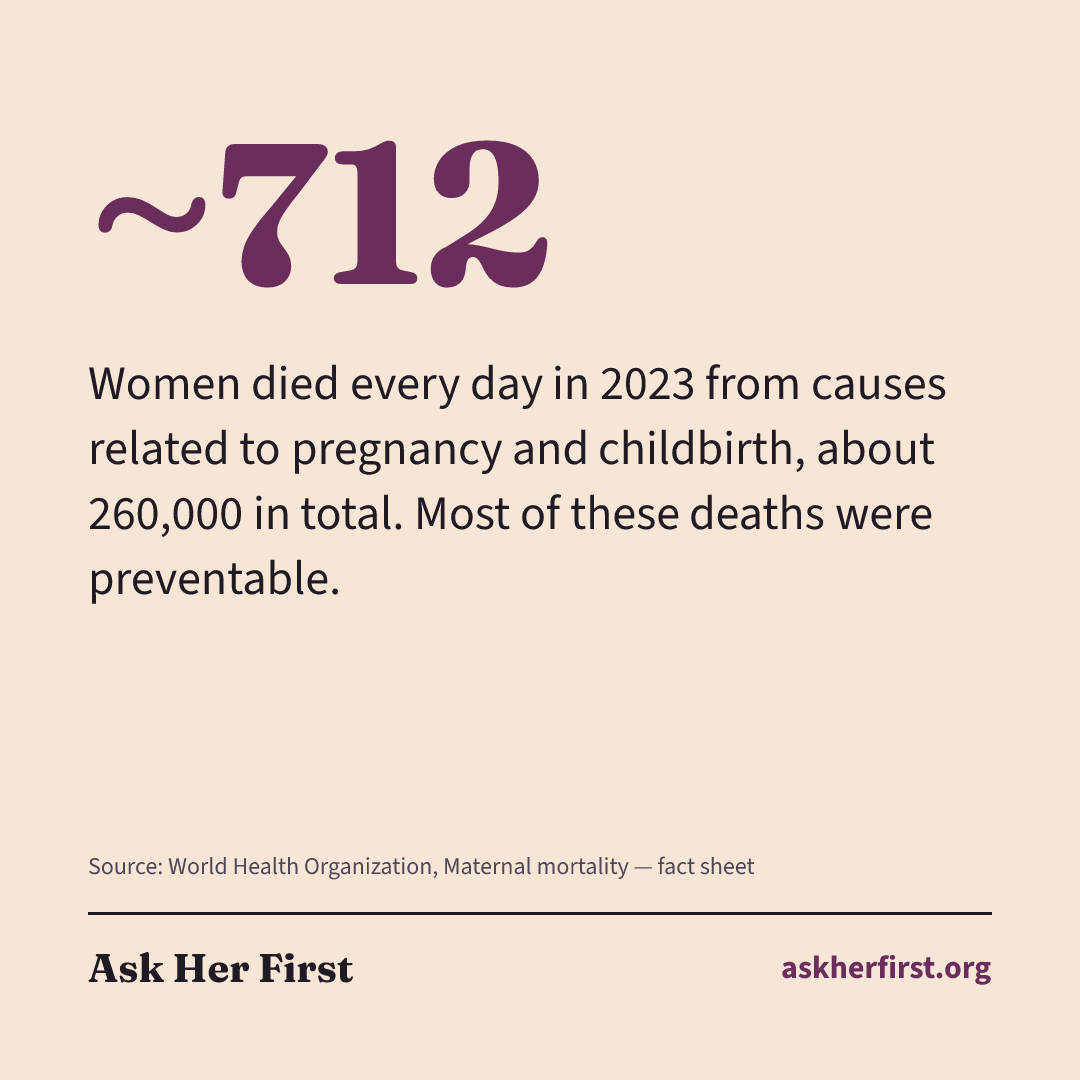
women died every day in 2023 from causes related to pregnancy and childbirth, about 260,000 in total. Most of these deaths were preventable.
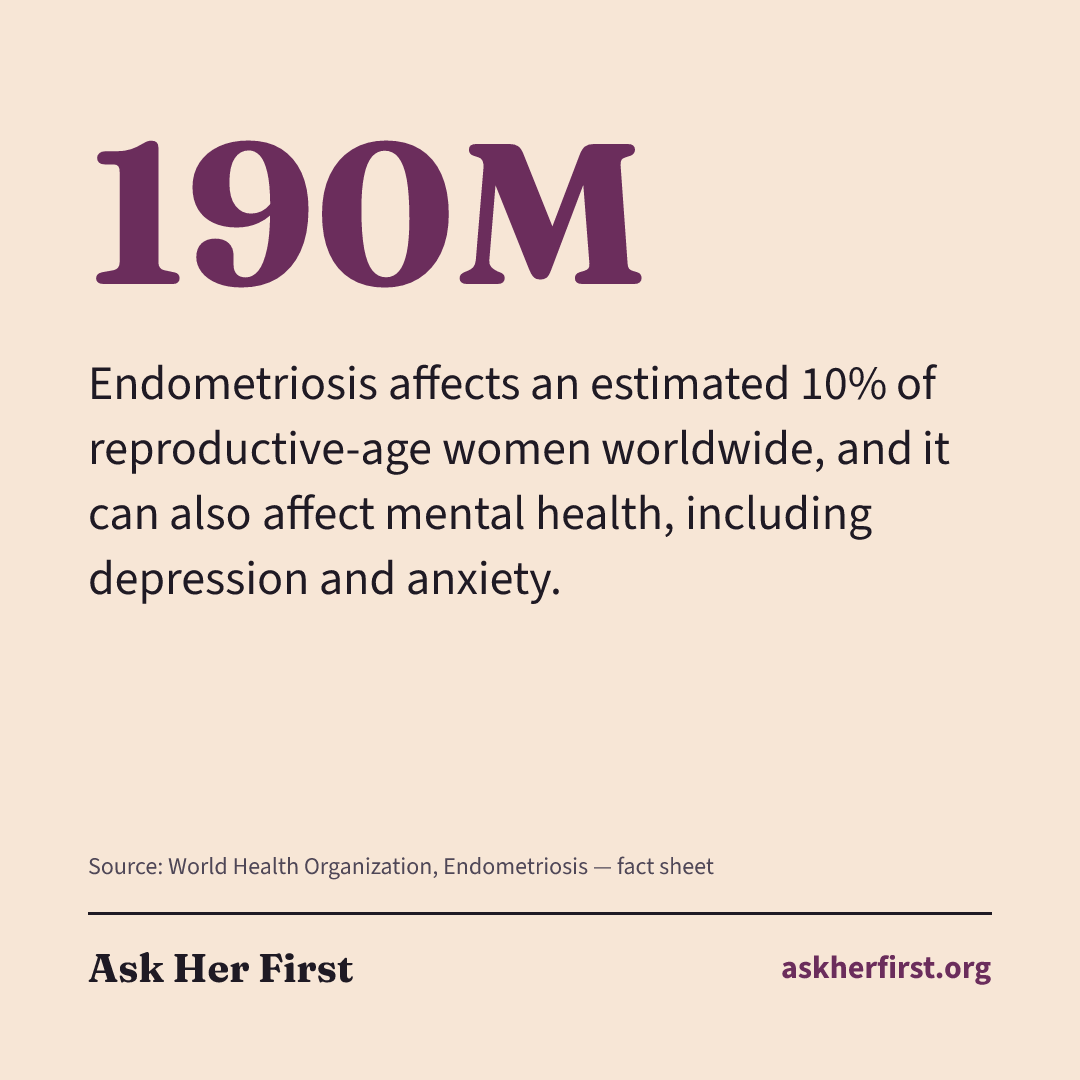
Endometriosis affects an estimated 10% of reproductive-age women worldwide, and it can also affect mental health, including depression and anxiety.
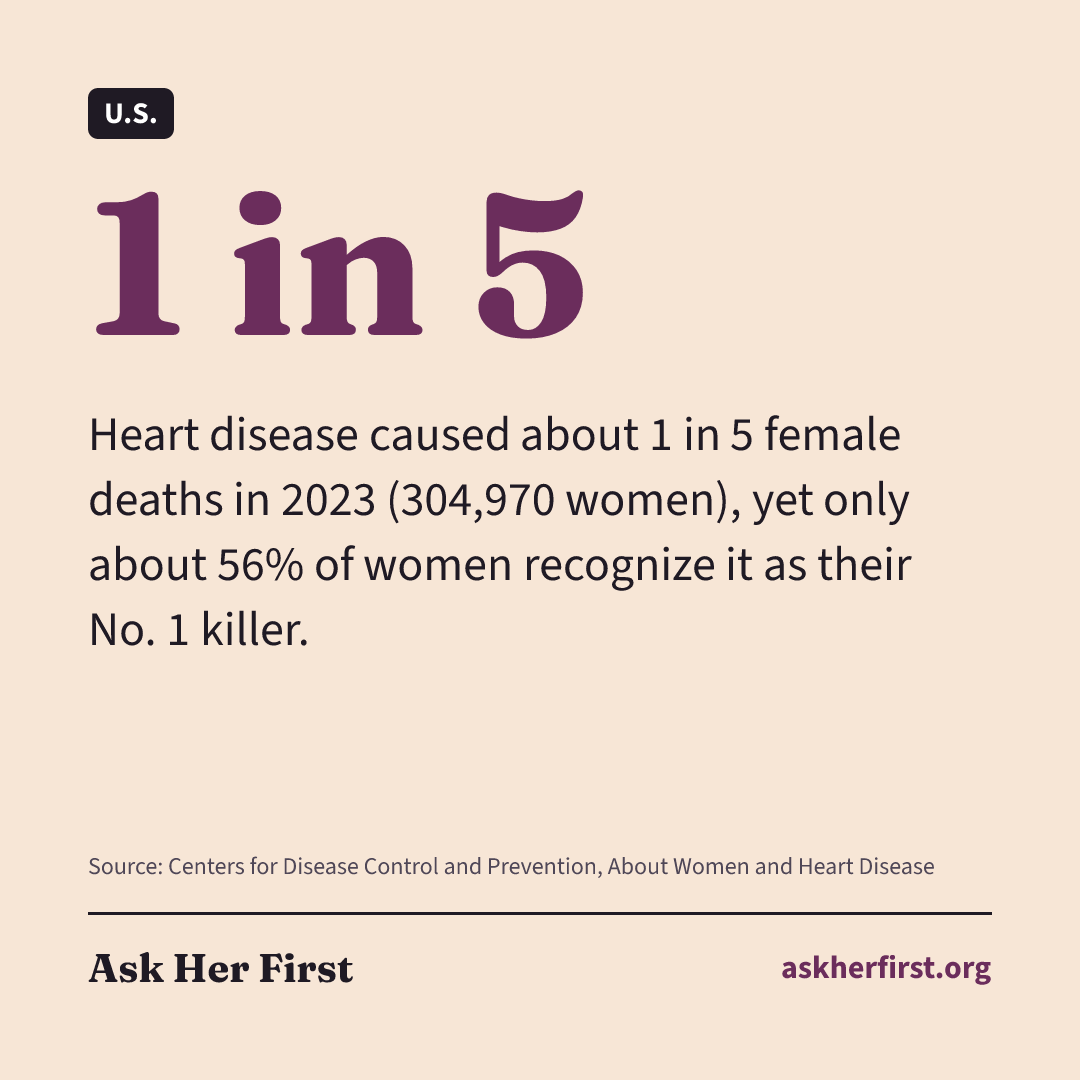
U.S.Heart disease caused about 1 in 5 female deaths in 2023 (304,970 women), yet only about 56% of women recognize it as their No. 1 killer.
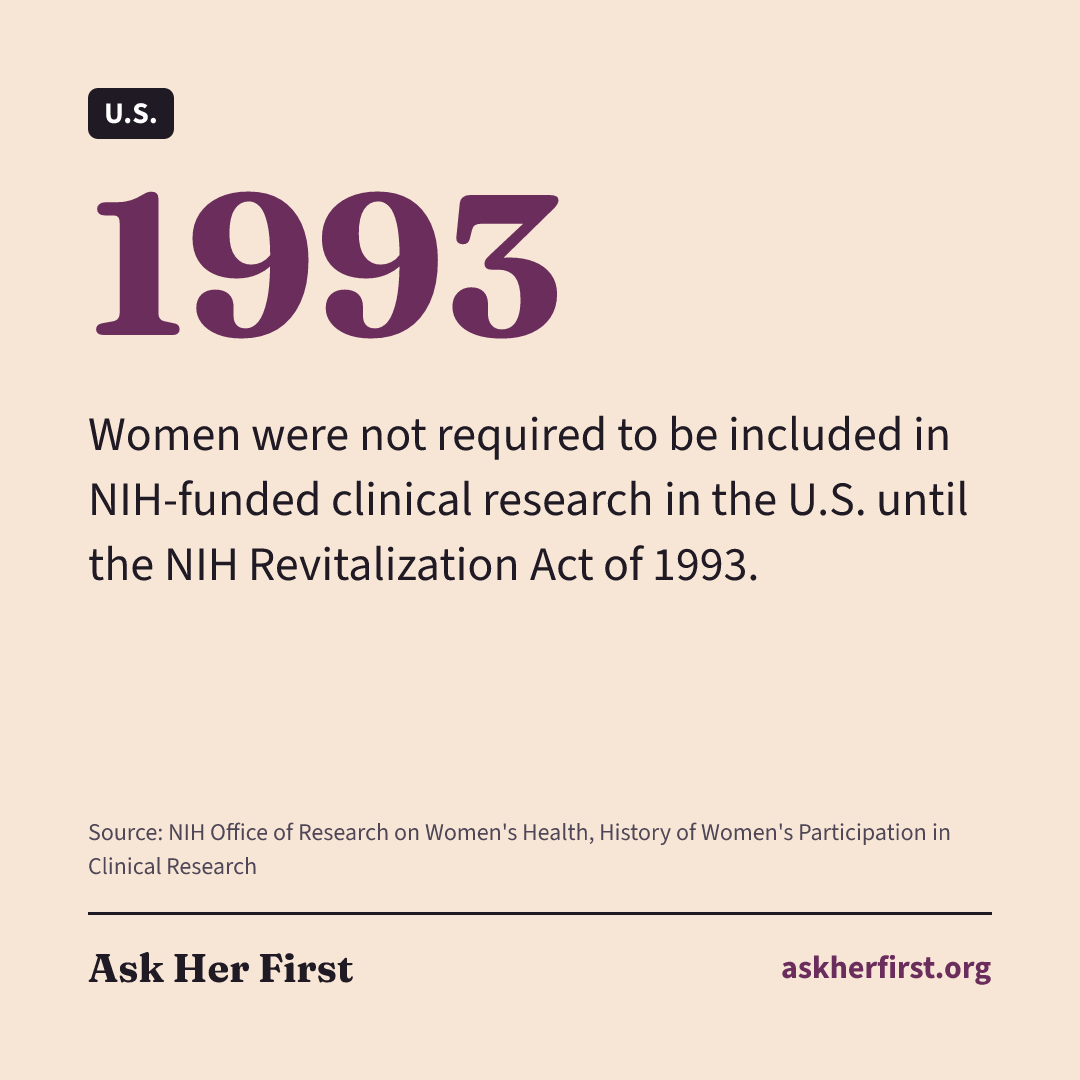
U.S.Women were not required to be included in NIH-funded clinical research in the U.S. until the NIH Revitalization Act of 1993.
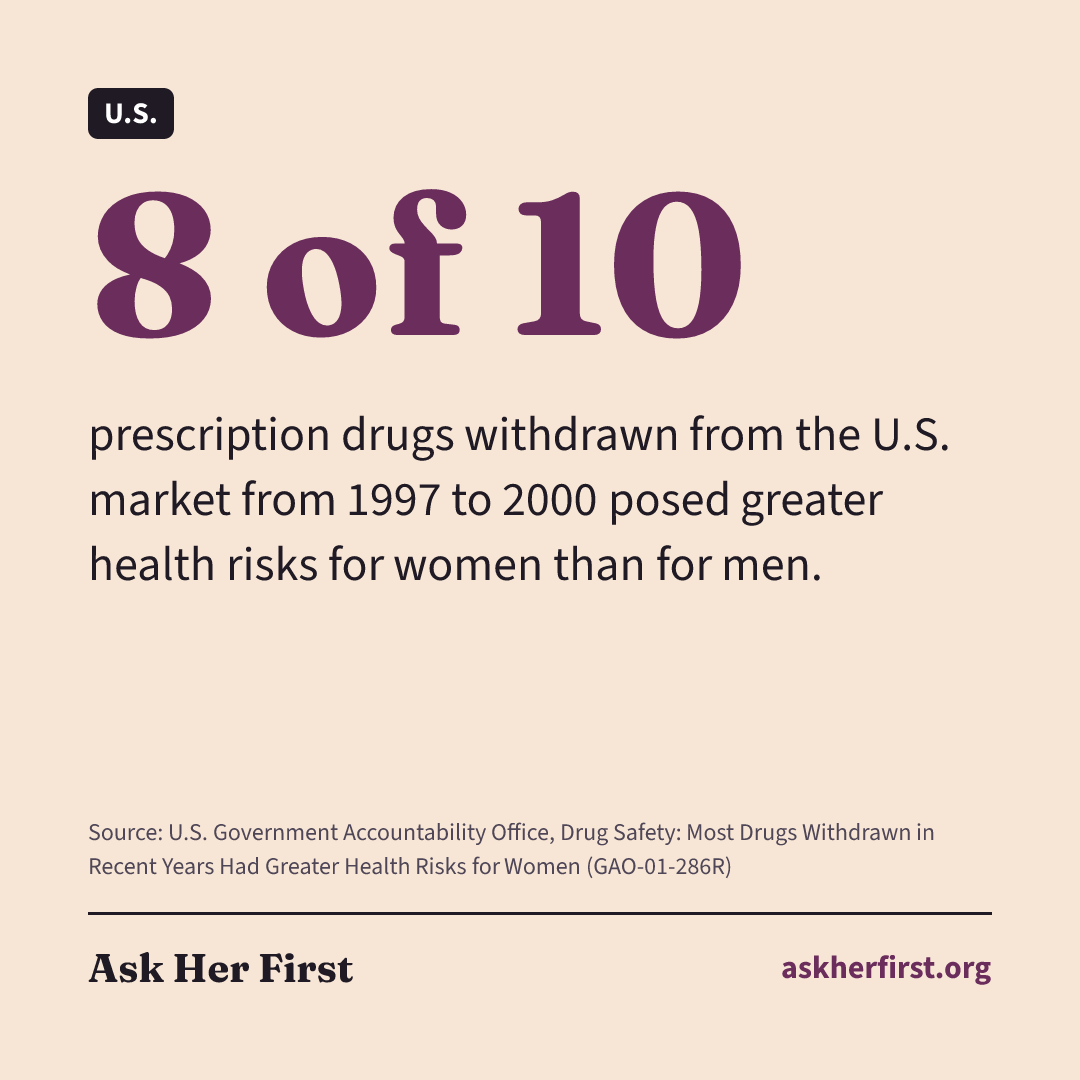
U.S.prescription drugs withdrawn from the U.S. market from 1997 to 2000 posed greater health risks for women than for men.
Picture it
The same numbers, drawn to scale.
Women in medical research: a U.S. timeline
Why so much of what we know about health was learned from men first.
- 1977
An FDA guideline restricted women who could become pregnant from taking part in early clinical trials of drugs.37
- 1986
NIH adopted a policy urging researchers to include women in clinical research. It was first published in 1987.38
- 1990
NIH established the Office of Research on Women's Health.39
- 1993
The NIH Revitalization Act, signed into law on June 10, 1993, required that women and members of minority groups be included in NIH-funded clinical research.40
- 1993
On July 22, 1993, the FDA lifted its restriction on most women who could become pregnant joining early drug trials, and began encouraging them to take part.41
- 2001
A U.S. Government Accountability Office report found that 8 of the 10 prescription drugs withdrawn from the U.S. market since January 1, 1997, posed greater health risks for women than for men.21
- 2013
The FDA lowered the recommended dose of the sleep drug zolpidem (Ambien and others) for women, who clear it from their bodies more slowly than men, raising the risk of impairment the next morning.42
- 2016
NIH began expecting researchers to account for sex as a biological variable in studies of vertebrate animals and humans.43
Read more
In-depth, fully sourced articles. All articles
- Breast cancer screening: what changed and whyMammograms every other year now start at 40, and your mammogram results must tell you about breast density. What changed, why, and what's still unknown.
- Cervical cancer screening you can do yourself: HPV self-collectionCervical cancer is almost always caused by HPV. How screening works, what self-collected HPV tests are, what the FDA has approved, and what the guidelines say.
- Endometriosis: why diagnosis can take yearsEndometriosis is common, painful, and often missed for years. What it is, why diagnosis is slow, how it's diagnosed and treated, and what research still lacks.
- Maternal health gaps in the U.S.Most U.S. pregnancy-related deaths are preventable, and many happen weeks or months after birth. What the data show, who is most at risk, and when to get help.
- Menopause hormone therapy: what changed and what we knowWhy hormone therapy's reputation swung after 2002, what FDA changed on its labels in 2025–2026, and what current sources say about benefits, risks, and options.
- PCOS explained: symptoms, diagnosis, and long-term healthPCOS is one of the most common hormonal conditions in women, and many who have it don't know. What it is, how it's diagnosed, and why it matters long term.
- Why women were left out of medical researchFor decades, rules meant to protect pregnancies kept women out of early drug trials. Here's what happened, what it cost, and the gaps that remain.
You're not imagining it
Common things women hear, and what the data says.
Myth
Heart disease is mostly a men's problem.
Fact
U.S.Heart disease caused about 1 in 5 female deaths in 2023 (304,970 women), yet only about 56% of women recognize it as their No. 1 killer.6
Myth
Medical research has always included women.
Fact
Women were not required to be included in NIH-funded clinical research in the U.S. until the NIH Revitalization Act of 1993.9
Myth
Endometriosis is rare.
Fact
Endometriosis affects an estimated 10% of reproductive-age women worldwide, and it can also affect mental health, including depression and anxiety.5
Myth
Deaths from pregnancy and childbirth can't be prevented.
Fact
~712 women died every day in 2023 from causes related to pregnancy and childbirth, about 260,000 in total. Most of these deaths were preventable.4
Myth
Approved medicines are equally safe for women and men.
Fact
8 of 10 prescription drugs withdrawn from the U.S. market from 1997 to 2000 posed greater health risks for women than for men.21
Support is available
See all support options, questions to ask your doctor, or how to help someone else.
National Maternal Mental Health Hotline
Call 1-833-TLC-MAMA (1-833-852-6262) or text 1-833-852-6262. Free and confidential. English and Spanish. TTY: use a relay service or dial 711, then 1-833-852-6262.10
Call 1-833-TLC-MAMA988 Suicide & Crisis Lifeline
Call or text 988 or chat at 988lifeline.org. Free and confidential. ASL via videophone.11
Call or text 988If you are in immediate danger, call 911.