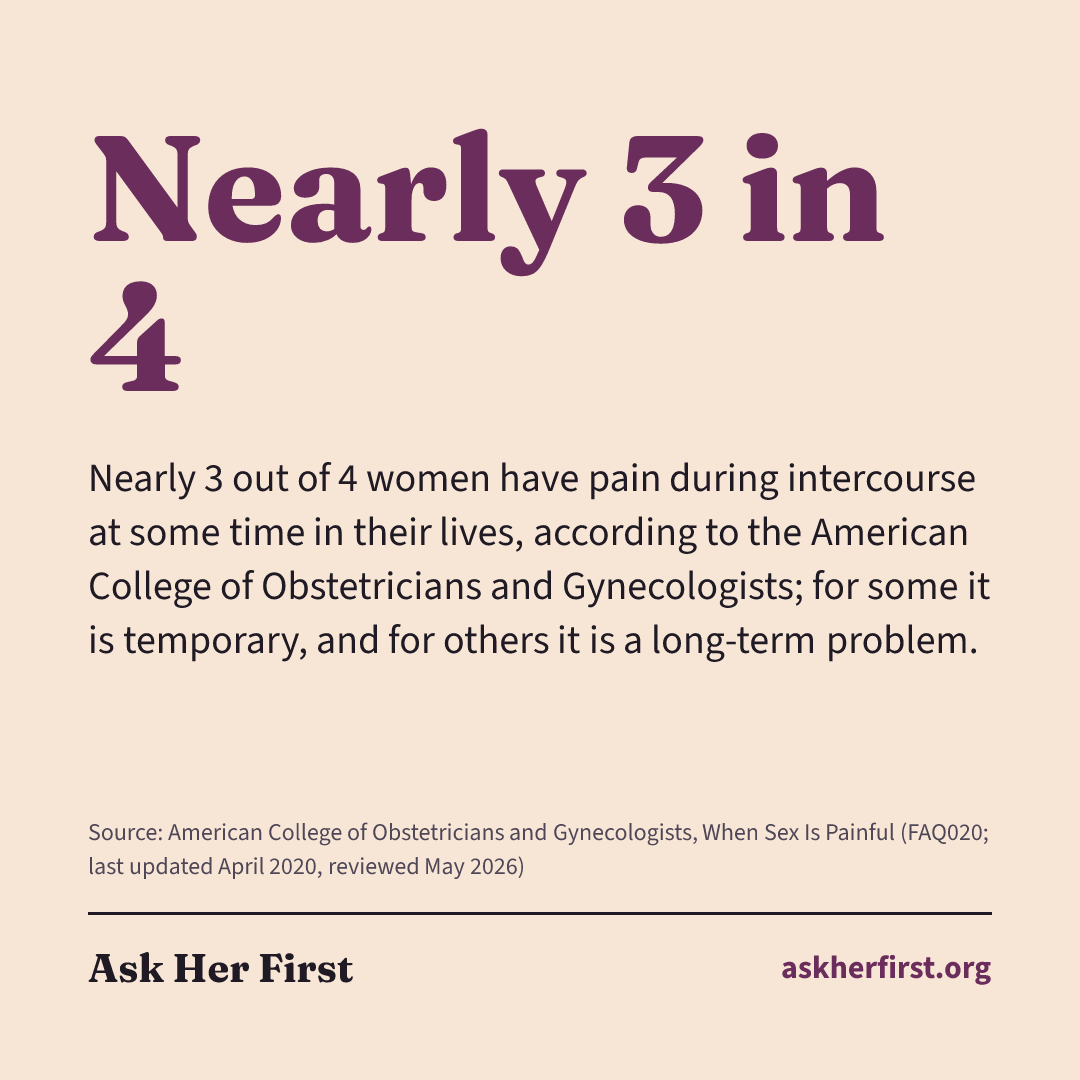
Pain during sex, a change in vaginal discharge, itching, or dryness can be hard to bring up, even with a doctor. These symptoms are common. Nearly 3 out of 4 women have pain during intercourse at some time in their lives, according to the American College of Obstetricians and Gynecologists; for some it is temporary, and for others it is a long-term problem.1 The American College of Obstetricians and Gynecologists (ACOG) says vaginitis, an inflammation of the vagina, is one of the most common reasons people visit an ob-gyn.2 This page explains what medical sources say can cause these symptoms, how the causes differ, which symptoms they say need prompt care, and what to expect when you get checked.
Symptoms that need prompt care
Most of the symptoms on this page are reasons for a regular appointment. Some are reasons to get care sooner, according to these sources:
- Fever or pelvic pain. MedlinePlus, from the National Library of Medicine, says to contact your provider right away if you have fever or pain in your pelvis or belly area, or if you may have been exposed to a sexually transmitted infection (STI).3 Abnormal discharge, pain in the lower abdomen, fever and chills, and painful sex can all be signs of pelvic inflammatory disease (PID), an infection of the reproductive organs.4 ACOG says these symptoms could also point to another serious problem, such as appendicitis or ectopic pregnancy, and that you should contact a health care professional if you have any of them.4 The longer PID goes untreated, the greater the risk of long-term problems such as infertility.4
- Bleeding after sex or between periods. MedlinePlus lists injury or disease of the vaginal opening, including from intercourse, and inflammation or infection of the cervix among the causes of bleeding between periods.5 It says most causes are benign and easily treated, but that sometimes bleeding is due to cancer or pre-cancer, so any unusual bleeding should be evaluated right away.5
- Bleeding after menopause. MedlinePlus says to contact your provider for any bleeding after menopause.5 Our menopause guide explains why: bleeding changes and bleeding after menopause.
- Symptoms during pregnancy. Vaginal infections are more common during pregnancy.6 The U.S. Office on Women’s Health (OWH) says bacterial vaginosis can lead to premature birth or a low-birth-weight baby, and that all pregnant women with symptoms of it should be tested and treated if they have it.7 The Centers for Disease Control and Prevention (CDC) urgent maternal warning signs include vaginal bleeding that is more than spotting or fluid leaking during pregnancy, and vaginal discharge that smells bad during or after pregnancy.8 See urgent warning signs during pregnancy and after birth.
- Sores or blisters. MedlinePlus lists blisters or other sores on the vagina or vulva among changes that could indicate a problem such as infection.3 Our guide to STI testing explains who should be tested and when.
If you have burning with urination or other urinary symptoms, MedlinePlus says this may mean you have a urinary tract infection.3 Read more: UTIs: symptoms, recurrence, and when to get care.
Pain during sex
Pain during sex is also called dyspareunia.9 According to ACOG, the pain may be felt in the vulva, around the opening of the vagina (the vestibule), or inside the vagina, and some women feel it in the lower back, pelvic region, uterus, or bladder.1
ACOG says that if you have frequent or severe pain during sex, you should see an ob-gyn or other health care professional, because it is important to rule out gynecologic conditions that may be causing the pain.1 MedlinePlus says occasional problems with sexual function are common, and that if problems last more than a few months or cause distress for you or your partner, you should see your health care provider.9
Common causes of painful sex
Pain during sex can be a warning sign of many gynecologic conditions, and ACOG says some of them can lead to other problems if not treated.1 Where another guide on this site covers a condition in depth, this section only summarizes it.
- Vaginal dryness from lower estrogen. During perimenopause and menopause, decreasing estrogen may cause vaginal dryness.1 The Menopause Society calls the dryness and thinning of the vagina after the drop in estrogen the most common cause of painful sex at midlife and beyond.10 See vaginal dryness and genitourinary syndrome of menopause below.
- After childbirth or while breastfeeding. Women who had an episiotomy or tears in the perineum during childbirth may have pain during sex that can last for several months.1 ACOG says vaginal dryness is another problem after childbirth, especially while breastfeeding, and can be caused by changes in hormone levels.6 Read more: recovering after birth and the postpartum checkup.
- Vaginitis. Inflammation of the vagina can be caused by a yeast or bacterial infection, and its symptoms include discharge and itching and burning of the vagina and vulva.1 See discharge, itching, and odor below.
- Skin conditions of the vulva. Some skin disorders cause ulcers or cracks in the skin of the vulva.1 Contact dermatitis, a reaction to an irritating substance such as perfumed soaps, douches, or lubricants, is common and may cause itching, burning, and pain.1
- Vulvodynia. This is vulvar pain that lasts 3 months or longer and is not caused by an infection, skin disorder, or other medical condition.11 The National Institute of Child Health and Human Development (NICHD) says symptoms may be caused by pressure on the vulva, such as during sex or when inserting a tampon.12 Because it tends to be diagnosed only after other causes are ruled out, reaching a diagnosis can be difficult and time-consuming.13 Read more: vulvodynia.
- Vaginismus. This is a reflex tightening of the muscles at the opening of the vagina, which may cause pain when you try to have intercourse; ACOG says it can be treated with different forms of therapy.1
- Endometriosis, PID, and adhesions. ACOG says pelvic inflammatory disease, endometriosis, and adhesions (scar tissue) are all associated with pain during sex, and that pain during sex may be a sign of ovarian cysts or endometriosis.1 Read more: endometriosis.
- Problems with sexual response. Pain can also come from a lack of desire or arousal.1 ACOG lists feelings such as fear, guilt, shame, or embarrassment that make it hard to relax; relationship problems; some medications, including some birth control methods and many pain medications; and medical conditions such as arthritis, diabetes, cancer, and thyroid conditions.1
Discharge, itching, and odor
Some discharge is normal. ACOG says normal discharge is clear to white, doesn’t have a noticeable odor, and changes in amount and makeup through the menstrual cycle.6 Signs of abnormal discharge include a change in color, odor, amount, or consistency from what is usual for you.6 A certain amount of vaginal odor is normal, but a strong, noticeable odor may mean an infection or other problem, and ACOG says sprays, deodorants, and douches are not recommended and may make things worse.6
CDC’s STI treatment guidelines say most women will have a vaginal infection, with discharge, itching, burning, or odor, during their lifetime.14 The infections most often linked to vaginal symptoms are bacterial vaginosis, trichomoniasis, and yeast infections (vulvovaginal candidiasis).14 They have different causes and different treatments.
Bacterial vaginosis (BV)
BV is caused by an imbalance in the normal bacteria in the vagina, and ACOG says it is not a true infection.2 CDC calls it the most common cause of vaginal discharge worldwide.15 The main symptom is increased discharge with a strong fishy odor, which may be stronger during a period or after sex; itching is not common.2 Many women with BV have no symptoms.7 It is treated with antibiotics, and ACOG says it often comes back.2 CDC says women with BV are at increased risk of getting STIs, including HIV.15 OWH notes that you can’t treat BV with over-the-counter yeast infection medicine.7
Yeast infections
Yeast infections are caused by overgrowth of a fungus called Candida, which normally lives in the vagina in small numbers.2 The most common symptoms are itching and burning of the vulva, and the burning may be worse with urination or sex.2 Discharge may be white, lumpy, and odorless, but sometimes there is no change in discharge.2 ACOG lists antibiotics, pregnancy, diabetes, and conditions that affect the immune system as factors that raise the risk.2
Trichomoniasis
Trichomoniasis is an STI caused by a microscopic parasite.2 Signs may include a yellow-gray or green discharge that may smell fishy, burning, irritation, redness, and swelling of the vulva, and sometimes pain during urination.2 CDC says most people with it have minimal or no symptoms.16 ACOG says sexual partners must be treated so you don’t get infected again, and CDC recommends retesting sexually active women about 3 months after treatment.2,16
Other causes
MedlinePlus lists other causes of discharge and itching, including chlamydia and gonorrhea, low estrogen after menopause, a forgotten tampon, and chemicals in products such as detergents, feminine sprays, douches, and contraceptive foams.3 CDC notes that inflammation of the cervix (cervicitis) can also cause abnormal discharge.14
Why guessing the cause can go wrong
These conditions can look alike. OWH says the symptoms of a yeast infection are a lot like those of other infections, such as STIs and BV, and that seeing a doctor or nurse is the only way to know for sure.17 CDC’s guidelines say none of the symptoms of a yeast infection is specific to it.18 They add that even women who were diagnosed with a yeast infection by a clinician before are not necessarily better at diagnosing themselves.18
The U.S. Office on Women's Health says studies show two out of three women who buy yeast infection medicine don't really have a yeast infection.17 ACOG says over-the-counter yeast treatments are safe and often effective, but if the problem is something else, the medicine won’t work and may delay the right diagnosis and treatment.2
What sources advise:
- ACOG says that if this is the first time you’ve had vaginal symptoms, you should see your ob-gyn, and that even if you’ve had a yeast infection before, it may be a good idea to call before using an over-the-counter medicine.2
- CDC says anyone whose symptoms continue after an over-the-counter treatment, or come back within 2 months of treatment for a yeast infection, should be evaluated and tested.18
- MedlinePlus says to contact your provider if symptoms get worse or last longer than 1 week despite home care.3
Vulvar itching, pain, and skin changes
The vulva is the external genital area.19 ACOG says that if you see changes on the skin of the vulva, or if you have itching, burning, or pain, you should contact a health care professional.19 It suggests getting to know what is usual for your own vulva, and talking with a clinician about changes in skin color, including moles, or any new bumps, painful swelling, itching, or burning that doesn’t go away.6
Conditions ACOG describes include:19
- Contact dermatitis: irritation from things like soaps, fabrics, or perfumes, causing itching, rawness, stinging, burning, and pain.
- Lichen sclerosus: a skin disorder that can cause itching, burning, pain during sex, and tears in the skin; it is treated with a steroid cream.
- Infections, such as yeast infections and genital herpes.
- Vulvar intraepithelial neoplasia: abnormal cells that are not yet cancer, often caused by HPV, which should be treated to prevent cancer.
Changes in vulvar skin color can signal a problem such as genital warts, infections, or skin disorders, and rarely vulvar cancer.6
Vaginal dryness and genitourinary syndrome of menopause
The Menopause Society defines genitourinary syndrome of menopause (GSM) as a collection of signs and symptoms linked to low estrogen that can affect the labia, vagina, clitoris, bladder, and urethra.10 According to ACOG, signs include vaginal burning and itching, less lubrication during sex leading to pain, bleeding after sex, more frequent vaginal and urinary tract infections, and frequent urination.6 Unlike hot flashes, which generally improve over time, GSM often worsens without treatment.10 Low hormone levels during breastfeeding can also cause dryness, itching, burning, and pain during sex; ACOG calls this atrophic vaginitis and says it is not caused by an infection.2
Treatments ACOG and The Menopause Society describe:
- Moisturizers and lubricants. These are sold without a prescription and can relieve dryness and painful sex, but because they contain no hormones, ACOG says they don’t affect the thickness or elasticity of the vagina.6
- Low-dose vaginal estrogen. It comes as a cream, ring, or tablet, releases a small dose of estrogen directly into vaginal tissue, and ACOG says it helps restore thickness and elasticity and relieves dryness and irritation.6 It needs a prescription.19 For its FDA labeling, see what the FDA changed in our hormone therapy guide.
- Other prescription options. The Menopause Society says vaginal dehydroepiandrosterone (DHEA) is a local therapy that helps with sexual pain, and that ospemifene is approved to treat GSM symptoms.20 ACOG notes that systemic estrogen (pills, patches, gels, or sprays) is another option, and that people who still have a uterus also need a progestin.6 Read more: menopause hormone therapy.
What a clinician may do
For pain during sex, ACOG says your medical and sexual history, symptoms, and a physical exam help find the cause, and a pelvic exam or ultrasound often gives clues.1 Sometimes further evaluation, including a laparoscopy, is needed.1 You may be referred to a physical therapist or a dermatologist.1
For discharge or itching, ACOG says your ob-gyn should take a sample of the discharge, and some results are ready right away while others take a few days.2 CDC says a medical history alone is not enough to diagnose vaginitis accurately and can lead to the wrong medicine.14 To keep test results accurate, ACOG advises not using vaginal medicines for at least 3 days before the visit, and not douching, having sex, or using spermicides beforehand.2 For vulvar pain, a clinician may touch areas of the vulva with a cotton swab to find where the pain is, and may take a small skin sample (biopsy).11
What may help, according to medical sources
This section describes what sources say. It isn’t personal advice, and treatment depends on the cause.
- Treating the cause. Vaginitis treatment depends on the cause and may be a pill or a cream or gel inserted into the vagina.2 ACOG says to follow the directions exactly, even if symptoms go away before you finish, and to talk with your ob-gyn if symptoms don’t go away or come back.2
- Gentle care of the vulva. ACOG suggests washing the vulva with plain warm water, not douching, and avoiding feminine hygiene sprays, scented tampons, and other scented products.2,19 It also suggests cotton underwear and clothing that isn’t tight.19
- Lubricants. ACOG says water-soluble lubricants are a good choice if you have irritation or sensitivity, and that petroleum jelly, baby oil, and mineral oil should not be used with latex condoms because they can make them break.1
- Other steps for pain during sex. ACOG suggests setting aside time when you’re not tired or anxious, telling your partner where and when it hurts, trying sexual activities that don’t cause pain, and, to relieve burning after sex, a wrapped ice or gel pack on the vulva.1
- For vulvodynia. Options NICHD lists include topical medicines, pain relievers, antidepressants or anticonvulsants, biofeedback, pelvic floor physical therapy, injections, and, for localized vulvodynia, surgery.21 ACOG says no one treatment works for everyone and relief can take a few months.11
Talking with a clinician about sex
It can feel awkward, but clinicians need details to find the cause. ACOG says you may be asked about your medications, medical conditions, and past events that may affect how you feel about sex, such as sexual abuse.1 MedlinePlus notes that for some women, sexual problems result from past sexual trauma.9 You can share as much or as little as you’re comfortable with. If you’ve been through sexual violence, our guides on trauma and PTSD and what to do after a sexual assault may help.
It may help to note where the pain is, when it happens (at entry, with deep penetration, or afterward), how long it’s been going on, and what you’ve tried. Our list of questions to ask your doctor and the tips on what may help you be heard can help you prepare.
What we don’t know yet
- Treating partners for BV. Sources disagree. CDC’s 2021 guidelines say routine treatment of sex partners is not recommended, and OWH (2022) says a male partner won’t need treatment.7,15 ACOG’s FAQ, updated in December 2025, says sex partners are often carriers of the bacteria and should consider treatment to lower the chance BV comes back.2 Ask your clinician what current guidance says for your situation.
- How BV spreads. OWH says researchers do not know exactly how BV spreads, and that you can get it without having sex, though it is more common in women who have sex.7
- What causes vulvodynia. ACOG says it is likely caused by many factors working together, and NICHD-sponsored researchers are still studying how to better evaluate and understand vulvar pain.11,13
- How current the guidance is. ACOG’s FAQ on painful sex was last updated in April 2020, and CDC’s STI treatment guidelines are from 2021.1,14 The painful-sex figure above is from an ACOG patient FAQ that doesn’t give its data source.1
Questions to ask your doctor
- What could be causing my pain during sex? Could more than one thing be involved?
- Can you test my discharge to find out whether it’s BV, a yeast infection, trichomoniasis, or something else?
- Should I be tested for STIs?
- My symptoms keep coming back. What should we try next?
- Could menopause, breastfeeding, or a medicine I take be causing dryness? What are my options, with and without hormones?
- Could this be a skin condition of the vulva? Do I need a biopsy?
- Would pelvic floor physical therapy or a referral to a specialist help?
- Should my partner be tested or treated?
This article summarizes published research and official health information. It has not been reviewed by a clinician and is not medical advice. How we source.
A printout or saved PDF is a copy someone else could find.