If you have ever felt that a health care provider didn’t believe how much you were hurting, research suggests you are not alone: in studies of people with chronic pain, women frequently report being mistrusted by health care providers or having their pain treated as psychological.361 Several large studies have found that women in pain receive less pain treatment than men in emergency care, while other studies have found no difference.352,354,355,356 This article looks at what the evidence shows, where it is mixed, and what may help you be heard.
How common pain is in women
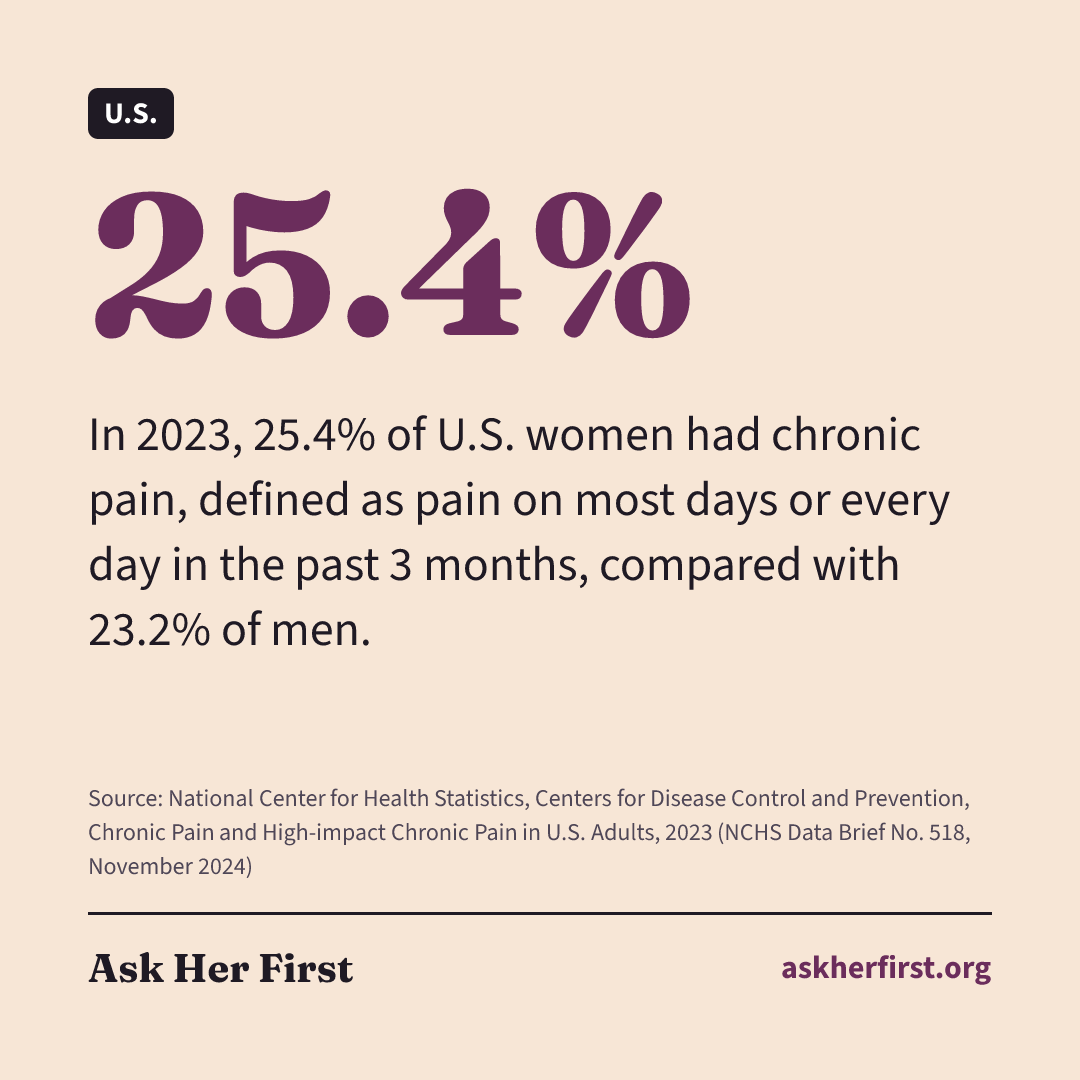
In 2023, 25.4% of U.S. women had chronic pain, defined as pain on most days or every day in the past 3 months, compared with 23.2% of men.349 In 2023, 9.6% of U.S. women had high-impact chronic pain, meaning chronic pain that limited their life or work activities on most days or every day in the past 3 months, compared with 7.3% of men.349 These figures come from a national household survey in which adults answered questions about their own pain.349
Migraine is one example of a painful condition that is more common in women.370 The National Institute of Neurological Disorders and Stroke (NINDS) says hormone changes during the menstrual cycle or pregnancy seem to be an important migraine trigger, which is likely why females experience migraine more than males.369 In 2021, 6.2% of U.S. women said they had been bothered a lot by headache or migraine in the past 3 months, compared with 2.2% of men.350
What studies of emergency care show
Large recent studies
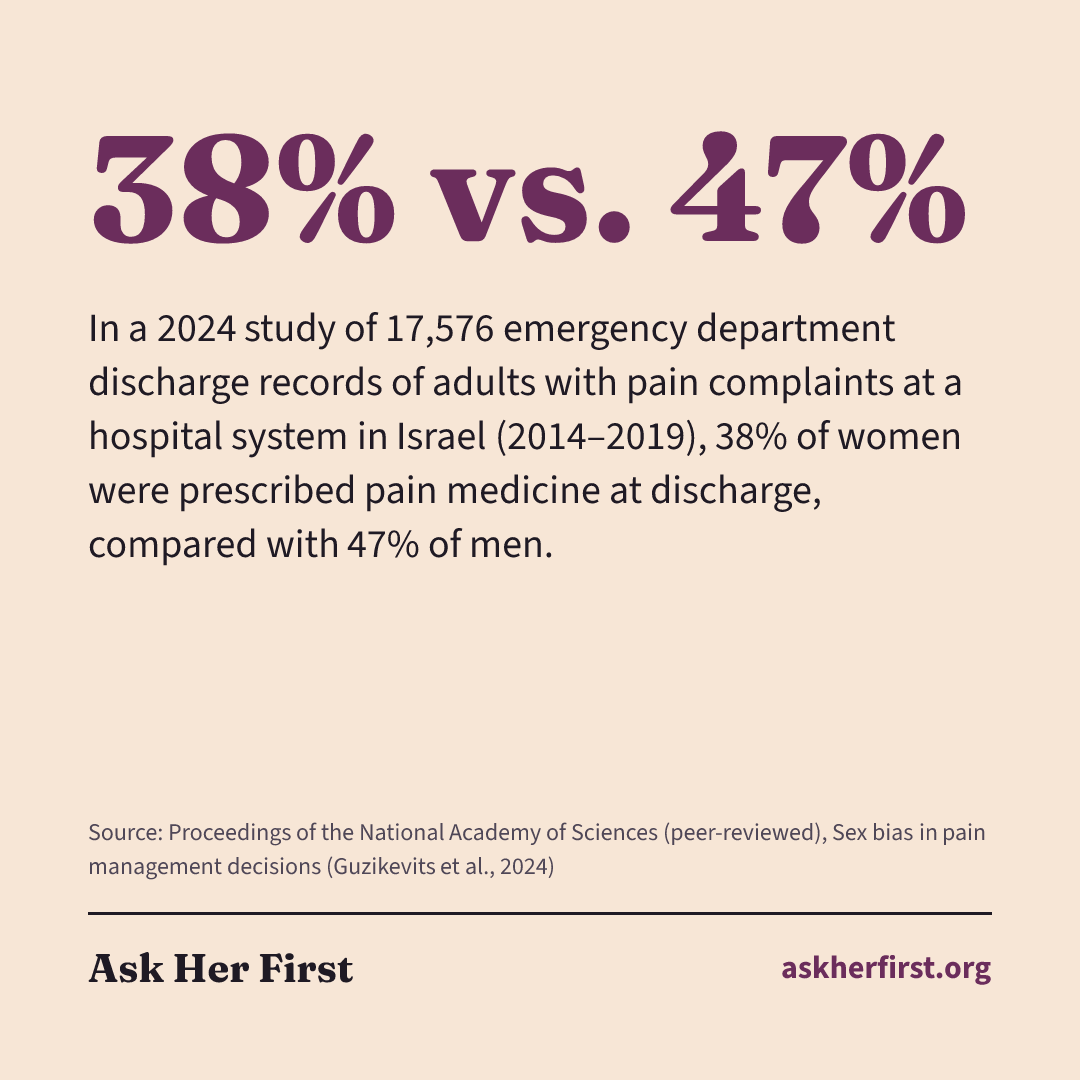
A 2024 study in the Proceedings of the National Academy of Sciences examined emergency department discharge records for adults with pain complaints such as headache or back pain, in Israel and the U.S.352 In a 2024 study of 17,576 emergency department discharge records of adults with pain complaints at a hospital system in Israel (2014–2019), 38% of women were prescribed pain medicine at discharge, compared with 47% of men.352 The gap persisted after the researchers accounted for patients’ reported pain scores and many patient, physician, and hospital factors, and both male and female physicians prescribed less pain medicine to women.352 Women were also less likely to be prescribed non-opioid pain relievers such as ibuprofen.352 In a 2024 study of emergency department records in Israel, women with pain complaints stayed about 30 minutes longer in the emergency department than men, and triage nurses were less likely to record their pain scores (37% vs. 41%).352
The study’s U.S. data pointed the same way, but they were available only as summary numbers, so the researchers could not adjust for other factors.352 In U.S. data from a 2024 study (4,275 emergency department discharges at one Missouri health system in 2019), 26% of women with pain complaints were prescribed pain medicine, compared with 31% of men, even though average pain scores were similar.352 In a small experiment in the same paper, clinicians, nearly all of them nurses, rated an identical case of severe back pain as less intense when the patient was described as female, though the difference narrowly missed the usual threshold for statistical significance.352
Studies of care before patients reach the hospital point in a similar direction.354,358 In an analysis of 106,888 helicopter emergency medical missions in Germany (2012–2025), women received pain medicine less often than men despite similar pain severity (62.0% vs. 66.9%) and received opioids less often (50.0% vs. 57.1%).354 In that German study, pain scores when patients were handed over to hospital staff were similar for women and men.354 A large 2023 study of ambulance care for chest pain in Victoria, Australia, found that women were less likely than men to receive pain relief or aspirin from paramedics, and less likely to be seen by emergency department clinicians within target times.358
U.S. studies
In a study of 981 adults with acute abdominal pain at one urban U.S. emergency department in 2004–2005, women and men reported similar pain scores, but 45% of women received opioid pain medicine, compared with 56% of men.351 In a 2004–2005 study at one urban U.S. emergency department, women with acute abdominal pain waited a median of 65 minutes to receive pain medicine, compared with 49 minutes for men.351 A 2022 study of a large U.S. hospital system also found that women with abdominal pain were prescribed narcotics less often than men, and that Black patients were less likely than White patients to receive them across reported pain levels.353 In a study of 32,676 adults discharged from the emergency departments of one large U.S. hospital system with undifferentiated abdominal pain over a single year, 16.99% of women were prescribed narcotics, compared with 19.41% of men.353
Waiting is part of the picture too. Among U.S. adults aged 18 to 55 who went to an emergency department with chest pain in 2014–2018, women were less likely than men to be triaged as emergent (19.1% vs. 23.3%) or admitted to the hospital or an observation unit (12.4% vs. 17.9%).357 In that national study, men with chest pain were seen by a physician more quickly than women, independent of their clinical features.357
Where the evidence is mixed
Not every study finds a gap. A large 2021 study of the four emergency departments in Calgary, Canada, found that, overall, men and women were about equally likely to receive opioids, although men were more likely to receive them for trauma, flank pain, headache, and abdominal pain.355 A U.S. national study of patients with appendicitis or gallbladder disease found no difference by sex in opioid treatment, wait times, or time spent in the emergency department.359 And a 2025 systematic review that pooled emergency department studies found no significant difference between the sexes in the likelihood of receiving pain medicine, even as it found that Black, Hispanic, and older patients were less likely to receive some kinds of pain treatment.356
The authors of the 2024 study offer one possible explanation, which they say future research should test: studies that found no bias often involved pain with a clear physical cause, such as a fracture, while studies that found bias mostly involved pain with a vague source, such as headache or abdominal pain.352 They also acknowledge that fewer opioid prescriptions are not automatically worse care, given the risk of addiction, but point to women’s lower rate of non-opioid prescriptions and the larger shortfall from guidelines for severe pain as reasons they concluded that women’s pain was undertreated.352
Why this might happen
There is no objective tool for measuring pain, so clinicians rely on what patients report and on their own judgment, which the 2024 study’s authors say leaves room for bias.352
In two experiments, lay volunteers who watched videos of patients with chronic shoulder pain rated women's pain lower than men's, even after accounting for the patients' own pain ratings; the average gap was 2.45 points on a 0–100 scale.360 In that research, people’s beliefs about how willing women and men are to express pain predicted how biased their estimates were, and they judged women as more likely to benefit from psychotherapy and men as more likely to benefit from pain medicine.360
A 2018 review of 77 articles found that women with chronic pain frequently reported being mistrusted by their health care providers, and that some studies found women received less effective pain relief, fewer opioids, more antidepressants, and more mental health referrals than men.361 The reviewers also noted that studies measuring gender bias in treatment objectively were fewer and less consistent.361
Conditions that can take years to diagnose
Several painful conditions that mainly affect women can be hard to diagnose.5,363,366
Endometriosis
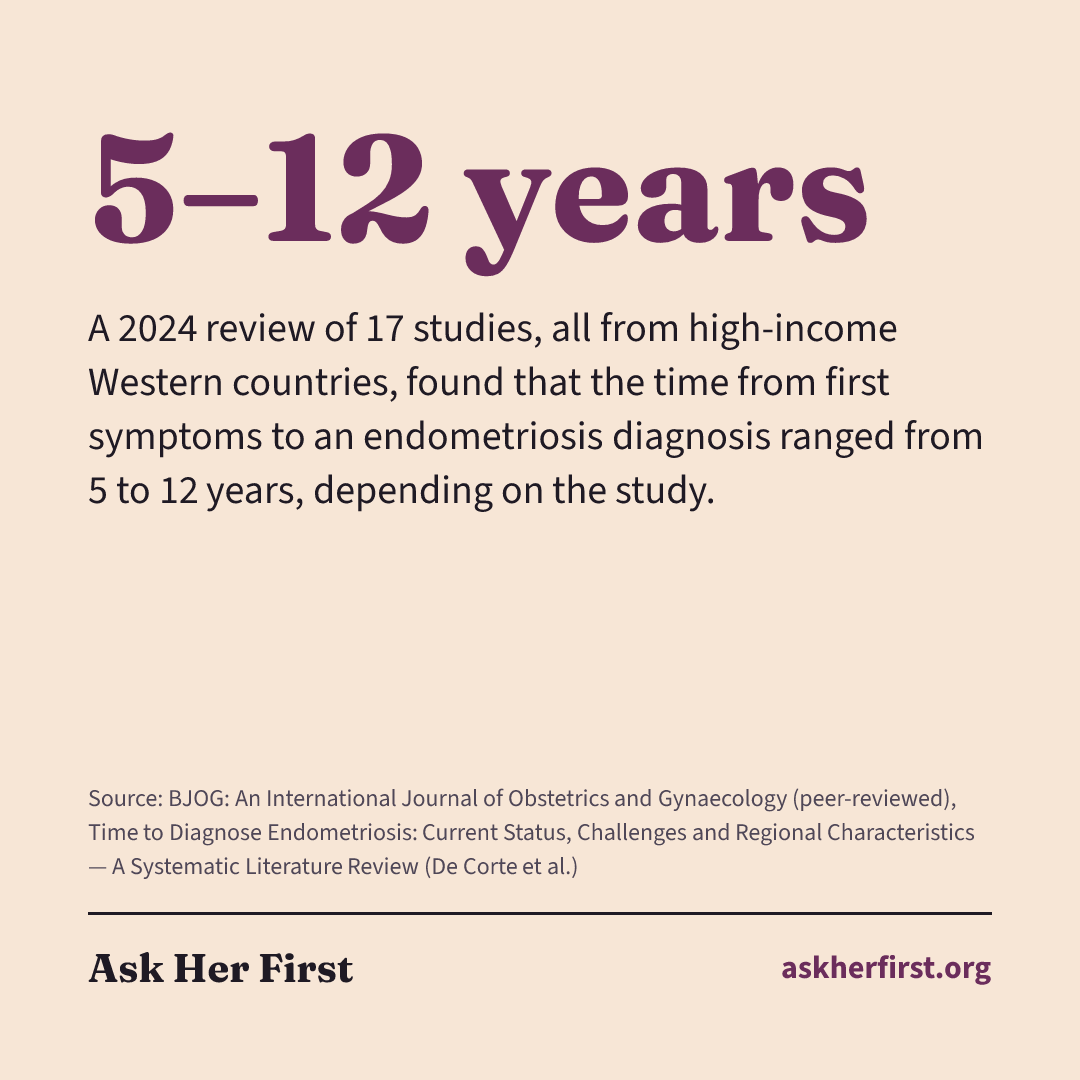
The World Health Organization (WHO) says long delays in diagnosing endometriosis are common.5 A 2024 review of 17 studies, all from high-income Western countries, found that the time from first symptoms to an endometriosis diagnosis ranged from 5 to 12 years, depending on the study.105 The review’s authors concluded that the delay is “primarily driven by physicians.”105 In a small U.K. survey included in a 2024 review, women who felt their general practitioner did not take their pain seriously took about twice as long to be diagnosed with endometriosis: a median of 12 years from first symptoms, compared with 6 years.105 The reviewers caution that findings seen in only one study don’t allow firm conclusions.105 WHO says that in many countries, the public, family members, and most health workers don’t know that the chronic pelvic pain of endometriosis is not normal.5 Our article on why endometriosis diagnosis can take years goes deeper.
Vulvodynia
Vulvodynia is chronic pain of the vulva, lasting at least 3 months, that has no clear cause such as an infection or cancer.362 Because it is often diagnosed only after other causes are ruled out, the National Institute of Child Health and Human Development (NICHD) says reaching a diagnosis can be difficult and time-consuming, especially for women without health insurance, and that some women may be reluctant to discuss their pain.363 By age 40, 7% to 8% of women surveyed in two U.S. metro areas, Boston and Minneapolis–Saint Paul, reported vulvar pain consistent with vulvodynia.364 In surveys of women in two U.S. metro areas, 30% (Boston) and 48% (Minneapolis–Saint Paul) of women with vulvar pain never sought treatment, and more than half of those with known health care access who sought care received no diagnosis.364 In a 2003 survey of U.S. women in the Boston area, 60% of those with chronic vulvar pain who sought treatment saw three or more doctors, many of whom could not provide a diagnosis.365
Fibromyalgia
Fibromyalgia is a long-lasting condition that causes pain all over the body, fatigue, and other symptoms.366 Women are twice as likely as men to have fibromyalgia, according to the National Library of Medicine's MedlinePlus.366 MedlinePlus says fibromyalgia can be hard to diagnose and sometimes takes visits to several providers, partly because there is no specific test for it and its main symptoms, pain and fatigue, are common in many other conditions.366 In a 2010 survey of 800 people with fibromyalgia in six European countries, Mexico, and South Korea, getting a diagnosis took an average of 2.3 years and visits to 3.7 different doctors.367 That survey was funded by Pfizer, recruited patients through their doctors, and relied on their memories.367
Bias may also cause fibromyalgia to be missed in men.368 In a 2018 study, women made up more than 90% of patients who had been referred and diagnosed with fibromyalgia, but about 59% of the cases found when researchers applied diagnostic criteria to an unselected group of rheumatoid arthritis patients and to a German population sample.368 The authors concluded that selection and confirmation bias in clinics leads to underestimating men with fibromyalgia and overestimating women.368
Migraine and other headache disorders
WHO says headache has been underestimated, under-recognized, and under-treated throughout the world, and that only a minority of people with headache disorders are appropriately diagnosed and treated.370 It names a lack of knowledge among health care providers as the main clinical barrier to care.370
Gaps in pain research
A 2020 review says that although most patients with chronic pain are women, basic research on how pain works has historically come overwhelmingly from studies of male rodents.371 That matters because the sexes can process pain differently: a 2015 study found that male and female mice relied on different immune cells to develop the same kind of pain sensitivity, and its authors concluded that male mice cannot stand in for females in pain research.372,371
In 2015, the National Institutes of Health (NIH) announced that, for applications due January 25, 2016, and later, it expects sex as a biological variable to be factored into the design, analysis, and reporting of vertebrate animal and human studies.43 The 2020 review reports that funders’ adoption of such policies has correlated with an increase in studies of sex differences in pain and pain relief.371 For more of this history, see why women were left out of medical research.
What we don’t know yet
- Why the gaps exist. The 2024 emergency department study could not directly link prescribing decisions to stereotypes about women’s pain, and its data did not include patients’ gender identity.352
- How widespread they are. Many of the largest recent studies come from outside the U.S., including Israel, Germany, Australia, and Canada, and results vary by setting and type of pain.352,354,358,355
- Care outside the emergency room. The 2024 study’s authors note that pain is also treated in places such as family clinics and after surgery, and that their studies looked only at emergency departments.352
- The full count of chronic pain. The national chronic pain figures come from a household survey that does not include people living in institutions.349
- Diagnostic delays. The fibromyalgia estimate comes from an older, industry-funded survey that did not include the U.S., and the vulvodynia figures come from two U.S. metro areas.367,364
What may help you be heard
These steps come from federal health agencies. They can’t guarantee a diagnosis, but they may help you and your clinician work together.
- Describe your pain in detail. The National Institute on Aging (NIA) suggests thinking about where it hurts, when it started and whether it comes and goes, what it feels like, what makes it better or worse, and what you have already tried.373
- Keep a record. NIA says your doctor may ask you to keep a diary of when and what kind of pain you feel every day.373 For headaches, NINDS says a headache journal can help a doctor diagnose the type of headache and find the best treatment, and suggests noting when each headache happened, how intense it was and how long it lasted, any medicines taken, sleep, and stress; people who menstruate can also record the days of their periods.369
- Bring your questions. The Agency for Healthcare Research and Quality (AHRQ) suggests writing down your questions before a visit and explaining your symptoms and health history, and says patients who ask questions and make sure they understand the answers tend to get more timely, accurate diagnoses.374 AHRQ’s 10 questions you should know include “Why do I need this treatment?” and “Are there any alternatives?”36
- Ask about specialists. NIA says that if your regular doctor can’t help, you can ask for the name of a pain specialist.373 MedlinePlus notes that not all providers are familiar with fibromyalgia and recommends seeing a provider or team who specializes in treating it.366
- Talk before changing medicines. If you think a pain medicine isn’t working, NIA advises talking with your doctor or nurse rather than changing it on your own.373
Questions to ask your doctor
- What could be causing my pain, and what else might it be?
- Which tests could help, and what can and can’t they show?
- Should I keep a pain or symptom diary? What should I track?
- What are my treatment options, including ones that don’t involve opioids?
- If this treatment doesn’t help, what is the next step, and when should I come back?
- Would a specialist, such as a gynecologist, rheumatologist, neurologist, or pain specialist, be helpful for me?
- If you don’t think a test or referral I asked about is needed, can you explain why?
This article summarizes published research and official health information. It has not been reviewed by a clinician and is not medical advice. How we source.