High blood pressure disorders of pregnancy, including preeclampsia, are common pregnancy complications in the United States, and gestational diabetes has become more common.238,240 Preeclampsia, gestational hypertension, and gestational diabetes usually go away after birth.245,246,243 But the American Heart Association (AHA) says they and other adverse pregnancy outcomes raise a woman’s risk of developing heart disease risk factors and of later heart disease, stroke, and heart failure.248 The American College of Obstetricians and Gynecologists (ACOG) calls pregnancy a natural “stress test” that can identify women at risk, and notes that because these conditions often resolve after birth, the higher heart risk is not consistently communicated to women.115
What these conditions are
High blood pressure disorders of pregnancy, also called hypertensive disorders, include:238
- Chronic hypertension: high blood pressure that starts before pregnancy or in the first 20 weeks.245
- Gestational hypertension: high blood pressure that first appears after 20 weeks of pregnancy in someone whose blood pressure was normal before.245
- Preeclampsia: high blood pressure at or after 20 weeks that can come with protein in the urine and other signs of organ injury. ACOG calls it a serious disorder that can affect all the organs in the body.242,245
- Eclampsia: preeclampsia that affects the brain enough to cause seizures or coma.242
HELLP syndrome is a serious complication in which a woman with preeclampsia or eclampsia has damage to the liver and blood cells.242 The causes of preeclampsia and eclampsia are not known.244
Gestational diabetes is diabetes that first develops during pregnancy in women who didn’t already have diabetes.237 Pregnancy hormones can interfere with insulin, the hormone that keeps blood sugar in the normal range, and blood sugar rises when the body can’t make enough extra insulin.246 It goes away after childbirth, though some women may have had mild diabetes before pregnancy without knowing it; for them, diabetes doesn’t go away.246
How common they are
Different data systems count these conditions differently, but they agree that high blood pressure in pregnancy has been increasing.238
- High blood pressure disorders of pregnancy were recorded in about 1 in 7 U.S. delivery hospitalizations in 2017–2019, rising from 13.3% to 15.9% over those three years.239 CDC found the increase was driven largely by high blood pressure that began during pregnancy.239
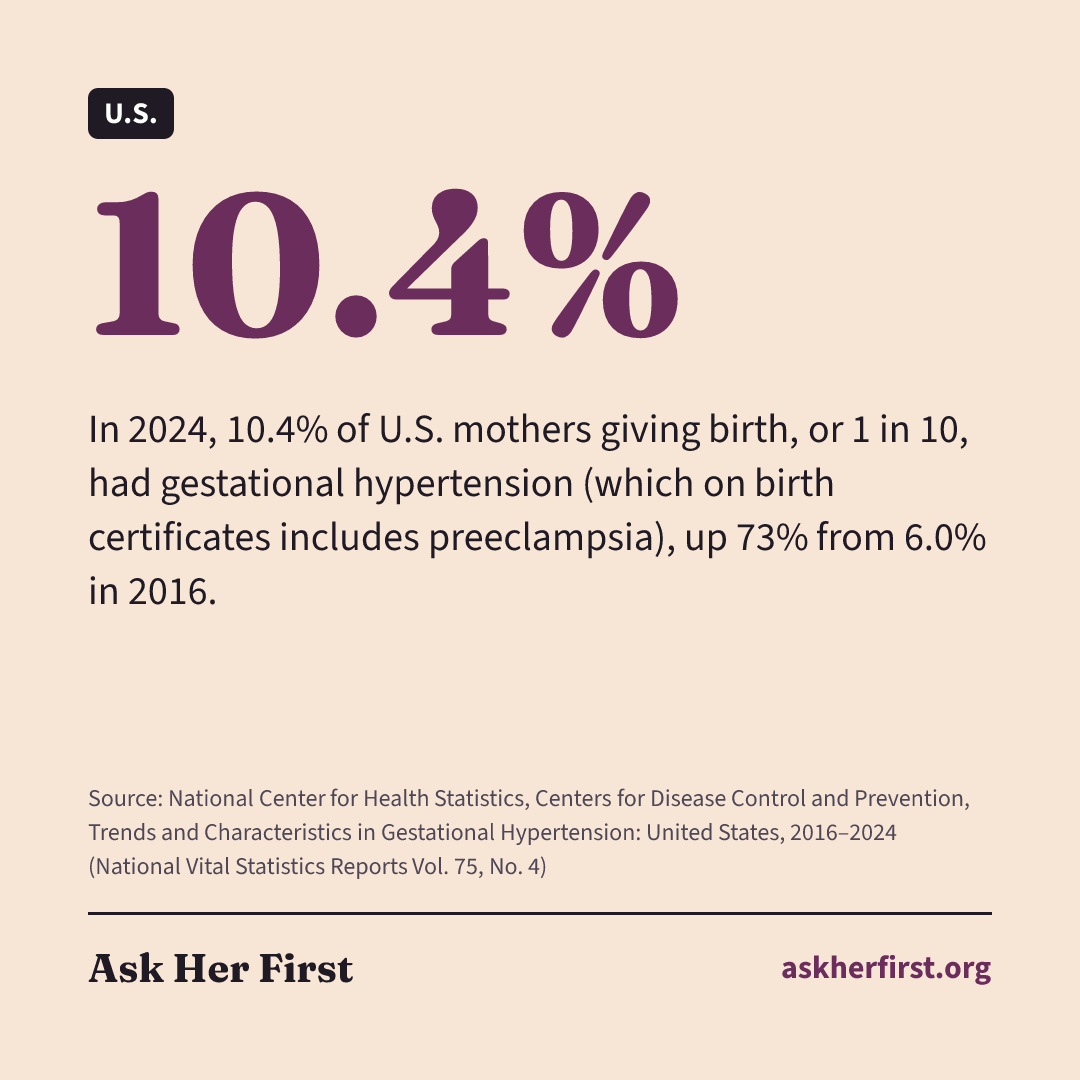
- In 2024, 10.4% of U.S. mothers giving birth, or 1 in 10, had gestational hypertension (which on birth certificates includes preeclampsia), up 73% from 6.0% in 2016.238 Rates rose in every racial and ethnic group, age group, and state, and in 2024 they were highest among American Indian and Alaska Native mothers, followed by Black mothers.238
- Preeclampsia is estimated to occur in 2% to 8% of pregnancies worldwide.235,247
- The share of U.S. mothers diagnosed with gestational diabetes rose from 6.0% in 2016 to 8.3% in 2021.240 A 2026 study of first-time mothers found gestational diabetes kept rising in every U.S. region through 2024, though the increase slowed after 2020 or 2021.241
The burden isn’t shared equally: Black women are at greater risk of developing high blood pressure disorders of pregnancy.255 About two-thirds of Black women with preeclampsia in the U.S. are diagnosed with severe symptoms, compared with fewer than half of White women with preeclampsia.255 The U.S. Preventive Services Task Force (USPSTF) says the higher rates and more severe complications among Black women may be due to a disproportionate burden of social and clinical risk factors that largely result from historical and current structural racism.255
The link to heart disease, stroke, and diabetes
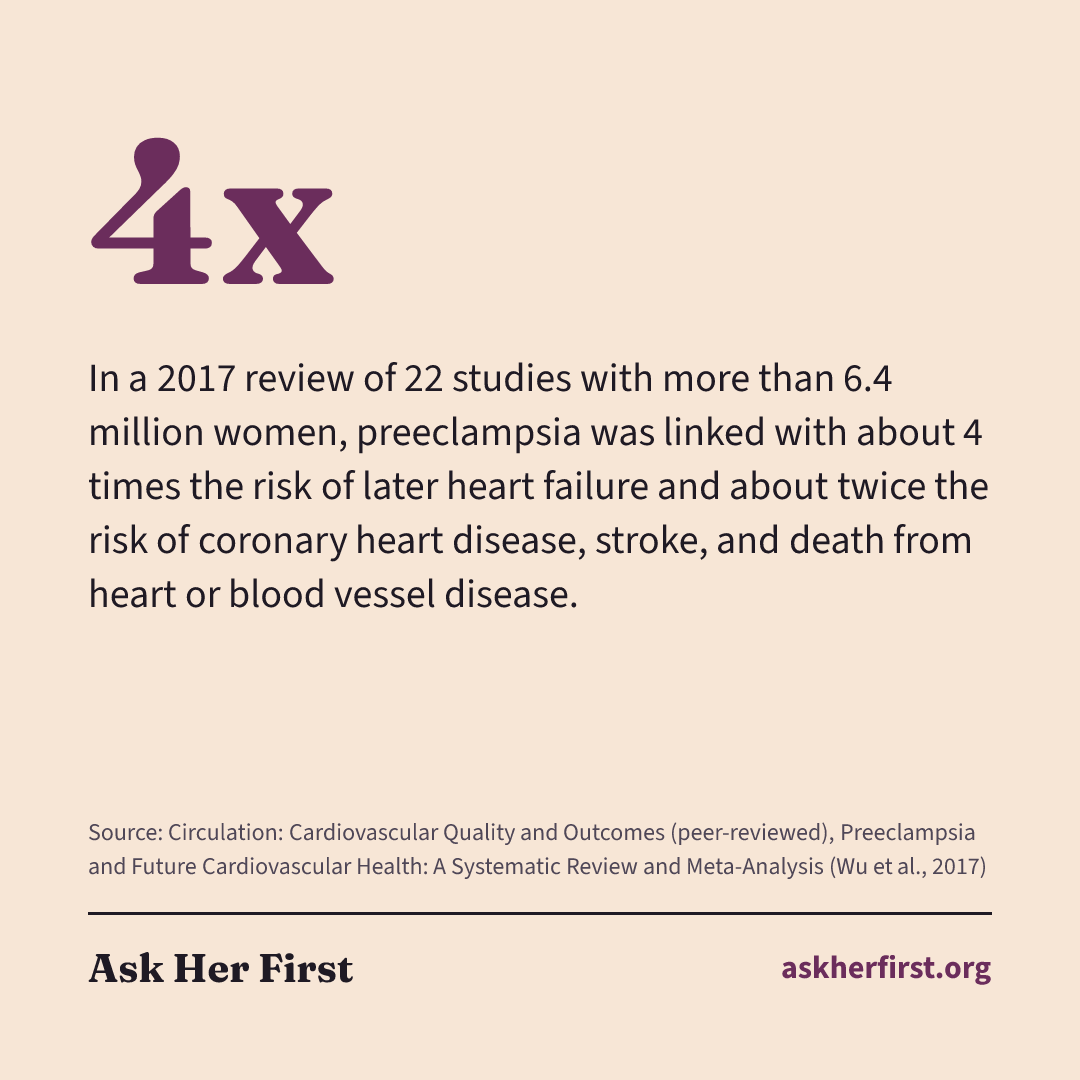
After high blood pressure in pregnancy. The USPSTF says any hypertensive disorder of pregnancy, particularly preeclampsia, is linked with a higher risk of chronic high blood pressure and cardiovascular disease later in life.255 In a 2017 review of 22 studies with more than 6.4 million women, preeclampsia was linked with about 4 times the risk of later heart failure and about twice the risk of coronary heart disease, stroke, and death from heart or blood vessel disease.249 In a U.S. study of 58,671 nurses followed for decades, those who had gestational hypertension or preeclampsia in their first pregnancy developed chronic high blood pressure at 2.8 and 2.2 times the rate of women whose blood pressure was normal in pregnancy.252 In that study, the relative risk of chronic high blood pressure was strongest in the first 5 years after the first birth, the women also had higher rates of type 2 diabetes and high cholesterol, and having these conditions again in a later pregnancy raised the risks further.252
ACOG says women who have had preeclampsia, especially those whose babies were born preterm, have a higher risk later in life of kidney disease, heart attack, stroke, and high blood pressure, and that having preeclampsia once raises the chance of having it again.245
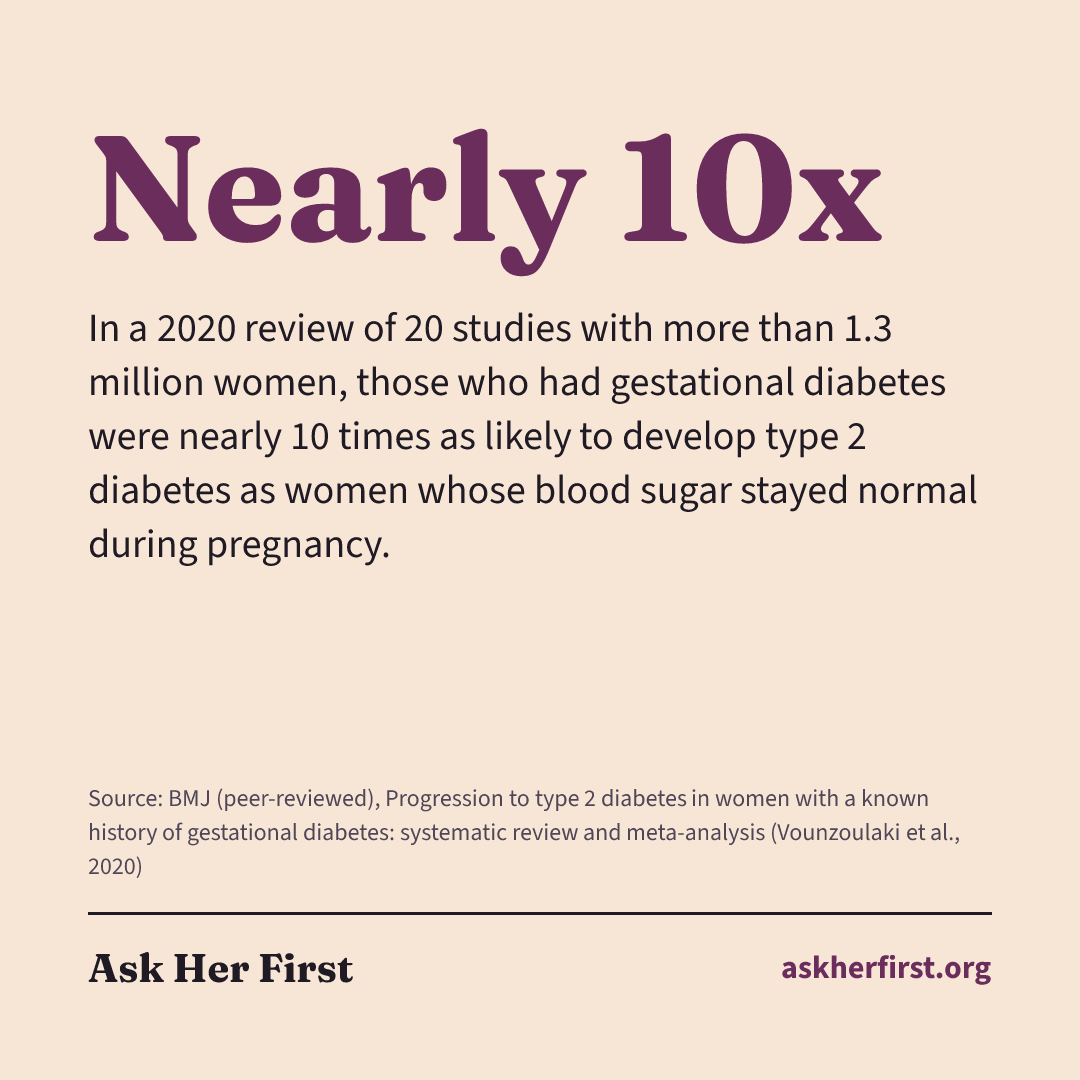
After gestational diabetes. About half of women with gestational diabetes go on to develop type 2 diabetes.236 In a 2020 review of 20 studies with more than 1.3 million women, those who had gestational diabetes were nearly 10 times as likely to develop type 2 diabetes as women whose blood sugar stayed normal during pregnancy.250 The risk isn’t limited to diabetes.251 In a 2019 review of nine studies with more than 5.3 million women, gestational diabetes was linked with twice the risk of later heart and blood vessel events, and the risk was still 56% higher in women who never developed type 2 diabetes.251 That higher risk was already apparent in the first decade after pregnancy.251 Gestational diabetes also raises a baby’s risk of being born too large and of developing obesity or type 2 diabetes in the future.237
For more on heart attack warning signs and heart conditions that affect women, see Heart attack symptoms in women.
Postpartum preeclampsia and warning signs
In rare cases, preeclampsia develops after birth, a serious condition called postpartum preeclampsia.235 CDC says it is typically diagnosed within 48 hours after delivery but can happen up to 6 weeks later, including in women who had no history of preeclampsia during pregnancy.235 One study found that slightly more than half of women who had postpartum preeclampsia did not have preeclampsia during pregnancy.243 The National Institute of Child Health and Human Development (NICHD) says postpartum preeclampsia and eclampsia need to be recognized and treated quickly because the risk of complications may be higher than during pregnancy, and without treatment they can lead to stroke or death.243
CDC says symptoms of postpartum preeclampsia are similar to those of preeclampsia, which include:235
- A headache that will not go away
- Changes in vision, including blurry vision, seeing spots, or changes in eyesight
- Pain in the upper stomach area
- Nausea or vomiting
- Swelling of the face or hands
- Sudden weight gain
- Trouble breathing
Some women have no symptoms of preeclampsia.235 CDC says to tell your health care provider or call 911 right away if you have symptoms of postpartum preeclampsia.235
CDC’s Hear Her campaign also lists urgent maternal warning signs for pregnancy and the year after delivery, including a headache that won’t go away or gets worse over time, changes in vision, trouble breathing, chest pain or a fast-beating heart, and extreme swelling of the hands or face, and says to seek medical care immediately if you have any of them.111 When you get care, CDC advises telling the provider if you are pregnant or were pregnant within the last year.111 See the full list in Maternal health gaps in the U.S. or on CDC’s Hear Her page.
ACOG notes that substantial health problems occur in the early postpartum period.115 In U.S. hospital data from 2013 and 2014, 58.4% of women readmitted for a stroke within 60 days of giving birth were readmitted within 10 days of going home.253
Recommended follow-up care
In the weeks after birth. ACOG recommends that postpartum care be an ongoing process, with contact with an obstetric care provider within the first 3 weeks and a comprehensive visit no later than 12 weeks after birth.115 For women with a hypertensive disorder of pregnancy, ACOG recommends a blood pressure check no later than 7 to 10 days after birth, and within 72 hours for women with severe hypertension.115 For women with chronic hypertension, ACOG’s patient guidance says to keep checking blood pressure at home for 1 to 2 weeks after delivery, because blood pressure often goes up in the weeks after childbirth.245
After gestational diabetes. ACOG says all women who had gestational diabetes should have their blood sugar tested after birth.115 CDC and ACOG say to get tested 4 to 12 weeks after the baby is born and, if results are normal, every 1 to 3 years after that.237,246 One-third of women who had gestational diabetes will have diabetes or a milder form of high blood sugar soon after giving birth.246
For the long term. ACOG says women whose pregnancies were complicated by preterm birth, gestational diabetes, or a hypertensive disorder should be told these conditions are linked with a higher lifetime risk of heart and metabolic disease, and should have their heart disease risk assessed.115 ACOG also says the postpartum period is the time to identify which health care provider will take primary responsibility for ongoing care.115 The AHA says a history of these complications should prompt more vigorous prevention of heart disease and its risk factors, including a heart-healthy diet and more physical activity starting after birth and continuing across the life span.248 It notes that breastfeeding may lower a woman’s later heart and metabolic risk.248
In a future pregnancy. The USPSTF lists a history of preeclampsia, along with diabetes before pregnancy and chronic hypertension, among the factors that put a person at highest risk for preeclampsia.254 For people at high risk, the USPSTF recommends that clinicians prescribe low-dose aspirin after 12 weeks of pregnancy to help prevent preeclampsia.254 That is guidance for clinicians, not a reason to start aspirin on your own: ACOG advises talking with your ob-gyn about whether you should take it.245 The USPSTF also recommends checking blood pressure throughout pregnancy to screen for these disorders.255
Tell every future doctor
ACOG says any history of pregnancy complications should be documented in a woman’s electronic medical record to inform future screening and treatment, and notes that current heart disease risk tools don’t account for these pregnancy outcomes.115 Its patient guidance says that if you had high blood pressure or preeclampsia in a past pregnancy, tell your ob-gyn so your heart and blood vessel health can be monitored throughout your life.246 If you had gestational diabetes, ACOG also says to tell your baby’s doctor so your child can be monitored.246
The AHA says these outcomes should be recognized whenever a woman’s heart disease risk is evaluated, and the 2019 prevention guideline from the American College of Cardiology and the AHA lists preeclampsia among the “risk-enhancing factors” clinicians should discuss with patients.248,298
What we don’t know yet
- Cause or early warning? ACOG describes pregnancy as a natural “stress test” that identifies women at risk.115 NHLBI says the extra strain of pregnancy can expose heart risks that were there before pregnancy and can also cause new problems, such as preeclampsia or gestational diabetes.256 Most of the long-term risk estimates above come from observational studies that follow women over time.252,250,251
- Why preeclampsia happens. Scientists are still investigating possible factors, including the placenta, genetics, the immune system, and hormones.244
- The best prevention after birth. The AHA says future studies of aspirin, statins, and metformin may better inform recommendations for medicines to prevent heart disease in women who have had these complications, and that more research is needed in women who are not White.248 It also says their value in reclassifying heart risk may not be established.248
- Screening right after birth. The USPSTF found little evidence on screening for high blood pressure in the period right after delivery, and suggests counseling patients about preeclampsia symptoms at hospital discharge and follow-up blood pressure checks for those with hypertensive disorders.255
- How many develop diabetes. Estimates vary: CDC says about half, while ACOG gives a wide range.236,246 Between 15% and 70% of women who had gestational diabetes will develop diabetes later in life.246
- Undercounting. Underreporting is a primary limitation of the birth certificate data behind the national trends, and CDC says national gestational diabetes data, first available in 2016, might be underreported.238,240
Questions to ask your doctor
- I had preeclampsia (or gestational hypertension or gestational diabetes). Is that in my medical record, and how does it change my risk of heart disease, stroke, or diabetes?
- When should my blood pressure be checked after I go home, and which readings or symptoms mean I should call you or 911?
- When should I be tested for diabetes after birth, and how often after that?
- Who will be responsible for my care after the postpartum period, and will my pregnancy history be shared with them?
- What can I do now to lower my long-term risk?
- If I get pregnant again, what is my risk of preeclampsia or gestational diabetes, and is low-dose aspirin right for me?
- Are my blood pressure or diabetes medicines safe while breastfeeding?
This article summarizes published research and official health information. It has not been reviewed by a clinician and is not medical advice. How we source.