Screening followed by timely treatment can stop precancer from turning into cervical cancer, and cervical cancer can be cured if it is diagnosed and treated at an early stage.81 Yet many people miss screening, and the pelvic exam is a barrier for some.87 A newer option lets you collect your own sample for an HPV test, and it is changing how screening can reach people.
HPV causes almost all cervical cancer
Virtually all cervical cancer is caused by the human papillomavirus (HPV).82 HPV is a common sexually transmitted infection, and almost all sexually active people will be infected at some point, usually without symptoms.81 Most infections clear on their own within a year or two.82
The danger comes from infections with high-risk HPV types that last for years. They can cause cell changes that may turn into precancer and then cancer if they are not treated.82 This usually takes 15 to 20 years, but it can take 5 to 10 years in women with weakened immune systems, such as those with untreated HIV.81 Smoking, other sexually transmitted infections, and immune status are among the factors that raise the chance of progression.81 Precancers rarely cause symptoms, which is why regular screening matters, even if you have been vaccinated.81
Cervical cancer is the fifth most commonly diagnosed cancer in women worldwide, with about 604,000 new cases and 280,000 deaths in 2024.81An estimated 13,820 new cases of cervical cancer and 4,360 deaths were expected in the U.S. in 2024.84 Deaths from cervical cancer in the U.S. have dropped dramatically since widespread screening began, and most cases now occur in women who have not been adequately screened, diagnosed, or treated.84
Who gets left out
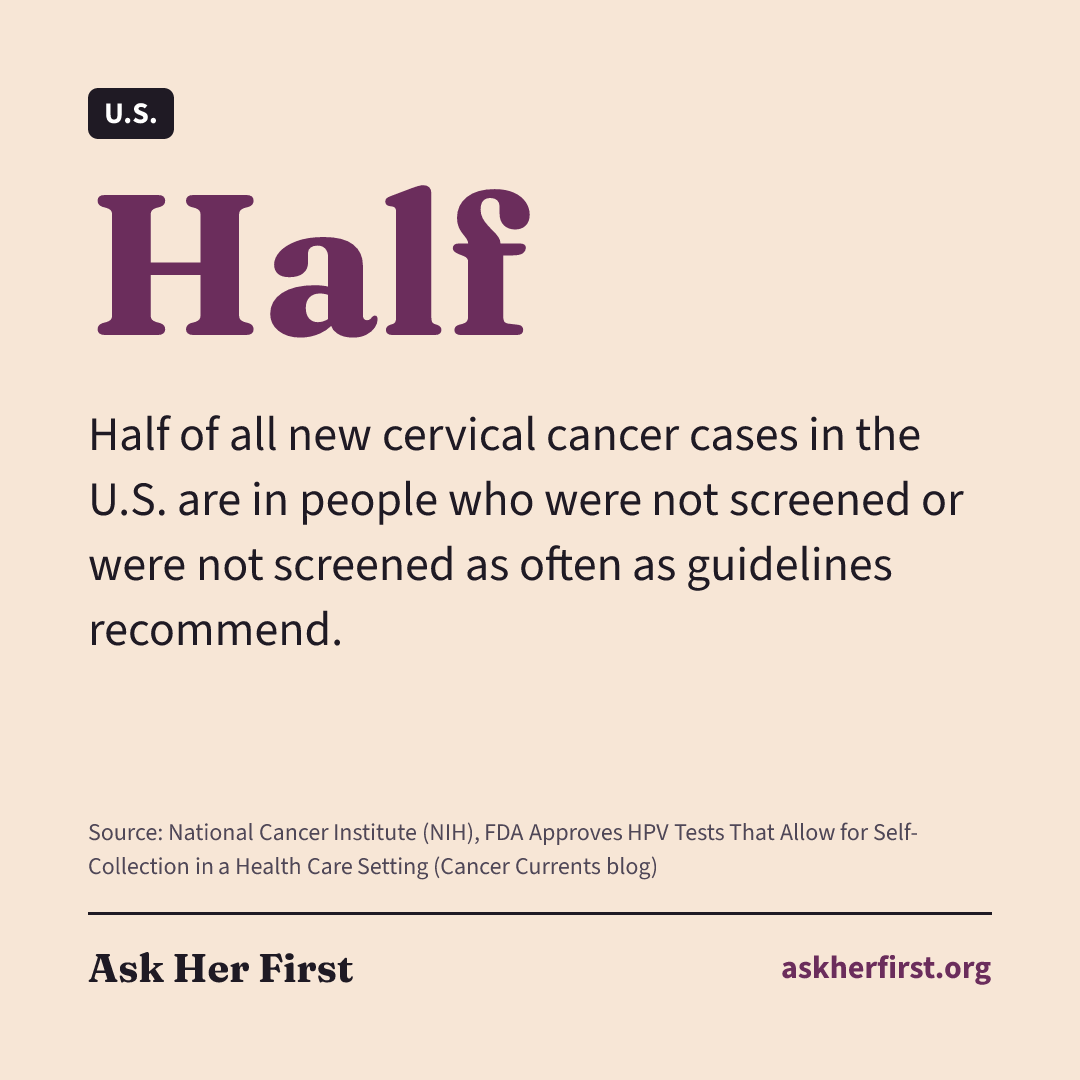
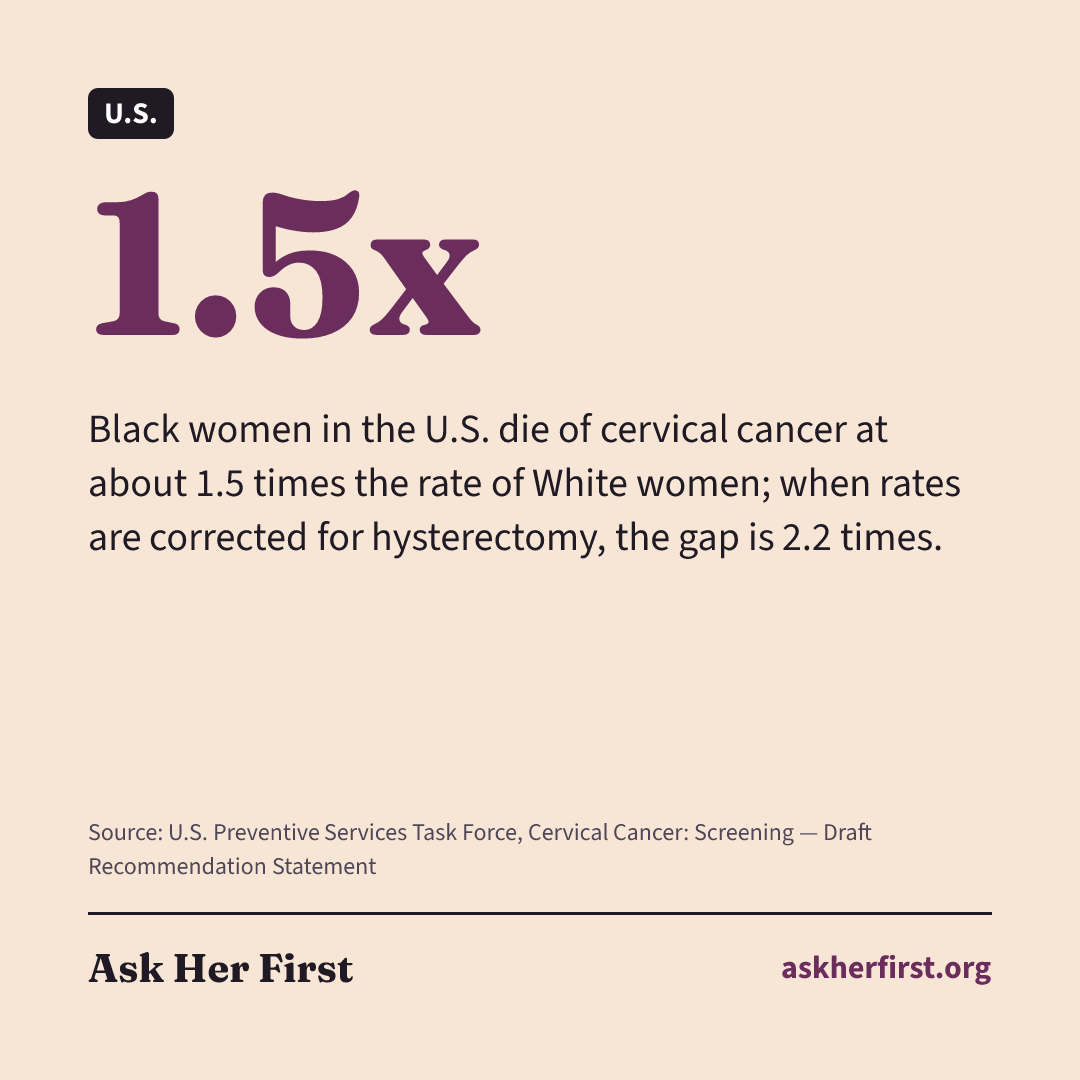
Almost 30% of eligible people with a cervix in the U.S. can't or don't get screened for cervical cancer at the recommended intervals.87 Half of all new cervical cancer cases in the U.S. are in people who were not screened or were not screened as often as guidelines recommend.87The burden is not shared equally. Black women in the U.S. die of cervical cancer at about 1.5 times the rate of White women; when rates are corrected for hysterectomy, the gap is 2.2 times.84 Studies have found that Black women are screened at rates similar to White women, and that poor follow-up after screening and differences in treatment are important reasons for the gap.84 Native American and Alaska Native women also have higher cervical cancer death rates than the national average, and Hispanic women have a significantly higher rate of new cases than White women.84 Appalachia, the southeastern Atlantic states, the lower Mississippi Valley, and the Texas-Mexico border have higher rates of cervical cancer.84
Women living with HIV are six times more likely to develop cervical cancer than the general population.81Barriers go beyond access to a clinic. People may skip a pelvic exam because of personal preference, religious or cultural beliefs, a history of trauma, or a disability or medical condition, and some providers cannot do pelvic exams.87
Current screening recommendations
The USPSTF’s current final recommendation is from 2018.83 It recommends:83
- Ages 21 to 29: a Pap test (cervical cytology) every 3 years
- Ages 30 to 65: a Pap test every 3 years, an HPV test alone every 5 years, or both together (cotesting) every 5 years
- No screening before age 21, after age 65 for people with adequate prior screening who are not at high risk, or after a hysterectomy that removed the cervix (unless there was a history of high-grade precancer or cancer)
These recommendations do not apply to people with a weakened immune system, such as women living with HIV, who need individualized follow-up.83
A proposed update. On December 10, 2024, the USPSTF released a draft update.84 For ages 30 to 65, it prefers an HPV test every 5 years, collected either by a clinician or by the patient.84 A Pap test every 3 years or cotesting every 5 years would remain acceptable alternatives.84 As of September 24, 2026, the USPSTF website still lists this update as a draft, and the 2018 recommendation as the final one.84,83
What HPV self-collection is
With self-collection, you use a swab or brush to collect a sample from your vagina yourself, instead of a clinician collecting cells from your cervix during a pelvic exam.87 The sample is tested for HPV in the same way.87
Does it work as well? The USPSTF reviewed the evidence for its draft update and found “adequate evidence that self-collected HPV screening has similar accuracy to clinician-collected HPV screening.”84 WHO also says self-collected samples have been shown to be as reliable as samples collected by health workers.81
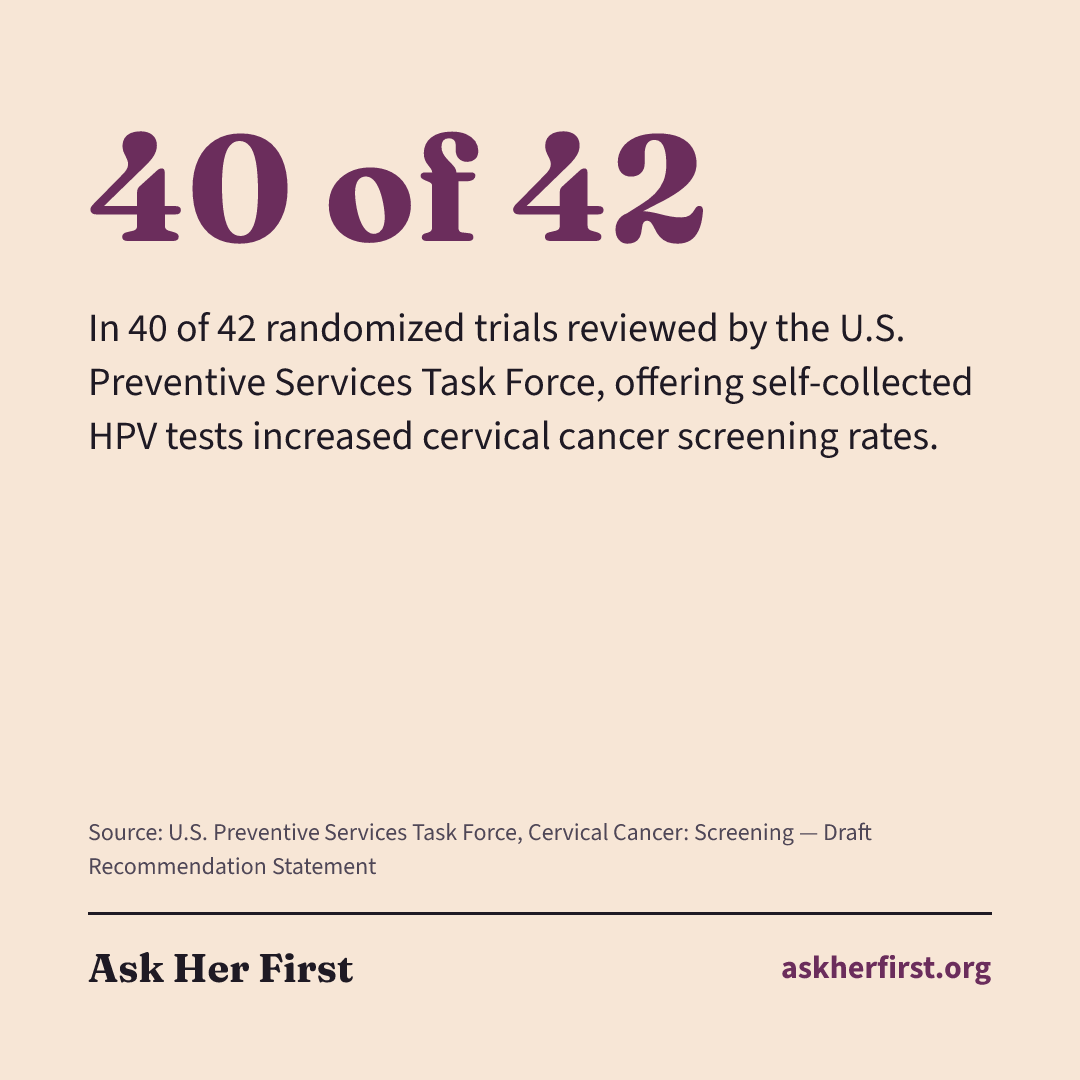
Does it get more people screened? In 40 of 42 randomized trials reviewed by the U.S. Preventive Services Task Force, offering self-collected HPV tests increased cervical cancer screening rates.84 The gains appeared larger in groups that have historically been underscreened, though the USPSTF notes that study designs may have affected these results.84 Most of the evidence for higher screening rates came from self-collection at home.84
What the FDA has approved
In a health care setting (2024). On May 14, 2024, the FDA expanded the approvals of two HPV tests, the BD Onclarity HPV Assay and the Roche cobas HPV Test, so that patients can self-collect a vaginal sample.85,87 Under these approvals, self-collection must happen in a health care setting, such as a primary care office, urgent care, pharmacy, or mobile clinic.87 The FDA said the approvals allow self-collection “when the patient and the health care provider determine that it is not possible for the clinician to collect a cervical specimen.”85
At home (2025). On May 9, 2025, the FDA granted a De Novo request for the Teal Wand, a prescription device for collecting your own vaginal sample.86 The FDA’s order says it “can be used at-home or in any private setting,” and the sample is then tested with an FDA-approved HPV test that the device has been validated with.86
Guideline groups don’t fully agree yet
Expert groups support self-collection, but they differ on how often to repeat the test.
- USPSTF (draft): HPV testing every 5 years, whether you or a clinician collect the sample.84
- Enduring Consensus Guidelines Committee: This U.S. guidelines effort includes federal health agencies, professional societies, and patient advocates.87 It says clinician-collected samples are preferred and self-collected samples are acceptable for people at average risk, and it recommends repeating the test in 3 years after a negative self-collected test.88
- American Cancer Society: In a guideline update published online in December 2025, the ACS endorsed the committee’s approach, calling self-collection acceptable for average-risk people aged 25 to 65, with a repeat test in 3 years after a negative result.89 The ACS notes that most people who test positive will need extra follow-up steps, and data on long-term, real-world effectiveness are limited.89
For some higher-risk people, and for follow-up after abnormal results, clinician-collected samples are still recommended.88,89
A positive test is not the end of the process. If your HPV test is positive, you may need more visits to check for precancer and, if found, a procedure to remove it.87 Treating precancer is simple and effective at preventing cervical cancer.81
HPV vaccination
HPV vaccines prevent infection with the HPV types that cause disease, preventing many HPV-related cancers.82 The HPV vaccine is estimated to prevent up to 90% of cancers caused by HPV infection.82
The CDC recommends HPV vaccination for all preteens, and the vaccine can be given starting at age 9.90 Teens and young adults through age 26 who did not start or finish the series also need it, and some adults aged 27 through 45 may decide to get it after talking with their doctor.90 In January 2026, the CDC updated the U.S. childhood immunization schedule; HPV remains on its list of immunizations recommended for all children.91 Ask your or your child’s clinician how many doses are recommended now.
The global picture
Every country has committed to eliminating cervical cancer as a public health problem.81 WHO defines eliminating cervical cancer as a public health problem as reducing new cases to 4 or fewer per 100,000 women a year.81 WHO's 2030 targets for eliminating cervical cancer are: 90% of girls vaccinated against HPV by age 15, 70% of women screened with a high-performance test by age 35 and again by 45, and 90% of women with precancer or cancer receiving treatment.81 WHO modeling estimates that reaching the cervical cancer elimination goal could prevent 74 million new cases and 62 million deaths by 2120.81 WHO recommends screening with a high-performance test every 5 to 10 years starting at age 30, and every 3 to 5 years starting at age 25 for women living with HIV.81
What we don’t know yet
- Final U.S. guidance. The USPSTF’s update including self-collection was still a draft as of September 24, 2026.84
- Follow-up and results in the U.S. The USPSTF says more research is needed on how self-collection affects follow-up testing and treatment, and on how it affects precancer and cancer detection rates in the United States.84
- Long-term effectiveness. The ACS says data on long-term, real-world effectiveness of self-collection are limited.89
- Self-collection after abnormal results. There are few data on using self-collected samples to monitor people after abnormal results or treatment.88
Questions to ask your doctor
- Am I due for cervical cancer screening? Which test do you recommend for me: HPV, Pap, or both?
- Can I collect my own sample? Can I do it here, or at home?
- If I self-collect, when should I be tested again?
- Does anything in my history, such as HIV, a weakened immune system, or past abnormal results, mean I need a clinician-collected test?
- If my HPV test is positive, what happens next, and how soon?
- I’m over 65. Have I had enough normal tests to stop screening?
- Is the HPV vaccine recommended for me or my child, and how many doses are needed now?
This article summarizes published research and official health information. It has not been reviewed by a clinician and is not medical advice. How we source.