Some pain during your period is normal, but a large amount of pain is not.3 If your periods hurt so much that you miss work or school, or you can’t do your usual activities, the U.S. Office on Women’s Health (OWH) says to talk to a doctor or nurse.4 This page explains the two kinds of period pain, signs that something else may be causing it, what medical sources say can help, and when to get care right away.
What period pain is
The medical name for pain with periods is dysmenorrhea.1 It is most often menstrual cramps: a throbbing, cramping pain in the lower abdomen.5 The pain can be sharp or aching and come and go, and it may come with back or leg pain.3 For some women, severe pain comes with other symptoms, including diarrhea, nausea, vomiting, headache, and dizziness.1
Period pain is not the same as premenstrual syndrome (PMS), which causes symptoms such as bloating, irritability, and fatigue and often starts one to two weeks before a period.5 If mood changes before your period are the hardest part, our guide to PMDD explains a more severe condition.
Primary and secondary period pain
Doctors describe two types of period pain.1
Primary dysmenorrhea is the most common kind, and it is not caused by another condition.5 According to the American College of Obstetricians and Gynecologists (ACOG), it is caused by natural chemicals called prostaglandins, made in the lining of the uterus, which make the muscles and blood vessels of the uterus contract.1 Prostaglandin levels are high on the first day of a period and go down as bleeding continues, which is why the pain tends to ease after the first few days.1 This type begins soon after periods start, and for many women it becomes less painful with age and may improve after giving birth.1 OWH says the risk may be higher for people who got their first period before age 11, have longer or heavier periods, smoke, or have high levels of stress.4
Secondary dysmenorrhea is caused by another health problem.4 ACOG says it tends to get worse over time and often lasts longer than normal cramps: it may start a few days before a period, get worse as the period goes on, and not go away after it ends.1 It often starts later in life.5
How common it is
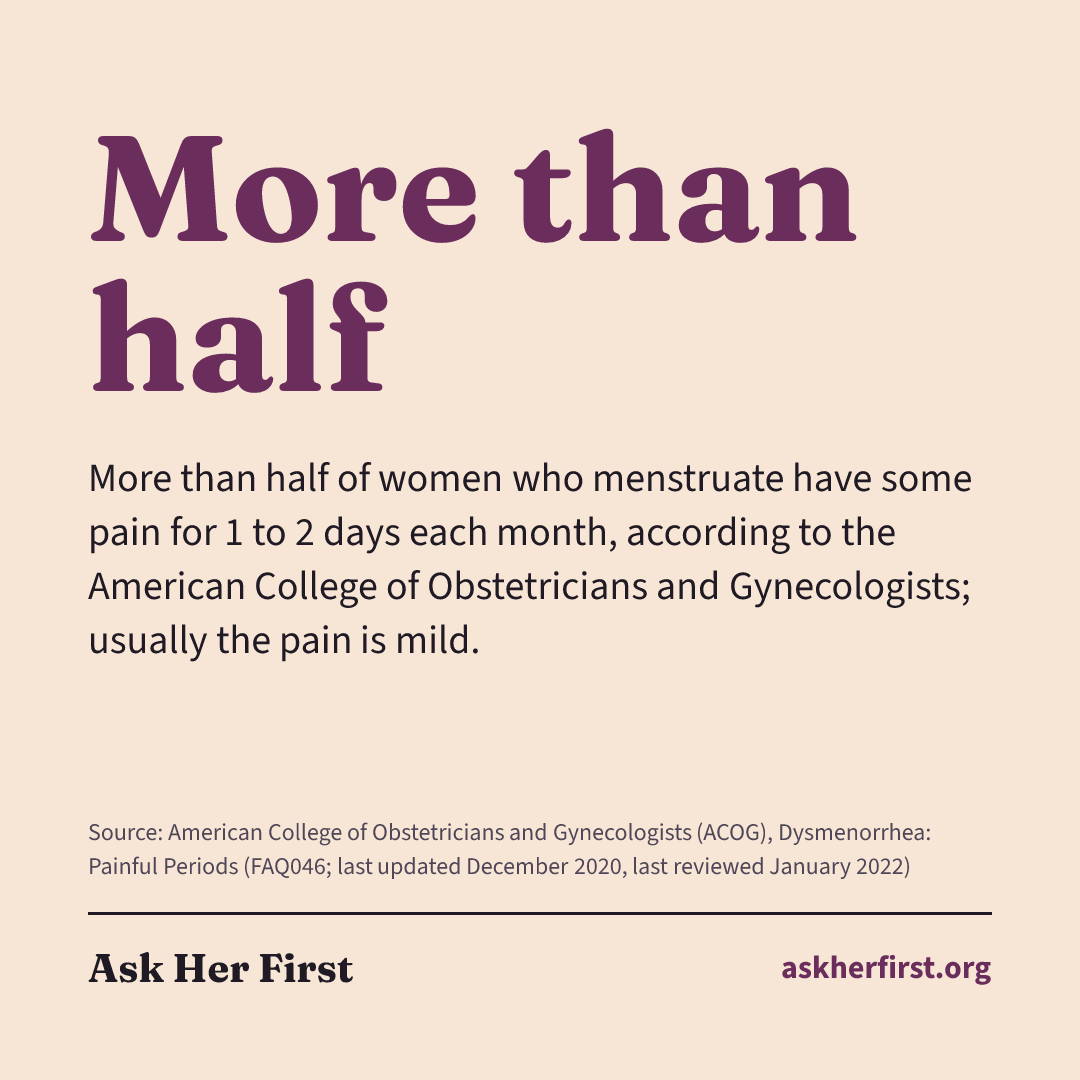
More than half of women who menstruate have some pain for 1 to 2 days each month, according to the American College of Obstetricians and Gynecologists; usually the pain is mild.1 But for some women, the pain is so severe that it keeps them from doing their normal activities for several days a month.1
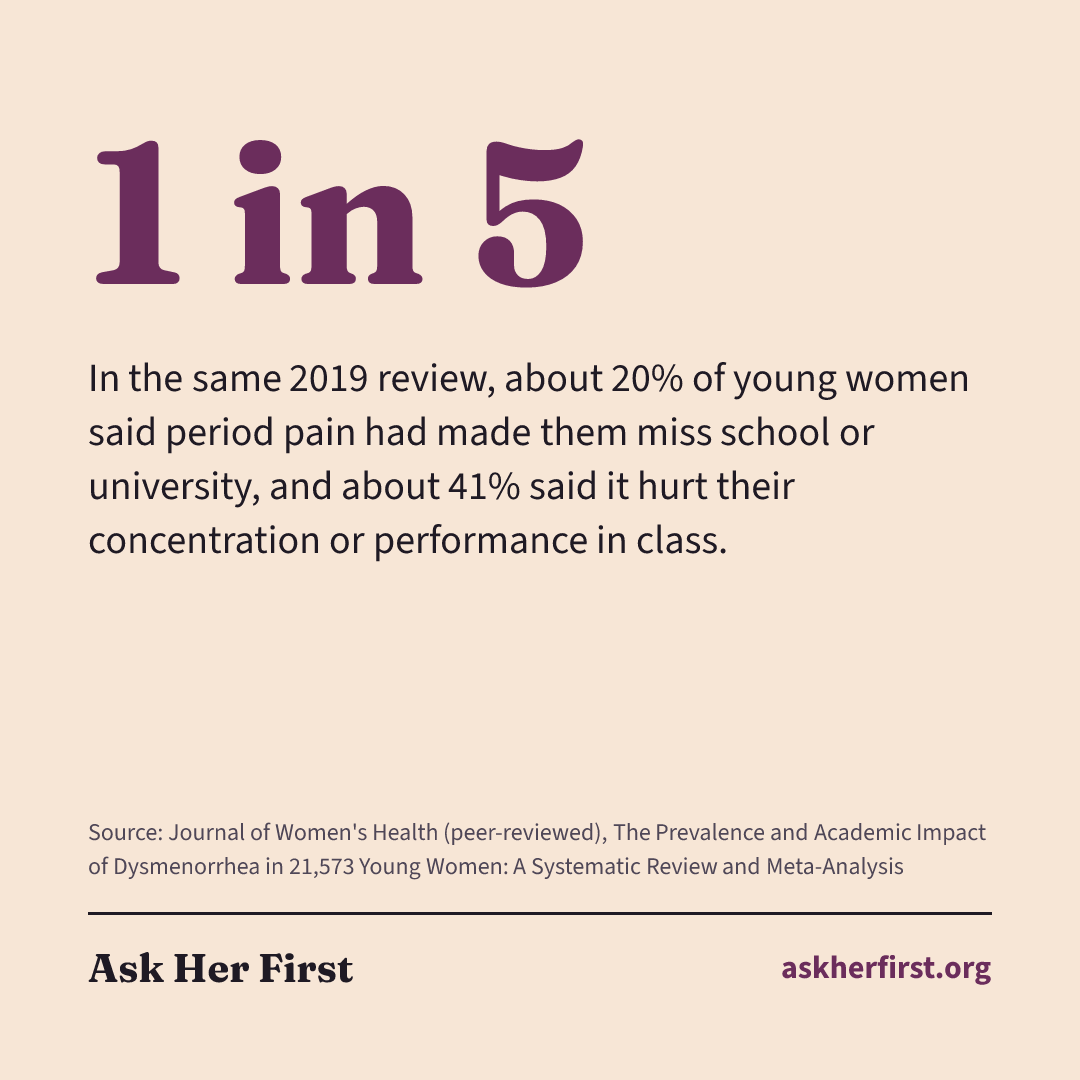
Research on young women shows how much it can get in the way. A 2019 review of 38 studies of more than 21,000 young women under 25 in many countries found that about 71% had period pain.2 In the same 2019 review, about 20% of young women said period pain had made them miss school or university, and about 41% said it hurt their concentration or performance in class.2 MedlinePlus, from the National Library of Medicine, calls painful periods the leading cause of lost time from school and work among women in their teens and 20s.3
Common does not mean you have to put up with it. OWH says to talk to your doctor or nurse if over-the-counter pain medicine doesn’t help or the pain interferes with daily activities like work or school.4
Signs your pain may have another cause
The sources below list signs that are worth raising with a health care provider. They don’t mean something serious is wrong, but they are reasons to get checked.
MedlinePlus says to contact your provider if:3,5
- NSAID pain relievers and self-care don’t help, and the pain interferes with your life
- Your cramps suddenly get worse
- You are over 25 and get severe cramps for the first time
- You have pain even when you are not having your period, it begins more than 5 days before your period, or it continues after your period ends
- Treatments haven’t relieved your pain after 3 months
- You have pain and had an intrauterine device (IUD) placed more than 3 months ago
- You pass blood clots or have other symptoms with the pain
OWH also suggests seeing a doctor to rule out other health problems if you have blood clots in your menstrual flow larger than a quarter.4
When to get care right away
MedlinePlus says to contact a provider right away if you have increased or foul-smelling vaginal discharge, fever with pelvic pain, or sudden or severe pain, especially if your period is more than a week late and you have been sexually active.3
Pain early in a pregnancy can have a serious cause.6 In an ectopic pregnancy, a fertilized egg grows outside the uterus, and ACOG says that if it bursts a fallopian tube, it can cause life-threatening internal bleeding.6 At first it may feel like a typical pregnancy, with signs such as a missed period, and may cause abnormal bleeding or mild cramping on one side of the pelvis.6 ACOG says that if you have sudden, severe pain, shoulder pain, or weakness, you should go to an emergency room.6 If you are in danger or can’t get there safely, call 911.
Conditions that can cause painful periods
Several conditions can cause secondary period pain. Some have their own guides on this site, so this section only summarizes them.
Endometriosis
In endometriosis, tissue similar to the lining of the uterus grows in other places, such as on the ovaries, fallopian tubes, and bladder, and it breaks down and bleeds in response to hormone changes, which can cause pain, especially around a period.1 Scar tissue can form and make organs stick together, which also causes pain.1 Read more: Endometriosis: why diagnosis can take years.
Adenomyosis
Adenomyosis develops when tissue that normally lines the uterus grows into the muscle wall of the uterus.1 ACOG says it is more common in older women who have had children.1
Uterine fibroids
Fibroids are growths in or on the wall of the uterus, and they are almost always not cancer.4 ACOG says fibroids in the wall of the uterus can cause pain, while small fibroids usually don’t.1 Some people with fibroids have pelvic pain and bleeding between periods.4
Read more: Uterine fibroids
Heavy periods
The National Institute of Child Health and Human Development (NICHD) lists heavy menstrual flow among common causes of menstrual pain.7 OWH notes that heavy bleeding can make periods so painful and heavy that normal activities are hard.4 Read more: Heavy periods and iron deficiency.
Infections, IUDs, and other causes
NICHD’s list of common causes also includes IUDs and pelvic scarring from sexually transmitted infections such as chlamydia or gonorrhea.7 MedlinePlus lists pelvic inflammatory disease, sexually transmitted infections, a copper IUD, PMS, and stress and anxiety among things that can be related to secondary period pain.3 OWH notes that ovarian cysts usually cause no symptoms, but some can cause pain during a period or at ovulation.4 ACOG adds that some conditions a person is born with, and conditions such as Crohn’s disease and urinary disorders that can flare during a period, may also cause pain.1 Read more: STI testing.
What helps, according to medical sources
This section describes what medical sources say. It isn’t personal advice; a clinician can help you work out what fits your health and history.
Pain relievers that target prostaglandins. ACOG says medications are usually the first step, and that nonsteroidal anti-inflammatory drugs (NSAIDs), such as ibuprofen and naproxen, reduce the prostaglandins the body makes and make cramps less severe.1 OWH says most period pain can be relieved by over-the-counter NSAIDs.4 NSAIDs aren’t right for everyone: ACOG says women with bleeding disorders, asthma, aspirin allergy, liver damage, stomach disorders, or ulcers should not take them.1 MedlinePlus suggests checking with a provider if you’re not sure whether NSAIDs are safe for you.5
Hormonal birth control. ACOG says methods with estrogen and progestin, such as the pill, patch, and ring, can be used to treat painful periods, and progestin-only methods such as the implant and injection may also reduce pain.1 The hormonal IUD can also be used.1 If you’re thinking about hormonal birth control and have a history of mood problems, our guide to birth control and mood may help you prepare questions.
Heat, movement, sleep, and relaxation. ACOG describes exercise most days of the week, a warm bath or a heating pad or hot water bottle on the abdomen, enough sleep before and during your period, and meditation or yoga as things that can help.1 MedlinePlus also suggests getting enough rest and avoiding alcohol and tobacco.5
Other approaches. ACOG says acupuncture, acupressure, nerve stimulation therapies, and physical therapy may be useful, and that relaxation exercises and biofeedback can teach ways to cope with pain.1
When there’s another cause. Treatment for secondary period pain depends on the condition causing it.5 ACOG describes options that may include hormonal treatments, other medicines, procedures, and, if other treatments haven’t worked, surgery.1
How a clinician may look for the cause
If you have painful periods, ACOG says you and your ob-gyn should talk about your symptoms and your menstrual cycle, and a pelvic exam may be recommended.1 Medication is often a first step, and ACOG says that if it doesn’t relieve the pain, treatment should focus on finding the cause.1
Tests MedlinePlus lists include a complete blood count, tests for sexually transmitted infections, and a pelvic ultrasound.3 If your provider thinks you have secondary dysmenorrhea, you might have laparoscopy, a surgery that lets the provider look inside your body.5 ACOG says it is done through a small cut near the belly button, often under general anesthesia.1
Keeping a symptom record
OWH says keeping track of your symptoms and periods in a diary or calendar can help your doctor or nurse diagnose health problems.4 Because the timing of pain is one of the clues sources describe, it can help to note when your pain starts and stops compared with your period, how bad it is, what you tried, and whether it kept you from work, school, or other activities.
If you feel dismissed
Being told your pain is “normal” when it is disrupting your life can be discouraging. The World Health Organization (WHO) says stigma and social beliefs that often ignore or downplay period pain make the effects of endometriosis worse, and that long delays in diagnosis are common.8 Our guide on what may help you be heard covers ways to prepare for an appointment and what to do if you’re not being taken seriously.
What we don’t know yet
- Supplements. Sources don’t agree. ACOG says vitamin B1 or magnesium may be helpful but that not enough research has been done to recommend them.1 MedlinePlus lists vitamin B6, calcium, and magnesium among self-care steps to try, especially if pain is linked to PMS.3
- Different lists of causes. ACOG describes secondary period pain as caused by a disorder in the reproductive organs, while MedlinePlus’s list also includes PMS and stress and anxiety.1,3
- How current the guidance is. ACOG’s patient FAQ on painful periods was last updated in December 2020 and last reviewed in January 2022.1 Its recommendations may be revised.
- Who the numbers describe. The large 2019 review looked only at young women under 25, in studies from low-, middle-, and high-income countries.2 It doesn’t tell us how common painful periods are among older women or in the U.S. specifically.
Questions to ask your doctor
- Does my pain sound like primary dysmenorrhea, or could another condition be causing it?
- My pain starts before my period, lasts after it, or has gotten worse over time. What could that mean?
- Should I have a pelvic exam or an ultrasound? When would laparoscopy be considered?
- Are NSAIDs safe for me, given my health history and other medicines?
- What are the pros and cons of hormonal treatments for my pain, and what if I want to get pregnant?
- If this treatment doesn’t help within a few months, what is the next step?
- Could endometriosis, adenomyosis, fibroids, or an infection be involved?
- Is my bleeding heavy enough to check my iron levels?
This article summarizes published research and official health information. It has not been reviewed by a clinician and is not medical advice. How we source.
A printout or saved PDF is a copy someone else could find.