Heavy menstrual bleeding is one of the most common problems women report to their health care providers.299 It is not normal, and it can be a sign of a more serious health problem.310 Blood loss from heavy periods can also lead to iron-deficiency anemia.310 Researchers say the link between the two is poorly appreciated and often treated as normal by society, health care providers, and girls and women themselves.319
What counts as a heavy period
A normal period generally lasts up to 7 days, and a normal cycle is typically 21 to 35 days long.311 The American College of Obstetricians and Gynecologists (ACOG) defines heavy menstrual bleeding as excessive menstrual blood loss that interferes with a woman’s physical, social, emotional, or material quality of life.312
CDC says you might have heavy menstrual bleeding if you:299
- Need to change your pad or tampon after less than 2 hours
- Soak through one or more pads or tampons every hour for several hours in a row
- Need to double up on pads, or change pads or tampons during the night
- Have periods that last more than 7 days
- Pass blood clots the size of a quarter or larger
- Have flow heavy enough to keep you from doing the things you would normally do
- Have constant pain in the lower part of your stomach during your period
- Are tired, lack energy, or are short of breath
If you have this kind of bleeding, CDC says to see a health care provider.299 ACOG suggests tracking several cycles on a calendar or app before your visit, including when each period started, how long bleeding lasted, and how heavy it was.310
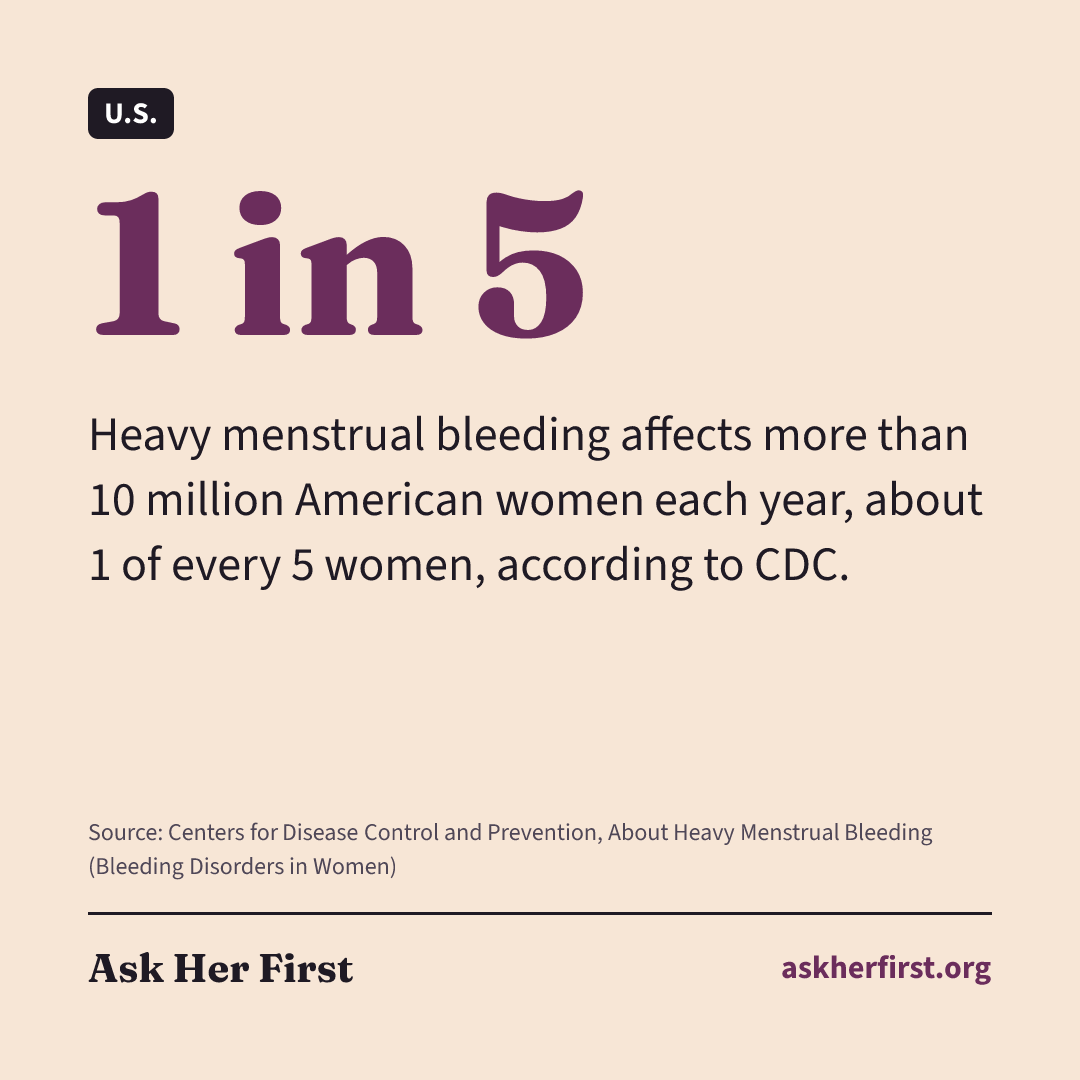
U.S.Heavy menstrual bleeding affects more than 10 million American women each year, about 1 of every 5 women, according to CDC.299Bleeding disorders are often missed
Heavy periods can be a sign of a bleeding disorder, a problem with the way the body controls blood clotting.305,299 The most common bleeding disorder in women is von Willebrand disease (VWD), which is usually inherited.300,306 As many as 1% of women in the U.S. may have a bleeding disorder, and many don't know it, according to CDC.300
VWD occurs equally in men and women, but women are more likely to notice symptoms because of heavy bleeding during their periods and after childbirth.300 U.S.In a CDC study of 102 women with von Willebrand disease, 95% reported heavy menstrual bleeding, their most common bleeding symptom.303 CDC lists these signs of heavy periods in women with VWD:302
- Soaking through a pad or tampon every 1 to 2 hours, or more often, on the heaviest days
- Bleeding that lasts longer than 7 days
- Flooding or gushing of blood
- Passing clots larger than grapes or strawberries
Heavy bleeding during or after childbirth can also be a sign.302 Other signs of a bleeding disorder include nosebleeds that happen for no clear reason and last longer than 10 minutes, easy bruising without an injury, and heavy bleeding after a medical procedure or dental extraction.301 CDC also lists being told you are “low in iron,” or having been treated for anemia, as a possible sign.301 ACOG says you may have a bleeding disorder if you have had heavy periods since you first started menstruating.311
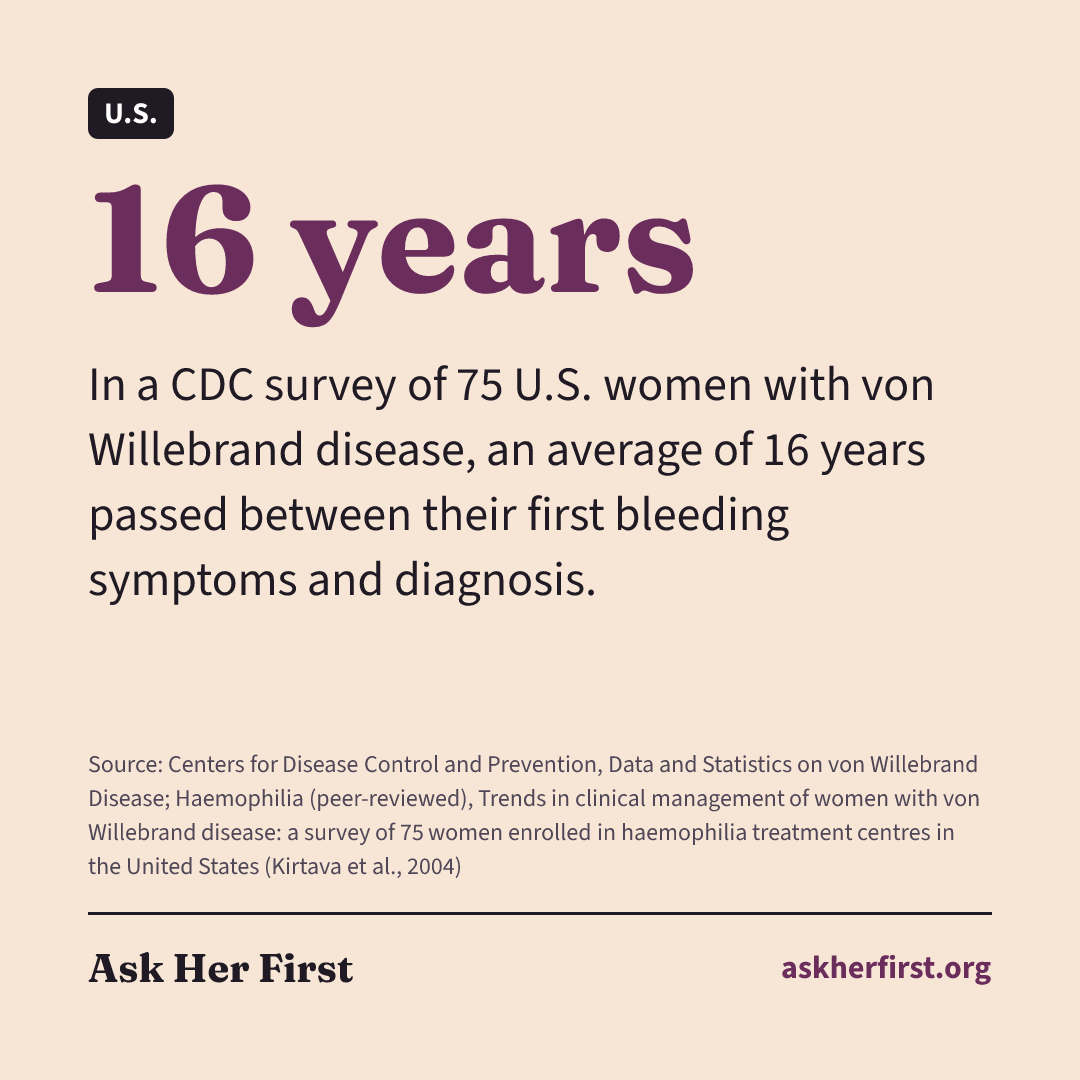
In a CDC survey of 75 U.S. women with von Willebrand disease, an average of 16 years passed between their first bleeding symptoms and diagnosis.303,304 Population studies estimate that 0.8% to 1.6% of people have von Willebrand disease, and about 1 in 1,000 have a clinically significant form, but registries worldwide report an average of only 25.6 cases per million people.309 A 2026 review names low awareness among health care providers, variation in lab tests, and limited access to specialized testing among the reasons VWD is underdiagnosed.309 The National Heart, Lung, and Blood Institute (NHLBI) notes that providers typically screen for bleeding disorders only if you have known risk factors or before certain major surgeries.307
CDC says that if you have heavy periods and your gynecologist has not found any problems during a routine visit, you should be tested for a bleeding disorder.299 Women with heavy periods or VWD are at higher risk of anemia, painful periods, hospital stays, blood transfusions, limits on daily activities, missed work or school, and a lower quality of life.300
Other causes
ACOG lists these causes of heavy menstrual bleeding:310
- Fibroids and polyps. Fibroids are noncancerous growths in the muscle of the uterus, and polyps are noncancerous growths inside the uterus or on the cervix; both can cause irregular or heavy bleeding.311
- Adenomyosis, in which the lining of the uterus grows into its muscular wall.311
- Irregular ovulation, which is common during puberty and perimenopause and can happen with polycystic ovary syndrome (PCOS) or an underactive thyroid.310
- Medicines and devices, including blood thinners, aspirin, and the copper IUD, especially in its first year of use.310
- Endometriosis, pelvic inflammatory disease, and pregnancy-related problems such as miscarriage and ectopic pregnancy.310
- Cancer. Heavy bleeding can be an early sign of endometrial cancer, though most cases are diagnosed in women in their mid-60s who are past menopause.310
Sometimes the cause isn’t known.310 The National Institutes of Health also lists adolescence, when cycles may occur without ovulation, among common causes of heavy or prolonged bleeding.313
Fibroids are very common. About 20% to 80% of women develop uterine fibroids by age 50, according to the U.S. Office on Women's Health.316 They are most common in women in their 40s and early 50s, and not all women with fibroids have symptoms.316 When they do cause symptoms, these can include heavy or painful periods and anemia.314 For African American women, fibroids typically develop at a younger age, grow larger, and cause more severe symptoms.315
How heavy periods drain iron
Your body needs iron to make hemoglobin, the part of red blood cells that carries oxygen.317 Iron deficiency means the body’s iron stores are depleted, and it can progress to iron-deficiency anemia, the most common type of anemia.326,318
For girls and women in their reproductive years, heavy menstrual bleeding is the most common cause of iron deficiency, according to a 2023 review.320 A 2021 international guideline on VWD notes that many women develop iron deficiency and anemia because heavy periods go unrecognized or are not treated well enough.308 U.S.Up to 5% of women of childbearing age develop iron-deficiency anemia because of heavy bleeding during their periods, according to the Office on Women's Health.317
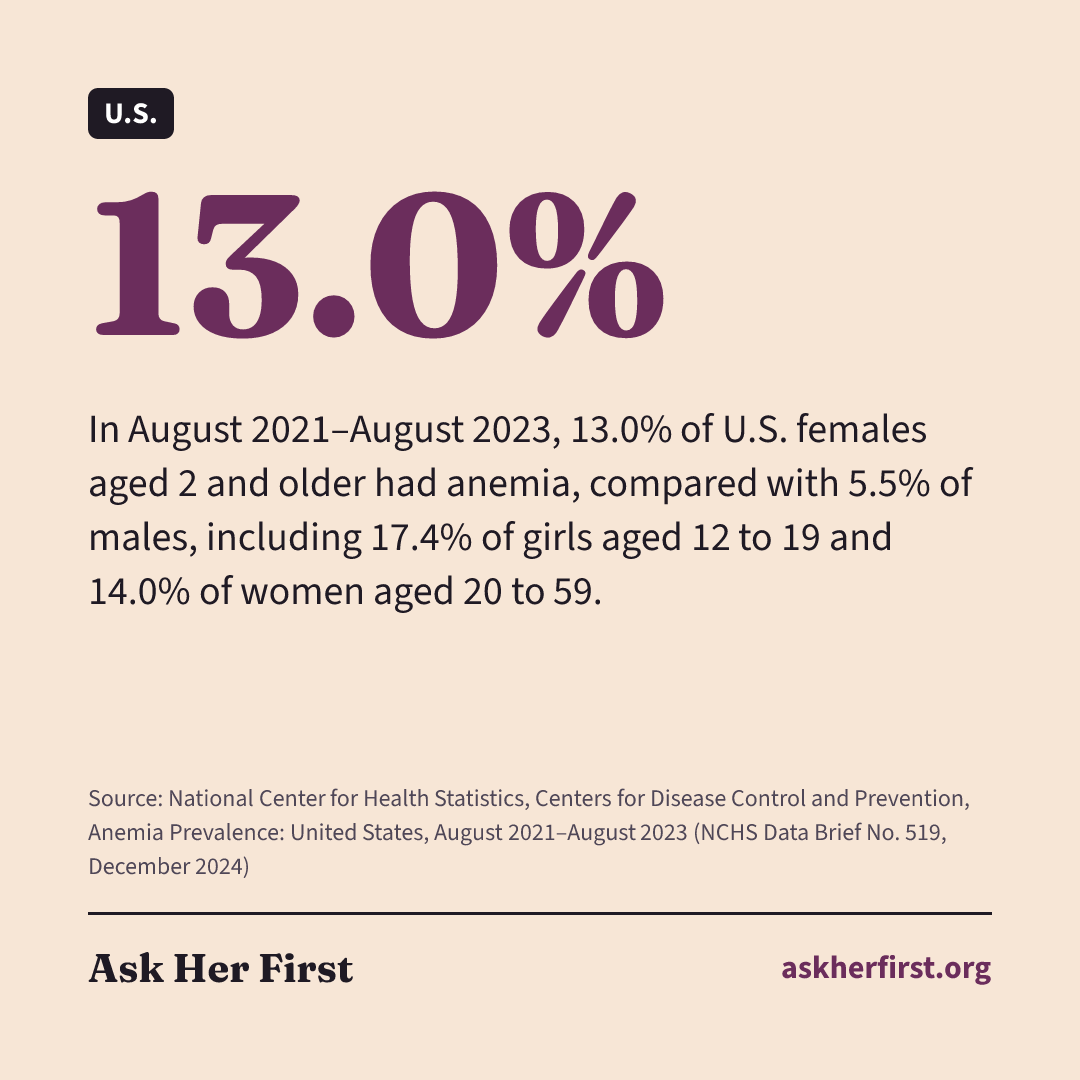
In the U.S., anemia is more common in females than in males.321 In August 2021–August 2023, 13.0% of U.S. females aged 2 and older had anemia, compared with 5.5% of males, including 17.4% of girls aged 12 to 19 and 14.0% of women aged 20 to 59.321 Among U.S. females in August 2021–August 2023, anemia was most common in Black females (31.4%), compared with Asian (15.9%), Hispanic (15.0%), and White (8.3%) females.321 Anemia can have several causes, including poor nutrition, infections, chronic diseases, heavy menstruation, and pregnancy-related issues, but it is often caused by a lack of iron.325
Iron can be low even when there is no anemia.322 In U.S. national survey data from 2003 to 2020, 38.6% of nonpregnant females aged 12 to 21 had iron deficiency (ferritin below 25 μg/L), and 6.3% had iron-deficiency anemia; with a stricter 15 μg/L cutoff, 17% had iron deficiency.322 In the same study, 83.6% of young U.S. females with iron deficiency did not have anemia.322 The authors concluded that current screening guidance may miss many people with iron deficiency.322
Worldwide, the World Health Organization (WHO) says consistent heavy menstrual losses commonly lead to anemia.325 In 2019, anemia affected an estimated 30% (539 million) of non-pregnant women and 37% (32 million) of pregnant women aged 15 to 49 worldwide.325
Symptoms of low iron
Iron-deficiency anemia often develops slowly, and at first you may have no symptoms or only mild ones.317 As it gets worse, symptoms can include:317,318
- Fatigue and weakness
- Dizziness or lightheadedness, and headaches
- Pale skin, and cold hands and feet
- A fast or irregular heartbeat
- Shortness of breath or chest pain, especially with physical activity
- Brittle nails
- Unusual cravings for ice or non-food items, called pica
Left untreated, iron-deficiency anemia can lead to complications such as restless legs syndrome, heart problems, and problems during pregnancy.318
During pregnancy
Iron needs rise during pregnancy, and iron deficiency and sudden blood loss are the two most common causes of anemia during pregnancy and in the weeks after birth, according to ACOG.327 In U.S. national survey data from 1999 to 2006, iron deficiency affected about 18% of pregnant people overall, rising from 6.9% in the first trimester to 14.3% in the second and 28.4% in the third.326
In August 2024, the U.S. Preventive Services Task Force (USPSTF) concluded that the evidence is insufficient to weigh the benefits and harms of routine screening for iron deficiency, or of routine iron supplements, in pregnant people who have no symptoms (an “I” statement).326 The statement does not apply to people who have symptoms, are severely malnourished, or have certain blood conditions such as sickle cell disease.326
Other groups go further: according to the USPSTF’s summary, ACOG, the American Academy of Family Physicians, and CDC recommend screening all pregnant people for anemia at the first prenatal visit, and ACOG recommends screening again at 24 to 28 weeks.326 CDC and ACOG also recommend routine low-dose iron supplements during pregnancy.326 The USPSTF notes that Black and Mexican American pregnant people are disproportionately affected by iron-deficiency anemia, with social factors as possible contributors.326 Your prenatal care provider can explain what they recommend for you.
When to see a doctor
- Get emergency care right away, ACOG says, if you are changing pads or tampons every hour for more than 2 hours in a row and you also have chest pain, shortness of breath, and lightheadedness or dizziness.311
- Talk with your provider about any abnormal uterine bleeding, which ACOG says includes bleeding between periods or after sex, bleeding that lasts more than 7 days, and any bleeding after menopause.311
- Ask about iron testing. The Office on Women’s Health suggests talking with your doctor about testing for iron-deficiency anemia as part of a regular exam if you have heavy periods.317
CDC’s screening recommendations, issued in 1998, call for checking nonpregnant women for anemia every 5 to 10 years starting in adolescence, and every year for women with risk factors such as heavy menstrual blood loss.328
Tests your provider may use
Your provider may ask about your health history, medicines, birth control, and periods, and do a physical exam that includes a pelvic exam.310 Depending on your symptoms and age, tests can include a pregnancy test, an ultrasound, a look inside the uterus with a thin lighted scope (hysteroscopy), a sample of the uterine lining (endometrial biopsy), or an MRI.310
A complete blood count (CBC) can show whether you have anemia, and you may be tested for certain bleeding disorders.311 To diagnose iron-deficiency anemia, NHLBI says doctors check the CBC, hemoglobin, blood iron levels, and ferritin.318 Ferritin is the most widely used blood test for iron deficiency.323 Testing for a bleeding disorder can include tests of how long blood takes to clot and tests that measure von Willebrand factor.307
For teens with heavy periods, ACOG says the evaluation should include checking for anemia, including a ferritin test, looking for hormone problems that stop ovulation, and testing for a bleeding disorder, working with a hematologist if one is suspected.312
Treatment
The type of treatment depends on the cause of the bleeding and how serious it is.299
For heavy bleeding. ACOG says medicines are often tried first.310 They include:
- Hormonal birth control, such as the pill, patch, or ring, or progestin-only methods such as the hormonal IUD, pill, or shot; the IUD and the shot may stop bleeding completely after a year of use.311
- Tranexamic acid, a prescription tablet taken each month at the start of the period.310
- Nonsteroidal anti-inflammatory drugs (NSAIDs) such as ibuprofen, which may help control heavy bleeding and relieve cramps.310
- Hormone therapy for heavy bleeding during perimenopause, after weighing its benefits and risks.310
If medicine doesn’t reduce bleeding, procedures include endometrial ablation, which destroys the uterine lining; uterine artery embolization or myomectomy to treat fibroids; and hysterectomy.310 After ablation, pregnancy is unlikely but can happen and carries a greatly increased risk of serious complications, so ACOG says birth control is needed until after menopause.310
If you have VWD. A 2021 guideline from four hematology organizations suggests hormonal therapy (combined hormonal birth control or a hormonal IUD) or tranexamic acid, rather than desmopressin, for women with VWD and heavy periods who do not want to become pregnant, and tranexamic acid for those who do.308 The panel rated the evidence behind these suggestions as very low certainty.308 It also says patients with heavy periods should be regularly checked and treated for iron deficiency or anemia, and encourages clinics where gynecologists and hematologists see patients together.308
For low iron. NHLBI says iron pills are the most common treatment for iron-deficiency anemia and often take three to six months to restore iron levels; side effects can include constipation, diarrhea, and an upset stomach.318 Iron given through a vein (IV iron) can restore levels in one or a few sessions and is more often used for serious anemia or long-term conditions.318 Blood transfusions may be used for serious iron-deficiency anemia.318 The Office on Women’s Health advises not taking iron pills without first talking to a doctor or nurse, and says treatment for iron-deficiency anemia depends on its cause.317
What we don’t know yet
- Where to draw the line for “low iron.” WHO’s ferritin cutoff for iron deficiency in women, below 15 μg/L, was set by expert opinion.323 An analysis of U.S. national data led by CDC researchers suggested a physiologically based cutoff of about 25 μg/L for nonpregnant women.323 In a 2025 study of women in 12 countries, 36.0% had iron deficiency using physiologically based ferritin thresholds, compared with 20.1% using current WHO thresholds.324
- Who should be screened. The USPSTF does not address screening nonpregnant women and teens, and CDC’s recommendations date to 1998.322,328 Risk factors such as heavy menstrual blood loss are not clearly defined, which likely leads to inconsistent screening, the authors of a 2023 study wrote.322
- Pregnancy. The USPSTF says the overall prevalence of iron deficiency in pregnancy is uncertain, and more research is needed on whether screening or supplements improve health for mothers and babies.326 The pregnancy figures it cites come from survey data collected from 1999 to 2006.326
- Treatment research. The evidence for treating heavy periods in women with VWD is of very low certainty.308
- Normalization. Researchers are calling for changes in clinical guidance and health policy on preventing, screening for, diagnosing, and managing both heavy periods and iron deficiency.319
Questions to ask your doctor
- Is my bleeding heavier than normal? What should I track before my next visit?
- Could a bleeding disorder such as von Willebrand disease be causing this? Should I be tested or see a hematologist?
- Could fibroids, polyps, adenomyosis, or a hormone problem be involved? Do I need an ultrasound?
- Can we check my iron stores (ferritin), not just my hemoglobin?
- If my iron is low, what treatment do you recommend, how long will it take, and when will we recheck?
- Which treatments for heavy bleeding fit my plans for pregnancy, now or later?
- I’m pregnant. Will you screen me for anemia, and what do you recommend about iron?
- What symptoms mean I should get emergency care?
This article summarizes published research and official health information. It has not been reviewed by a clinician and is not medical advice. How we source.