Pregnancy and a new baby can bring a range of emotions, and many women feel overwhelmed, sad, or anxious at times.347 For some, these feelings are more serious and last longer.347 Anxiety during and after pregnancy is as common as depression, and it can be treated.347 Sudden, unwanted thoughts about the baby being harmed are also common after birth, and for most parents they fade over the first months.335
If you ever feel you might act on a thought of harming your baby or yourself, or you are thinking about suicide, that is an emergency: call 911, or call or text 988.344,346
How common perinatal anxiety is
“Perinatal” describes the time during pregnancy or just after birth.347 Studies report two kinds of numbers: how many women have anxiety symptoms on questionnaires, and how many are diagnosed with an anxiety disorder.329
- During pregnancy: A 2017 review of 102 studies (221,974 women in 34 countries) found self-reported anxiety symptoms in 18.2% of women in the first trimester of pregnancy, 19.1% in the second trimester, and 24.6% in the third.329
- After birth: The same review found anxiety symptoms in 15.0% of women 1 to 24 weeks after giving birth, and a diagnosed anxiety disorder in 9.9%.329
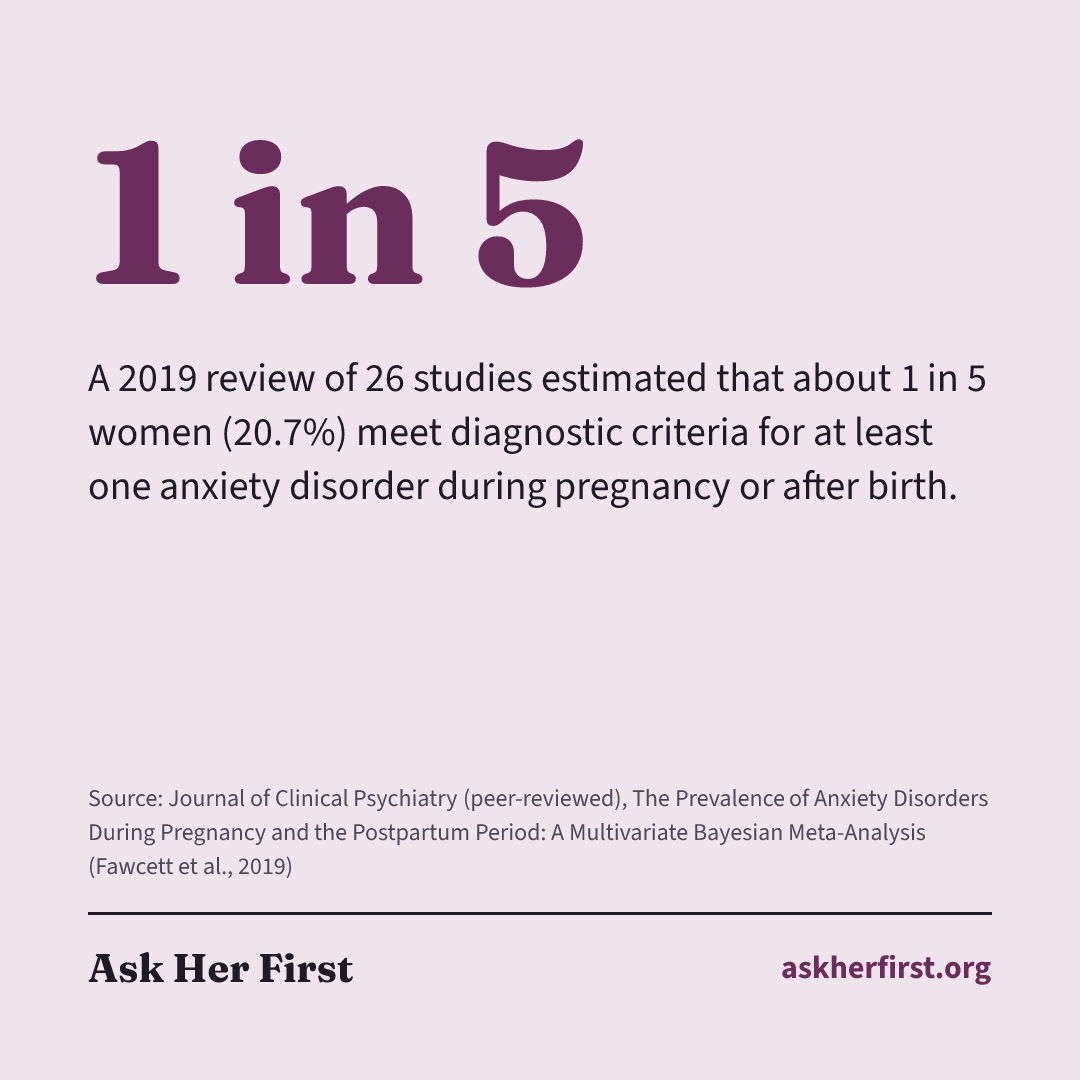
- Diagnosed disorders: A 2019 review of 26 studies estimated that about 1 in 5 women (20.7%) meet diagnostic criteria for at least one anxiety disorder during pregnancy or after birth.331
Rates were higher in low- and middle-income countries.329 Perinatal anxiety often occurs along with perinatal depression.346 A 2017 review of 66 studies found that 8.2% of women had both anxiety symptoms and depressive symptoms between 1 and 24 weeks after giving birth.330
Signs of perinatal anxiety
The U.S. Office on Women’s Health lists these common symptoms:346
- Constant worrying
- Feeling that something bad is going to happen
- Racing or intrusive thoughts
- Changes in sleep and appetite
- Being unable to sit still
- Physical symptoms such as dizziness, hot flashes, and nausea
Women with depression or anxiety around pregnancy also describe feeling very anxious around the baby and their other children, and having scary, upsetting thoughts that don’t go away.347
What intrusive thoughts are
After birth, anxious worries can take the form of unwanted thoughts or images of harm coming to the baby, often along with checking, seeking reassurance, or avoidance, such as not letting others look after the baby.344 Researchers sort them into thoughts of accidental harm, such as the baby suffocating or dying of sudden infant death syndrome, and thoughts of intentional harm.335
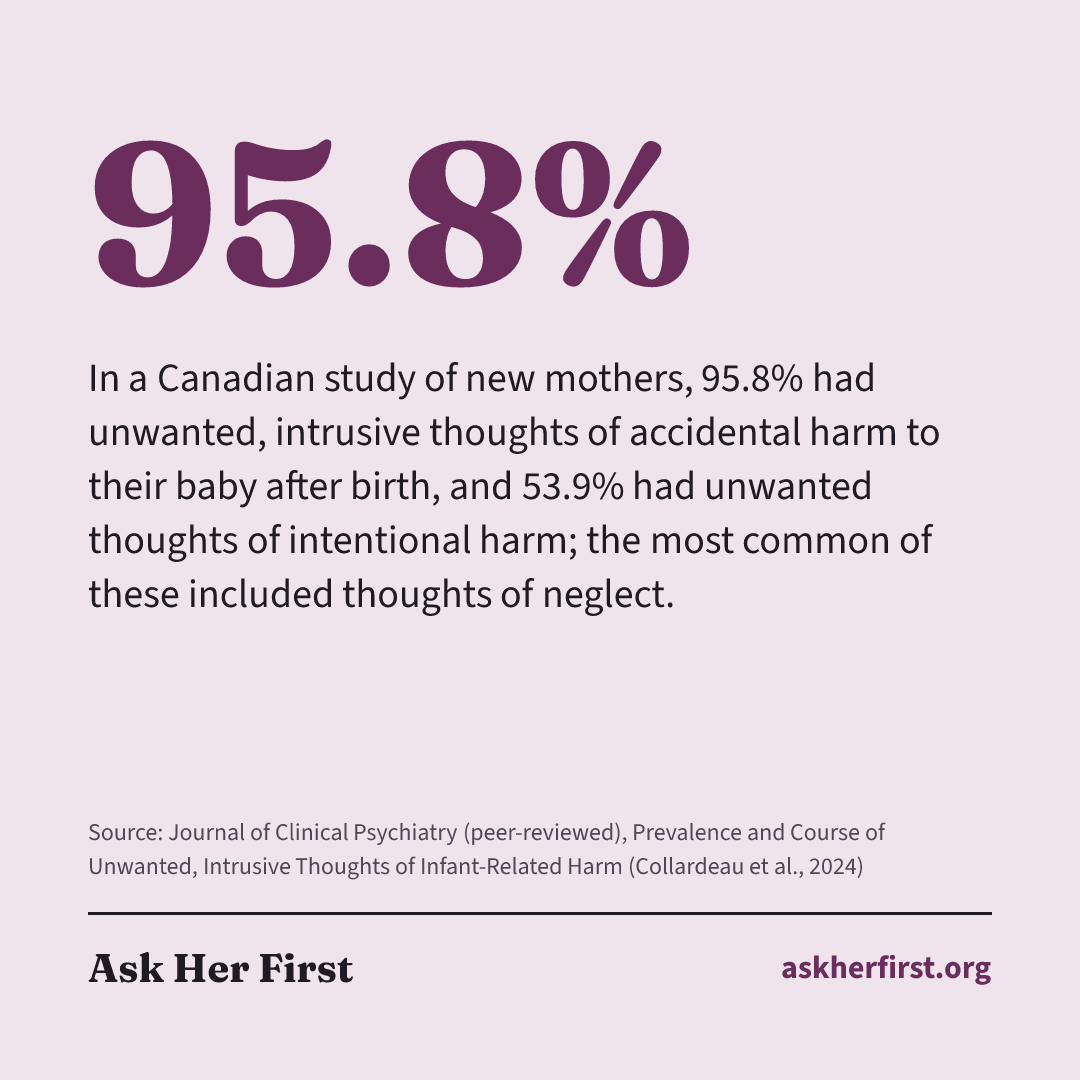
In a Canadian study of new mothers, 95.8% had unwanted, intrusive thoughts of accidental harm to their baby after birth, and 53.9% had unwanted thoughts of intentional harm; the most common of these included thoughts of neglect.335In that study, the thoughts were most intense in about the first 2 months after birth, when many parents found them moderately or extremely distressing.335 For most, they became less frequent or went away by 6 months.335 The authors describe these thoughts as “a normative and typically self-resolving occurrence” after birth.335
Partners have them too: in a study that followed new parents, most mothers and fathers had intrusive thoughts about the baby and did things to neutralize them that were similar to, but milder than, what happens in obsessive-compulsive disorder (OCD).339
Unwanted thoughts can also be sexual in nature.337 In the same Canadian study group, 9.2% of parents reported unwanted, intrusive thoughts of sexual harm involving their baby, and researchers found no link between these thoughts and sexual behavior toward the infant.337 Because the group was small, the researchers say this finding needs to be repeated in a larger study.337
A thought is not an intention
The 2024 perinatal guideline from the Canadian Network for Mood and Anxiety Treatments (CANMAT), published in a peer-reviewed journal, says thoughts of infant harm are common after birth and, in most cases, are intrusive and unwanted and do not represent a safety concern.344 It describes repeated, distressing thoughts of harming a baby on purpose, with no actual intent or desire to do so, as obsessional symptoms with a low risk of harm to the infant.344
In the same group of Canadian mothers, those who had unwanted thoughts of intentionally harming their baby were no more likely to report acting aggressively toward the baby than those without these thoughts (2.6% vs. 3.1%).336 The researchers found no evidence that either these thoughts or OCD raised the risk of harm to the infant.336 A 2017 review found that the research consistently states these thoughts, on their own, carry no increased risk of violence; instead, compulsive behavior is very common.340
The Office on Women’s Health says women with postpartum OCD know their thoughts are disturbing and are unlikely to ever act on them.346 MedlinePlus, from the National Library of Medicine, says such thoughts in mothers with postpartum depression are almost never acted on, but should still be told to a health care provider right away.173
Many parents may hide these thoughts out of shame, stigma, or fear that their baby will be taken away, especially people from groups that have faced discrimination in health care.344 CANMAT suggests clinicians explain that thoughts about infant harm are common, and usually dangerous only in the context of postpartum psychosis or suicidal thinking.344
The risk is different when a parent intends to act, is not distressed by the thoughts, has psychosis, or is at high risk of suicide.344 In those situations, the guideline says the parent should not be left alone with the baby, and treatment should be sought as an emergency.344
When it may be perinatal OCD
OCD involves uncontrollable, recurring thoughts (obsessions), repetitive behaviors (compulsions), or both.348 The National Institute of Mental Health (NIMH) says people with OCD generally can’t control their obsessions or compulsions even when they know they’re excessive, spend more than 1 hour a day on them, and have significant problems in daily life because of them.348
The Office on Women’s Health lists these common symptoms of postpartum OCD:346
- Upsetting thoughts or mental images about the baby that happen over and over
- Behaviors repeated to calm those thoughts and fears, such as constant cleaning, checking, counting, or reordering things
- Going to extreme lengths to keep the baby safe, such as refusing to leave the house or not letting trusted people hold the baby
- Being afraid to be left alone with the baby
- Being overly watchful for dangers or threats to the baby
A 2020 review found aggressive obsessions much more common in OCD after birth than during pregnancy or at other times; obsessions about accidental harm to the baby, checking, and reassurance seeking were also relatively common after birth.341
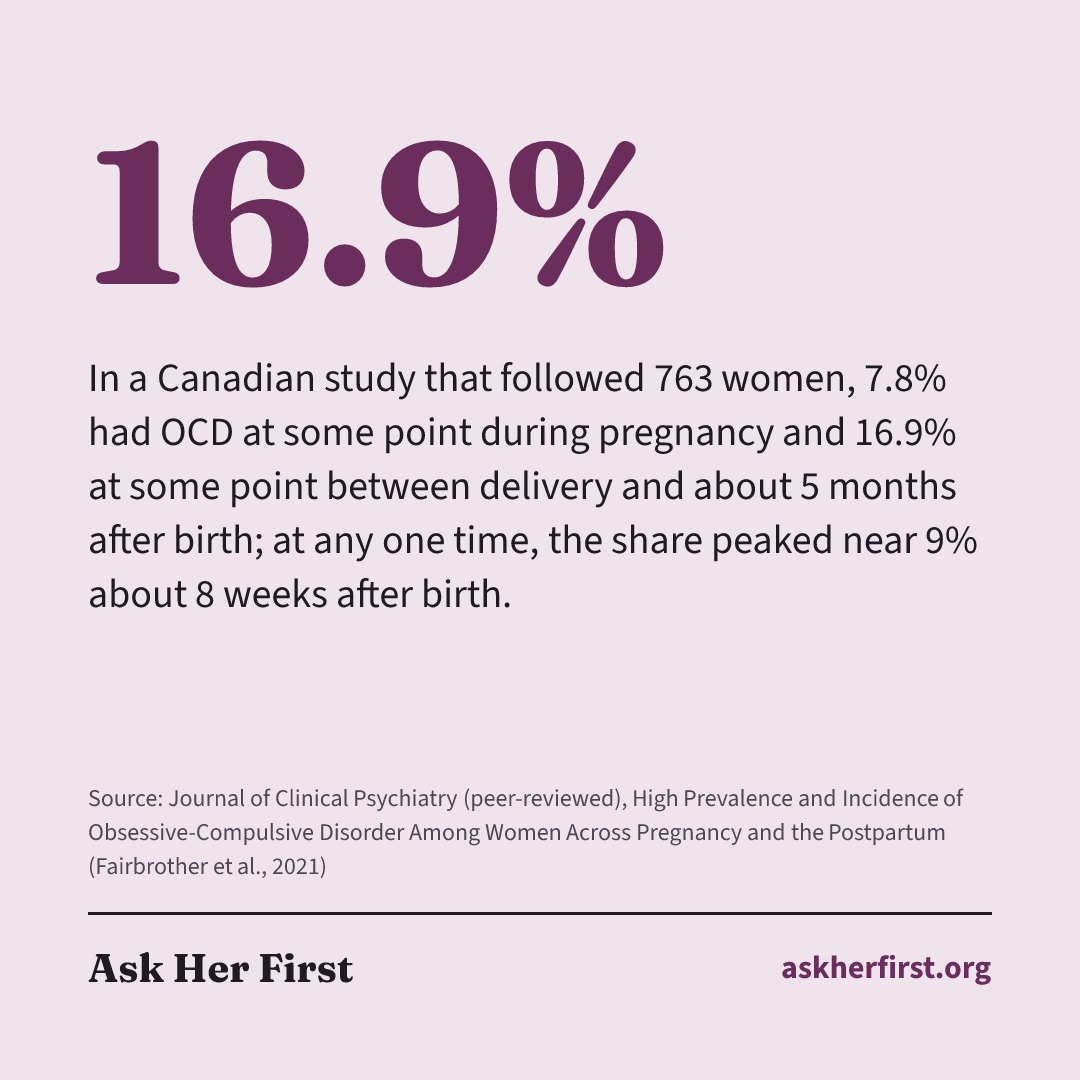
A 2013 review of studies that used diagnostic interviews found obsessive-compulsive disorder (OCD) in 2.07% of pregnant women and 2.43% of women in the year after birth, compared with 1.08% of women in the general population.333 In a Canadian study that followed 763 women, 7.8% had OCD at some point during pregnancy and 16.9% at some point between delivery and about 5 months after birth; at any one time, the share peaked near 9% about 8 weeks after birth.334 The Canadian researchers suggested that when women are encouraged to report baby-related symptoms and current diagnostic criteria are used, estimates of perinatal OCD may be higher than previously believed.334
How it differs from depression and psychosis
Depression. The National Institute of Child Health and Human Development (NICHD) describes depression as feeling sad, empty, or “down,” and anxiety as feeling nervous, worried, or scared.347 In depression after birth, persistent negative thoughts about one’s ability as a parent, and guilt, are common; anxiety tends to focus on worries about the baby’s health and the ability to parent.344 Intrusive worrying in depression and anxiety disorders can sometimes be hard to tell apart from OCD.344
The baby blues, which many women have in the first 2 weeks after birth, can include worry, but they are mild and short-lasting.170 Anxiety or unhappiness that is severe or lasts longer than 2 weeks may be a sign of postpartum depression.170 Our article on postpartum depression vs. the baby blues covers depression in more detail.
Postpartum psychosis is different, and it is an emergency. People with postpartum psychosis may have delusions (beliefs that are not true), hallucinations, mania, paranoia, and confusion.170 Postpartum psychosis is rare: studies reviewed in 2017 found it in about 0.89 to 2.6 of every 1,000 women after childbirth.180 Symptoms typically start within the first week after delivery and almost always within the first 4 weeks, though they can begin later.344 The strongest risk factors are a personal or family history of bipolar disorder and a previous episode of postpartum psychosis.344
One key difference: the Office on Women’s Health says women with postpartum OCD know their thoughts are disturbing, while women with postpartum psychosis may see or hear things that aren’t there or hold an unshakeable belief in something untrue.346 It also says women with postpartum psychosis may have an increased risk of harming their baby.346 NIMH calls postpartum psychosis a psychiatric emergency: anyone with symptoms should call 911 or go to the nearest emergency room.170 Recovery is possible with professional help.170
Who is at higher risk
Depression and anxiety around pregnancy can happen to anyone, and they are not caused by something a parent did or didn’t do.347 Risk is higher for people who have:
- A personal or family history of anxiety or OCD, or of depression346,347
- Had depression or anxiety during a previous pregnancy or after a previous birth346
- A thyroid imbalance346
- A difficult pregnancy or birth, or twins or other multiples347
- Relationship or money problems, little support from family or friends, or an unplanned pregnancy347
CANMAT calls a past history of the same disorder the strongest risk factor, and names lack of social support and stressful life events as major risk factors for perinatal depression and anxiety.344 In an earlier study, high parenting stress and low social support predicted unwanted thoughts of intentionally harming the baby.338
Screening and the self-checks on this site
The U.S. Preventive Services Task Force (USPSTF) recommends screening adults for anxiety disorders, including pregnant and postpartum people (a “B” recommendation, June 20, 2023).345 A positive screen needs a follow-up assessment to confirm a diagnosis.345 A 2023 guideline from the American College of Obstetricians and Gynecologists (ACOG) also covers screening for perinatal anxiety.183
This site offers two free screening questionnaires. On their own, screening tools can’t diagnose anxiety or depression.345,48
- The anxiety self-check uses the GAD-7, seven questions about worry, nervousness, restlessness, irritability, and fear over the past 2 weeks.46 Its developers recommend a score of 10 or more as the point for further evaluation.44 One study in pregnancy suggested a cutoff of 7 may be more sensitive.344
- The after-birth self-check uses the Edinburgh Postnatal Depression Scale (EPDS), 10 questions about the past 7 days.48 It was built to detect depression, and the Illinois Department of Healthcare and Family Services notes it will not detect anxiety disorders.48
Neither questionnaire was designed to detect OCD, and data on the best screening tools for perinatal OCD are limited.44,48,344 A low score doesn’t rule out a problem: CANMAT notes that someone who scores below a cutoff may still need care.344
Treatment
NICHD says treatment can reduce symptoms of anxiety during or after pregnancy, or make them go away completely.347 For OCD, NIMH says treatment helps many people, even those with the most severe forms.348
Talk therapy. CANMAT recommends psychological treatment as a first-line option for moderate anxiety and OCD during pregnancy and after birth, and says cognitive behavioral therapy (CBT) and mindfulness-based therapies are effective for perinatal anxiety symptoms.344 Therapy for perinatal depression and anxiety works individually or in groups, in person or by phone or video.344 The USPSTF found that psychological treatments bring a moderate benefit for anxiety symptoms in adults, including pregnant and postpartum people.345
Exposure and response prevention (ERP). CANMAT recommends CBT with exposure and response prevention for perinatal OCD, based on its well-established effectiveness for OCD at other times, though studies in pregnancy and after birth are fewer.344 A 2022 review found that observational studies and randomized trials support CBT with ERP as a first-line treatment for perinatal OCD.342 In ERP, people are gradually exposed, in a safe setting, to situations that trigger their obsessions while holding back from their usual compulsions; anxiety may rise at first, but compulsions decrease for most people who continue.348 In a small randomized trial, intensive CBT reduced mothers’ postpartum OCD symptoms.343
Medication. CANMAT says antidepressants are first-line medications for anxiety disorders and OCD, used when therapy alone isn’t enough, or first when symptoms are moderate to severe.344 The mainstays for OCD are antidepressants that block serotonin reuptake, such as selective serotonin reuptake inhibitors (SSRIs).344 NIMH says these can take 8 to 12 weeks to start working, and OCD may need higher doses than depression.348 No randomized trials have tested medicines for OCD in pregnancy or after birth.344
Deciding about medicine during pregnancy or breastfeeding means weighing its benefits, including avoiding the harms of an untreated illness, against possible risks of exposure for the baby.344 CANMAT says that, with some exceptions, commonly used psychiatric medicines are considered fairly low risk in pregnancy, and most appear to be low risk during breastfeeding.344 NIMH advises talking with a health care provider before starting or stopping any medication.170
Getting help now
Health agencies say not to wait: CDC lists thoughts about harming yourself or your baby among the urgent maternal warning signs that need medical care right away, during pregnancy and in the year after delivery.111 The Office on Women’s Health advises anyone having thoughts about harming their baby to get help immediately by calling or texting 988.346
CANMAT advises clinicians to fully assess any disclosure of thoughts of harming a baby before referring to child protection services, in case a referral is unnecessary; reporting rules vary by location.344
What we don’t know yet
- How common these conditions really are. Estimates vary widely between studies, which use different designs, assessment tools, and timing.331,332,342
- Who was studied. Several key studies on intrusive thoughts cited here come from the same group of English-speaking parents in British Columbia, Canada.335,336,337
- Treatment. There are no randomized trials of medicines for perinatal OCD, and research on CBT specifically for perinatal OCD is limited.344 The USPSTF lists the accuracy of screening tools and the effectiveness of anxiety treatment in pregnant and postpartum people as research gaps, and found inadequate evidence on medication for anxiety in pregnancy.345
- Diagnosis. The DSM-5-TR diagnostic manual has a “peripartum onset” label for depression and bipolar disorder, but none for anxiety disorders or OCD, even though they are common at this time.344
Questions to ask your doctor
- Could what I’m feeling be anxiety, OCD, depression, or a mix?
- I’ve been having unwanted, scary thoughts about my baby. Can we talk about what they mean and what might help?
- Will you screen me for anxiety, not just depression?
- Can you refer me to a therapist trained in CBT or exposure and response prevention (ERP)?
- If medicine might help, what are the benefits and risks for me and my baby during pregnancy or breastfeeding?
- Could a thyroid problem or another health issue be contributing?
- What signs mean I should call you right away, go to the emergency room, or call 911?
This article summarizes published research and official health information. It has not been reviewed by a clinician and is not medical advice. How we source.