Eating disorders are often pictured as a problem of teenage girls. But the National Institute of Mental Health (NIMH) says eating disorders can affect people of all ages, racial and ethnic backgrounds, body weights, and sexes.92 A UK study found that eating disorders are common in women in midlife, both as new illnesses and as long-lasting ones.94 Eating disorders are serious and can be life-threatening, and they can be treated successfully.93
What eating disorders are
NIMH describes eating disorders as serious illnesses marked by severe disturbances in a person’s eating behaviors.92 They are not a choice.92 Even people who appear healthy can have an eating disorder and be extremely ill, and people with eating disorders can be underweight, average weight, or overweight.92 The exact cause is not fully understood, but research suggests a combination of genetic, biological, behavioral, psychological, and social factors can raise a person’s risk.92
NIMH describes four common types:92
- Anorexia nervosa: severely avoiding or restricting food because of a distorted self-image or an intense fear of gaining weight. Some people with anorexia also binge eat and purge.
- Binge-eating disorder: regularly losing control of eating and eating unusually large amounts of food.
- Bulimia nervosa: regularly binge eating and then trying to prevent weight gain, for example by forced vomiting or using laxatives. People with bulimia may be an average weight or overweight.
- Avoidant restrictive food intake disorder (ARFID): limiting the amount and variety of food because of anxiety or fear about what might happen when eating, such as choking or vomiting, or because of dislike of a food’s look or texture.
How common they are in U.S. adults
The national estimates on NIMH’s statistics page come from a diagnostic interview survey done in 2001–2003.19 In that survey, all three eating disorders it measured were more common in women than in men.19
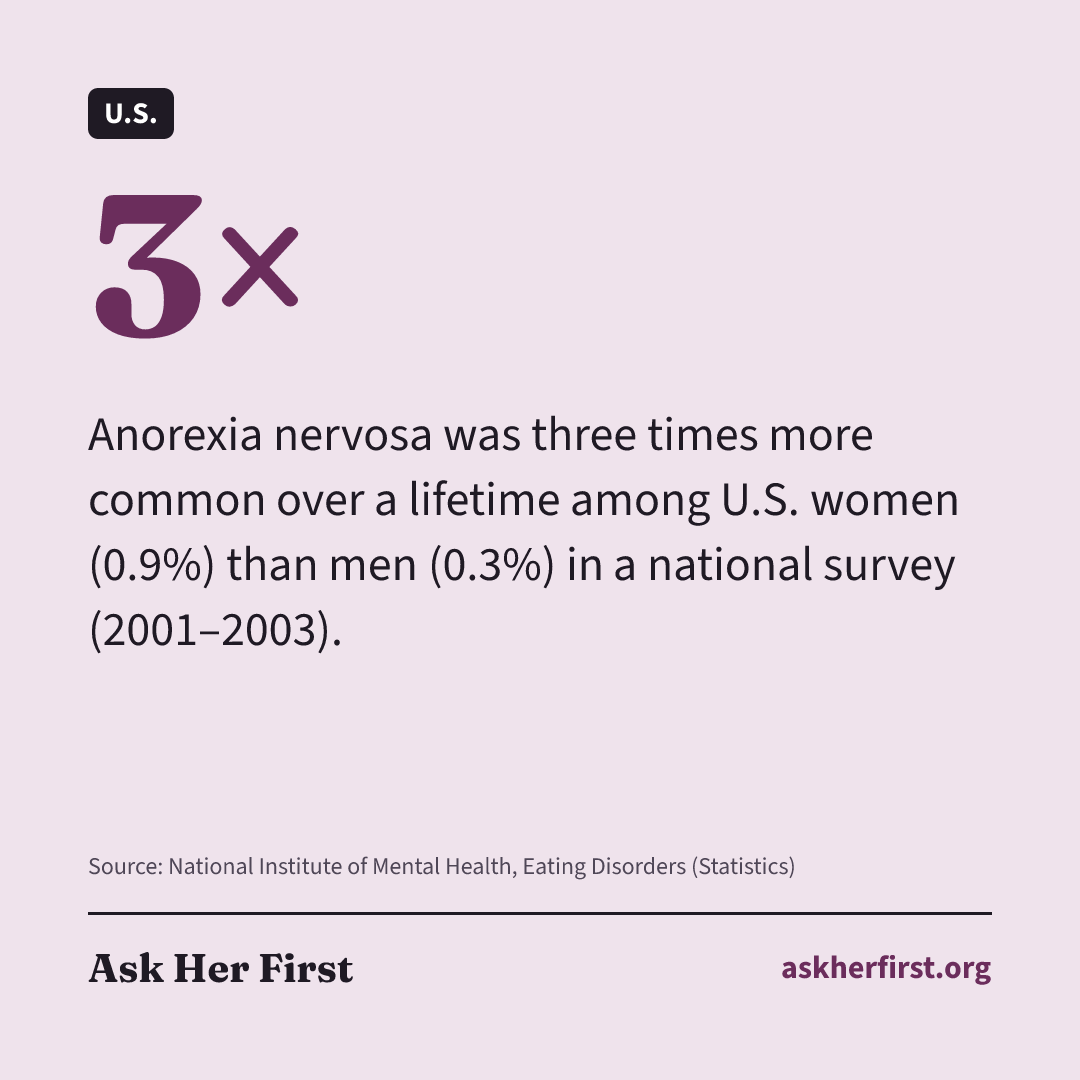
Anorexia nervosa was three times more common over a lifetime among U.S. women (0.9%) than men (0.3%) in a national survey (2001–2003).19 Bulimia nervosa was five times more common among U.S. women (0.5%) than men (0.1%) in the past year, in a national survey (2001–2003).19 Binge eating disorder was twice as common among U.S. women (1.6%) as men (0.8%) in the past year, in a national survey (2001–2003).19The same survey found a median age of onset of 21 for binge-eating disorder and 18 for bulimia and anorexia.19 A median means half of people started earlier and half started later, and binge-eating disorder was not limited to young adults. 1.5% of U.S. adults aged 45–59 had binge eating disorder in the past year, similar to adults aged 18–29 (1.4%), in a national survey (2001–2003).19
Eating disorders in midlife
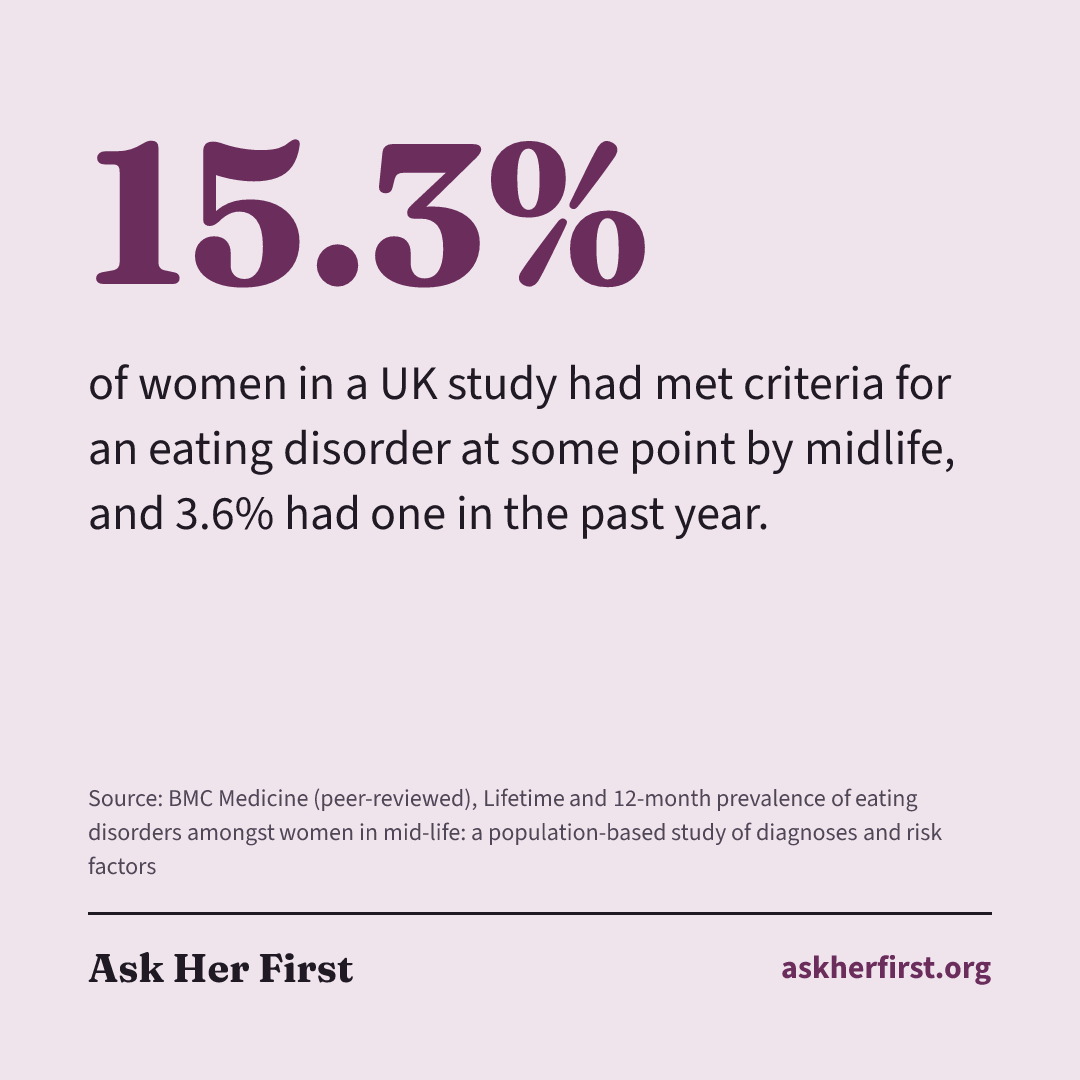
Research focused on midlife women is newer. When a UK team published its study in 2017, the authors said no research had specifically looked at the lifetime and past-year rates of eating disorders among women in midlife.94 Their study, which used structured interviews with thousands of women in a long-running community study, found eating disorders were common. 15.3% of women in a UK study had met criteria for an eating disorder at some point by midlife, and 3.6% had one in the past year.94 The authors concluded that active eating disorders are common in midlife, due both to new cases and to long-lasting ones, and that few of the women had accessed health care.94
A 2023 review of recent studies reached a similar conclusion. Recent studies reviewed in 2023 found that between 2.1% and 7.7% of older women met full criteria for an eating disorder, compared with less than 1% of older men.97 It found that eating disorders become less common with age in women but do not approach zero even at very old ages.97
An online survey of women 50 and older found that eating disorder symptoms, dieting, body checking, and concerns about weight and shape were widely reported.95 The study used a web-based convenience sample, meaning participants were not randomly selected.95
The menopause question
Some researchers think perimenopause, the transition to menopause, may be a vulnerable time for an eating disorder to develop or return.98 Their reasoning is that, like puberty, perimenopause involves changes in estrogen, a hormone that research links to eating disorder risk at younger ages.98 The 2023 review reported that women with severe menopausal symptoms showed more eating disorder symptoms than women with mild symptoms during the menopausal transition.97 This is an active research question, not a settled finding.98
Why they can be missed in adults
A 2017 review said that medical problems related to age, the stigma of having an eating disorder at an “untypical” age, and the glorification of sports activity often get in the way of recognizing eating disorders in midlife and older adults.96 It also found that most middle-aged and older people with eating disorders are not in treatment.96 U.S. survey data also show gaps in treatment. 33.8% of U.S. adults with anorexia nervosa had ever sought treatment specifically for their eating disorder, compared with 43.2% of those with bulimia nervosa and 43.6% with binge eating disorder, in a national survey (2001–2003).19
Warning signs
NIMH lists these signs and symptoms. Anyone with any combination of these symptoms may have an eating disorder and should talk to a health care provider.92
Anorexia nervosa: extremely restricted eating, intense and excessive exercise, extreme thinness, a relentless pursuit of thinness, intense fear of gaining weight, a distorted body image, and denial of how serious a low body weight is.92
Binge-eating disorder: eating unusually large amounts of food in a short time, eating quickly during binges, eating when full or not hungry, eating until uncomfortably full, eating alone or in secret, feeling distressed, ashamed, or guilty about eating, and dieting often, possibly without weight loss.92
Bulimia nervosa: the same signs as binge eating, plus trying to get rid of food afterward by throwing up, taking laxatives, exercising excessively, or fasting.92
ARFID: severe restriction of the types or amount of food eaten, lack of appetite or interest in food, dramatic weight loss, stomach problems with no other known cause, and a range of preferred foods that keeps getting smaller.92
Health risks
Eating disorders can harm both physical and mental health.92 NIMH lists these possible long-term effects:92
- Anorexia nervosa: thinning of the bones (osteopenia or osteoporosis), mild anemia, muscle wasting and weakness, severe constipation, low blood pressure, slowed breathing and pulse, damage to the heart, constant tiredness, infertility, brain damage, and multiple organ failure.
- Binge-eating disorder: obesity, type 2 diabetes, heart and blood vessel problems, sleep problems, and digestive symptoms such as acid reflux, bloating, and diarrhea.
- Bulimia nervosa: a chronically sore throat, swollen salivary glands, worn tooth enamel and tooth decay, acid reflux and other digestive problems, severe dehydration, and electrolyte imbalance.
- ARFID: unhealthy weight loss, malnutrition, and problems with school, work, and relationships.
Anorexia nervosa can be fatal and has an extremely high death rate compared with other mental disorders, according to NIMH.92 People with anorexia are at risk of dying from medical complications of starvation, and suicide is a leading cause of death for people with anorexia.92
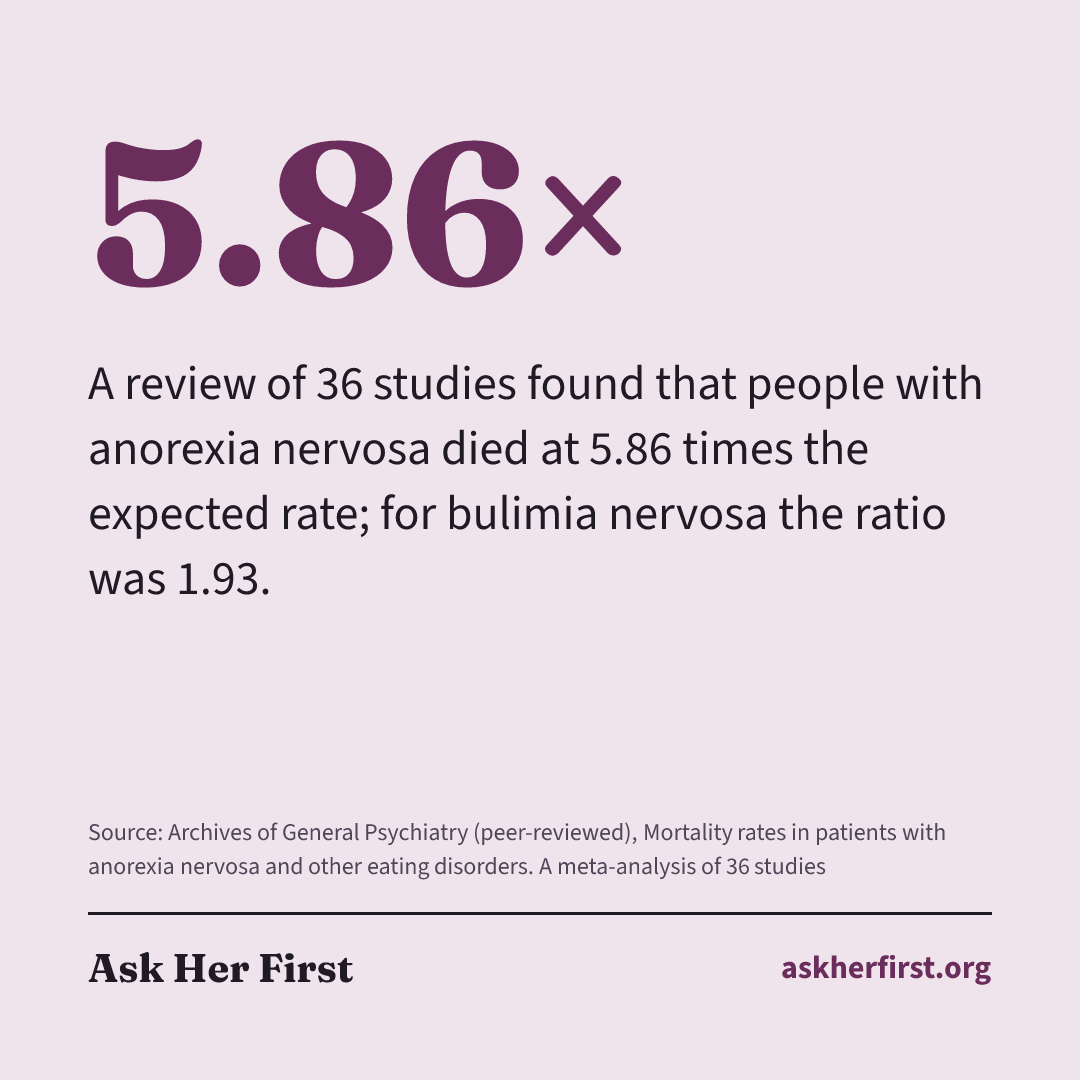
A review of 36 studies found that people with anorexia nervosa died at 5.86 times the expected rate; for bulimia nervosa the ratio was 1.93.99 In a review of 36 studies, 1 in 5 people with anorexia nervosa who died had died by suicide.99 The same review found that age at assessment was a significant predictor of death for people with anorexia.99
Eating disorders also often come with other mental health conditions, most often depression, anxiety, and substance use disorders, and people with eating disorders are at higher risk for suicide.92 94.5% of U.S. adults with bulimia nervosa had at least one other core mental disorder in their lifetime, as did 78.9% of those with binge eating disorder and 56.2% of those with anorexia nervosa, in a national survey (2001–2003).19 In that survey, anxiety disorders were the most common co-occurring condition for all three eating disorders.19
Treatment
NIMH says eating disorders can be treated successfully, and early detection and treatment are important for recovery.92 Treatment plans may include:92
- Psychotherapy (individual, group, or family) to identify and change troubling emotions, thoughts, and behaviors about food.
- Medical care and monitoring to treat the health effects of the eating disorder.
- Nutrition counseling to help people eat well and reach and keep a healthy weight.
- Medication to treat symptoms of some eating disorders, including bulimia and binge-eating disorder, and to ease co-occurring anxiety or depression.
There are currently no medications approved by the U.S. Food and Drug Administration (FDA) to treat the symptoms of anorexia nervosa or ARFID.92 Some people with a severe eating disorder may need care in a hospital or residential treatment program.92 Family members can encourage a loved one to seek help and support them during treatment.92
Reviews of eating disorders in midlife say treatment should be tailored to older women and men and address the context of midlife and aging.96,97
Getting help
If you’re worried about your eating or mental health, NIMH suggests starting with a primary care provider, who can refer you to a qualified mental health professional such as a psychologist, psychiatrist, or clinical social worker.92 The National Association of Anorexia Nervosa and Associated Disorders (ANAD) runs a free eating disorders helpline for emotional support and referrals, answered by trained volunteers on weekdays.100 If you or someone you know is struggling or having thoughts of suicide, call or text the 988 Suicide & Crisis Lifeline at 988.92
What we don’t know yet
- Current U.S. numbers. The national prevalence figures NIMH reports come from a survey conducted in 2001–2003.19
- Midlife and older women. Researchers describe women over 50 with disordered eating as an underserved population and say focused research is needed to develop age-appropriate interventions.95
- The role of menopause. Whether perimenopause raises eating disorder risk is still being studied.98
- Mortality data age. The review of death rates cited here covered studies published from 1966 through 2010.99
- Treatment for anorexia and ARFID. No FDA-approved medications exist for these conditions, and NIMH is funding research into new treatments, including medications and behavioral therapies.92,93
Questions to ask your doctor
- I’ve struggled with eating, bingeing, or restricting for years. Could this be an eating disorder, even at my age?
- Could menopause or perimenopause be affecting my eating or body image?
- What tests should I have to check my heart, bones, and blood work?
- Can you refer me to a therapist or dietitian with experience treating eating disorders in adults?
- What treatment options fit my situation, and what does each involve?
- I also have anxiety or depression. How will my treatment address both?
- What should my family or partner know to support me?
This article summarizes published research and official health information. It has not been reviewed by a clinician and is not medical advice. How we source.