Stalking is more than an annoying ex or a few unwanted messages. The CDC calls it a public health problem that affects millions of people in the United States.22 Some of it happens through phones, apps, and hidden devices, which can be hard for victims to detect.214,213
If you are in immediate danger, call 911.219
What it is
The CDC says stalking involves a perpetrator’s use of a pattern of harassing or threatening tactics that are unwanted and cause fear or safety concerns in a victim.22 The U.S. Department of Justice’s Office on Violence Against Women defines stalking as engaging in a course of conduct directed at a specific person that would cause a reasonable person to fear for their safety or the safety of others, or to suffer substantial emotional distress.221 Legal definitions of stalking vary from one place to another.220
The CDC lists stalking tactics that can include:22
- Following and watching the victim
- Approaching or showing up at places like the victim’s home or workplace
- Leaving strange or potentially threatening items for the victim to find
- Sneaking into the victim’s home or car to scare them or show they had been there
- Sending unwanted cards, letters, flowers, or other presents
- Using technology, such as a camera or computer software, to spy on the victim from a distance
- Using GPS technology to track the victim’s location
- Contacting the victim through phone calls (including hang-ups and voicemails), texts, email, social media, or photo messages
The CDC says stalking victims usually know their stalkers, and the most common perpetrators are intimate partners or acquaintances.22 The CDC also counts stalking by a partner as one of the four types of intimate partner violence.195
What the research shows
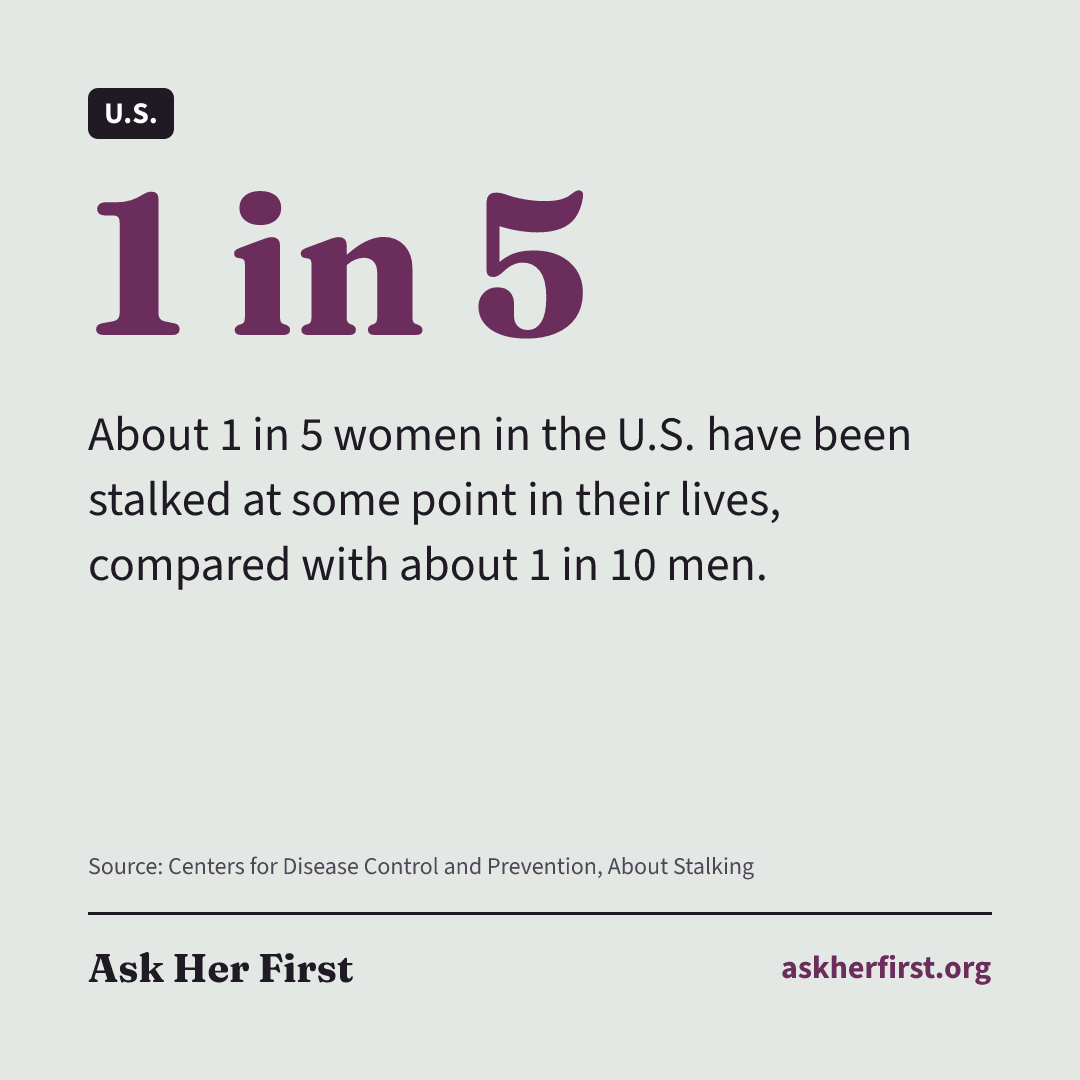
About 1 in 5 women in the U.S. have been stalked at some point in their lives, compared with about 1 in 10 men.22 About 1 in 20 U.S. women (5.5%, or 7.0 million) were stalked in the 12 months before the survey.213 Nearly 58% of U.S. women who have been stalked experienced stalking before age 25, and about 24% were stalked as minors.22Most stalking combines watching and intruding. Among U.S. women who have been stalked, 78.3% were followed, watched, or spied on, and 74.2% were approached in places such as their home, workplace, or school when they did not want it.213 Among U.S. women who have been stalked, 69.2% received unwanted phone calls, emails, voice messages, or texts, 46.8% received unwanted messages through social media, and 36.3% said the stalker used social media to monitor or track them.213 The CDC describes the most common tactics as a combination of surveillance (being followed, watched, or spied on) and life invasion (such as repeated unwanted calls or messages, or being approached at home, work, or school).213
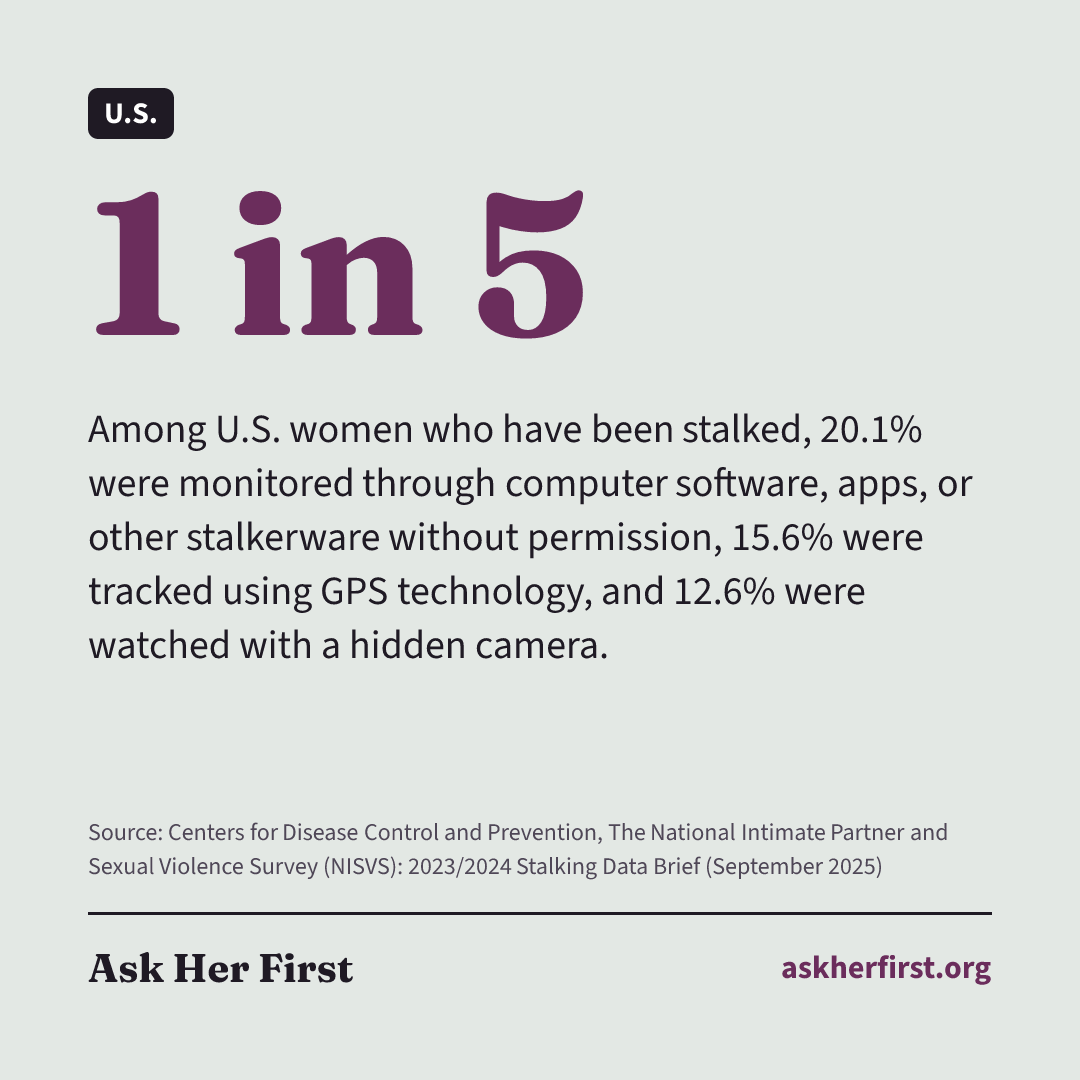
Technology is part of the picture. Among U.S. women who have been stalked, 20.1% were monitored through computer software, apps, or other stalkerware without permission, 15.6% were tracked using GPS technology, and 12.6% were watched with a hidden camera.213 The CDC expanded its questions about technology-facilitated stalking in its 2023/2024 survey.213
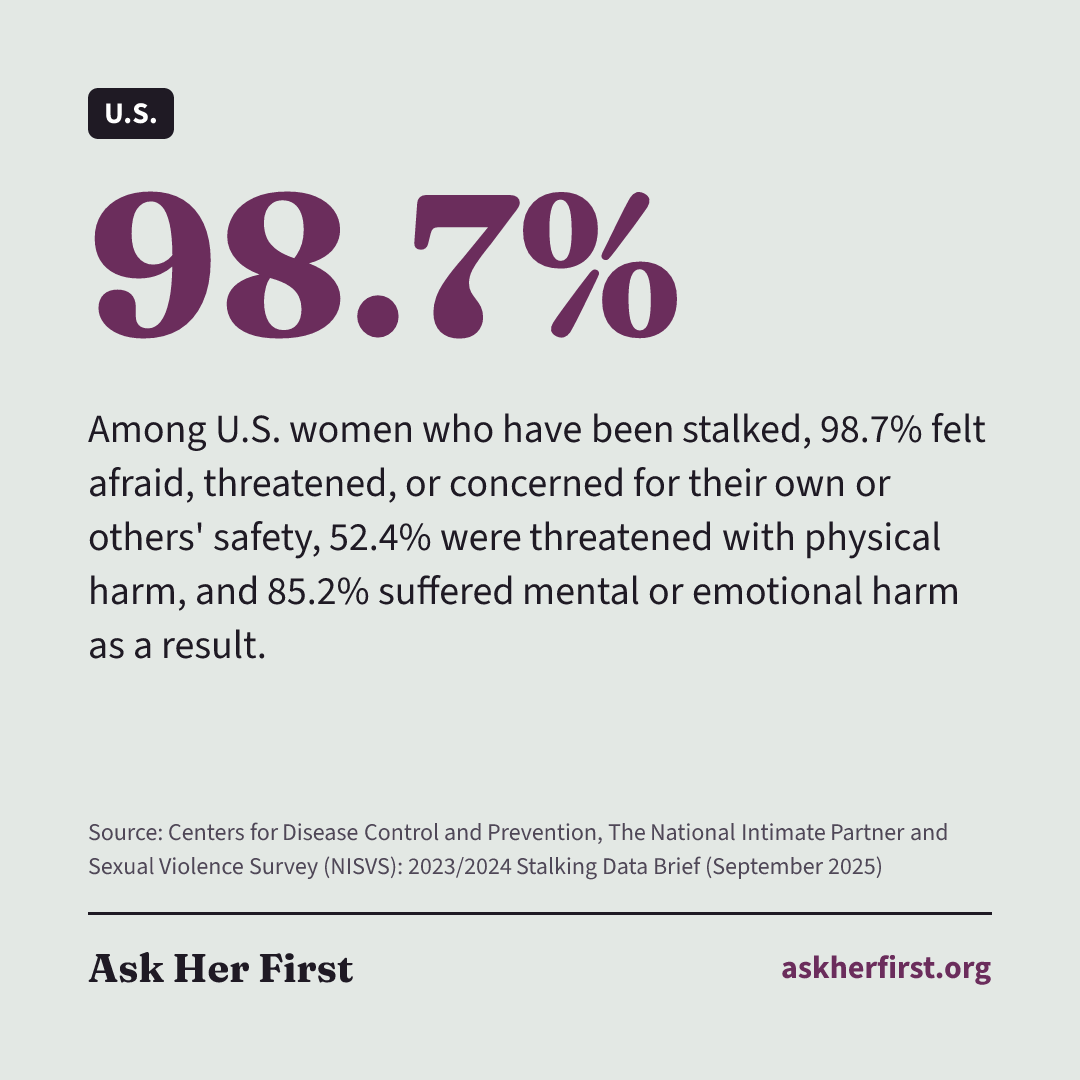
The harm is real. Among U.S. women who have been stalked, 98.7% felt afraid, threatened, or concerned for their own or others' safety, 52.4% were threatened with physical harm, and 85.2% suffered mental or emotional harm as a result.213 The CDC says research has shown a relationship between being stalked and post-traumatic stress symptoms, feelings of hopelessness, depression, and anxiety.22 It also notes previous research found that in severe cases, stalking may be associated with homicide risk.213 The Stalking Prevention, Awareness, and Resource Center (SPARC) says that while every case is different, people who stalk can be very dangerous, and there is no single profile that predicts what a stalker will or will not do.219
How technology is misused
The National Domestic Violence Hotline defines technology-facilitated abuse as using technology, the internet, and online platforms to bully, harass, stalk, intimidate, or control a partner.216 It describes several kinds:216
- Intimate partner surveillance: using apps to track location or monitor social media, spyware on a partner’s phone, smart home devices with monitoring features, or hidden GPS trackers in a car, clothing, or bag.
- Internet of Things abuse: misusing connected devices, such as smart speakers, doorbells, thermostats, locks, cameras, and wearables, to watch or control someone, usually inside the home.
- Image-based sexual abuse: creating or sharing private sexual images without consent, or threatening to, including “deepfake” images.
- Sextortion: threatening to share intimate images unless the victim meets certain demands.
- Online harassment: threatening or insulting messages, constant texting, or fake profiles used to embarrass or isolate someone.
The Hotline warns that computer and cell phone use can be monitored without you knowing it, and that GPS trackers can be placed in a car or on items like a purse or phone.215 It also says browsing history can never be completely erased from a device, even in private or incognito mode.215
Stalkerware
The Federal Trade Commission (FTC) describes stalkerware, also known as spyware, as software or an app that someone installs on your phone or other device without your knowledge.214 The FTC says these programs may let an abuser track your location, record phone conversations, read texts and emails, see photos and videos, and watch what you do online.214 It says stalkerware is designed to avoid detection and may be hidden under innocent-sounding names.214
The FTC suggests watching for signs such as a battery that drains faster than usual, unexpected data use, overheating, or a phone turning off and on by itself.214 It also suggests asking whether the abuser knows your exact location, details of private conversations, who you’re texting, or what sites you visit, and whether they’ve had unsupervised access to your phone.214
Why removing spyware can be risky
This is important: removing stalkerware could tip off the person who installed it. The FTC says an abuser who uses stalkerware may escalate their abuse if they suspect you’re cutting off their access to your phone.214 It warns that taking steps to deal with stalkerware could tip off your abuser, especially if you make a call, use the phone to research options, or talk near the phone.214
For that reason, the FTC advises reaching out to a domestic violence advocate through the National Domestic Violence Hotline before you remove stalkerware.214 It says not to contact advocates or law enforcement from the device that might have stalkerware on it, and suggests borrowing a friend or family member’s device or buying a pay-as-you-go phone instead.214 The FTC says an advocate can help you make a safety plan, identify tech misuse, and discuss how to preserve evidence before you make changes to your phone.214
We don’t give our own technical instructions here. For step-by-step help, see the FTC’s stalkerware guidance, the Hotline’s internet safety page, and its tech-safety tips, or talk with an advocate.
Documenting stalking
SPARC is a project of AEquitas funded by the U.S. Department of Justice’s Office on Violence Against Women.218 It says keeping a log of stalking incidents can be especially helpful if you choose to go to the criminal or civil justice systems, such as for protection orders, divorce or custody cases, or criminal prosecution.220 Its free stalking incident and behavior log has columns for the date, time, description, location (including the technology or online platform used), witnesses, evidence, and who you reported it to.220
SPARC’s guidance includes:220,219
- Record every stalking-related incident, such as repeated calls or messages, following or waiting for you, gifts, tracking, property damage, rumors, posting private information or photos, impersonation, hacking into accounts, and threats, including threats sent through other people.
- Save evidence when possible, including emails, texts, photos, and social media posts.
- When you report an incident, write down the person’s name, agency, and any badge or ID number, and ask for a copy of the report.
- Don’t include anything in the log that you wouldn’t want the stalker to see, because it could become evidence or be shared with them later.
- Keep the log in a safe place, and think about whether the stalker might have access to your phone or computer before keeping a digital copy.
The Hotline adds that evidence of technology-facilitated abuse is often fleeting and easily deleted, and suggests ways to save it, such as screenshots and printouts that show the sender, date, and time.207 The FTC says to document evidence before replacing or resetting a phone.214
SPARC notes that documenting stalking can be difficult and emotionally exhausting, and that a local advocate can provide support, information about your options, and help with safety planning.220
What we don’t know yet
The CDC cautions that technology-facilitated stalking may be undercounted, because many of these tactics are designed to escape detection and may be hard for victims to notice.213 The CDC also says future surveys will show whether technology-facilitated stalking increases as these tools become more available.213 Because the CDC changed how it measured stalking in its 2023/2024 survey, it cautions against comparing the newest results with earlier years.213 Some figures on the CDC’s stalking page, such as the ages at which people were stalked, come from its 2016/2017 survey.22
What you can do
- Trust your instincts. SPARC says victims are often pressured to downplay a stalker’s behavior, but stalking poses a real threat of harm.219
- Call 911 if you are in immediate danger. SPARC suggests explaining why the stalker’s actions are causing you fear.219
- Talk with an advocate before changing your devices. You can reach the National Domestic Violence Hotline from a device you believe is safe; the FTC recommends this step before removing stalkerware.214
- Keep a log and save evidence using SPARC’s log.
- Ask about protection orders. SPARC says different places use different names for these orders and suggests checking with local victim advocates about what’s available where you live.219
- Find local help. SPARC does not provide direct services to victims, and it says domestic violence and sexual assault service providers are often the right people to contact about stalking, even when the stalking isn’t related to domestic violence.219 SPARC also notes there is no dedicated stalking hotline.218
- Review the Hotline’s internet safety guidance and our Browse safely page.
This article summarizes published research and official health information. It has not been reviewed by a clinician and is not medical advice. How we source.